Cretan Vetch
Vicia cretica · Accepted scientific name
Scientific literature: Very Sparse (2 studies) · ★☆☆☆☆
Cretan Vetch, scientifically known as Vicia cretica, is a resilient legume native to the rocky landscapes of Crete. Renowned for its vibrant purple flowers, this hardy plant plays a vital role in Mediterranean ecosystems, contributing to soil health through nitrogen fixation and offering potential medicinal benefits in traditional herbalism.
- Family
- Fabaceae
- Native range
- Europe
- Parts used
- Seed
- Common names
- Cretan Vetch
- Scientific synonyms
- Not available
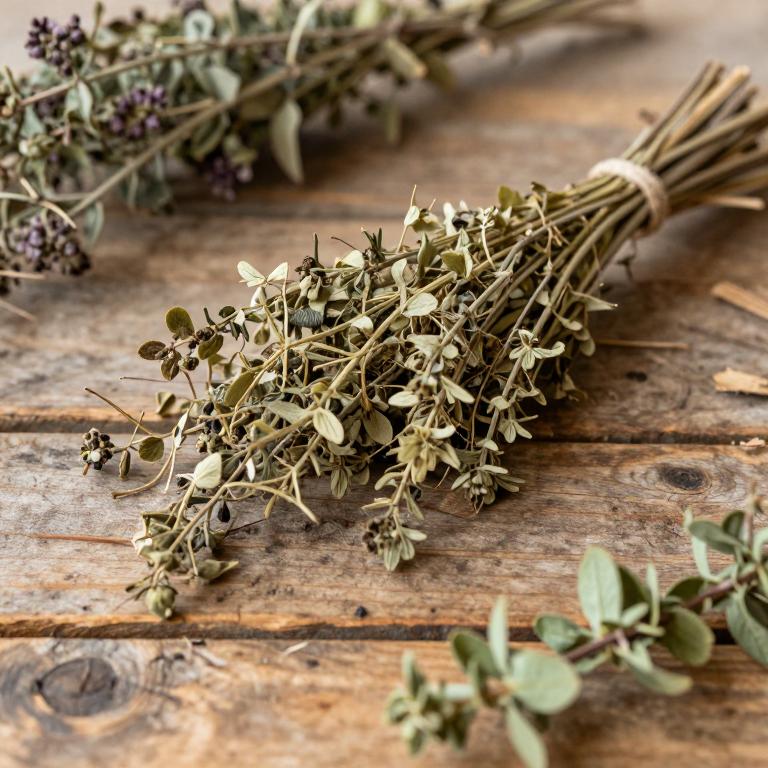
Names and Synonyms
Common Names
- Cretan Vetch
Scientific Names
Accepted name
Vicia creticaSources: Wikidata, Catalogue of Life
Taxonomical Classification
This plant belongs to the kingdom Plantae and is classified under the phylum Streptophyta and the class Equisetopsida. Within the subclass Magnoliidae, it is further categorized into the order Fabales and the family Fabaceae. Finally, its specific taxonomic placement is within the genus Vicia.
| Rank | Classification |
|---|---|
| Kingdom | Plantae |
| Phylum | Streptophyta |
| Class | Equisetopsida |
| Subclass | Magnoliidae |
| Order | Fabales |
| Family | Fabaceae |
| Genus | Vicia |
Sources: The World Checklist of Vascular Plants (WCVP)
Distribution
This plant is primarily located within the region of Southeastern Europe. Specifically, its natural habitat includes various areas across Greece. A significant concentration of its population can be found on the island of Kriti. Furthermore, its range extends into Western Asia. This distribution encompasses the islands of the East Aegean.
| Region | Area |
|---|---|
| Southeastern Europe | Greece |
| Southeastern Europe | Kriti |
| Western Asia | East Aegean Is. |
Sources: The World Checklist of Vascular Plants (WCVP)
Botanical Identification
Life history
The life history of Vicia cretica is characterized by an annual lifecycle, meaning it completes its entire developmental process—from germination to seed production—within a single growing season. As a therophyte, its survival strategy relies on completing its life cycle rapidly to exploit favorable environmental conditions before the onset of unfavorable periods. This life form implies that the plant survives the dormant season primarily in the form of seeds, which remain in the soil until the subsequent growing season begins.
- Life form :
- therophyte
- Lifecycle :
- annual
Morphology
The morphology of Vicia cretica is characterized by its habit as a non-woody herb. It functions as a terrestrial plant, typically growing in well-drained soils rather than in aquatic or semiaquatic environments. As a herbaceous species, it lacks permanent woody tissue, maintaining a soft, flexible structure throughout its growth cycle.
- Aquatic :
- terrestrial
- Growth form :
- herb
- Woodiness :
- non-woody
Physiology
The physiology of Vicia cretica is characterized by a metabolic framework driven by a C3 photosynthetic pathway, which governs its carbon fixation processes and energy production. As a C3 plant, it utilizes the enzyme Rubisco to directly fix atmospheric carbon dioxide into three-carbon compounds during the Calvin cycle, a mechanism that is highly efficient under temperate conditions and moderate light intensities. This metabolic strategy influences the plant's water-use efficiency and transpiration rates, as the stomata must remain open to facilitate gas exchange, thereby making its physiological performance sensitive to moisture availability in its natural habitat. Furthermore, its physiological processes are integrated with nitrogen-fixing capabilities typical of many legumes, allowing for nutrient acquisition that supports its overall growth and reproductive development.
- Photosynthetic pathway :
- C3
Reproduction
The reproduction of Vicia cretica is characterized by a specific seed morphology and a diverse range of dispersal strategies. The seeds produced by this species exhibit a highly uniform mass, with a mean, minimum, and maximum weight all recorded at 0.01836 g, indicating a lack of significant variation in individual seed size. Regarding the movement of its progeny, the plant utilizes a zoochorous dispersal syndrome, relying on animals for the distribution of its seeds. This biological mechanism is supported by a broad spectrum of potential dispersal modes, which include anemochorous, anthropochorous, autochorous, endozoochorous, epizoochorous, hydrochorous, myrmecocorous, and unspecialized methods, suggesting a highly adaptable reproductive strategy capable of exploiting various environmental vectors.
- Dispersal syndrome :
- zoochorous
- Seed mass mean:
- 0.01836 g
Sources: Global Inventory of Floras and Traits (GIFT)
Plant Parts
Vicia cretica has 1 reported plant parts identified across 1 scientific publications and several other databases that are studied for medicinal purposes. The most consistently reported plant part include seed.
| Plant part | Supporting sources | Consensus |
|---|---|---|
| Seed | 1 supporting sources | ★☆☆☆☆ |
Seed
- Journal of clinical pathology
Chemicals
Vicia cretica has 1 reported phytochemicals identified across 1 scientific publications and several other databases. The most consistently reported chemicals include Lectin.
| Chemical | Supporting sources | Consensus |
|---|---|---|
| Lectin | 1 supporting sources | ★☆☆☆☆ |
Lectin
- Journal of clinical pathology
Preparations
Vicia cretica has 1 reported preparations identified across 1 scientific publications and several other databases. The most consistently reported preparations include Extracts of the seeds of Vicia cretica.
| Preparation | Supporting sources | Consensus |
|---|---|---|
| Extracts of the seeds of vicia cretica | 1 supporting sources | ★☆☆☆☆ |
Extracts of the seeds of vicia cretica
- Journal of clinical pathology