gray speedwell
Veronica polita · Accepted scientific name
Scientific literature: Very Sparse (15 studies) · ★☆☆☆☆
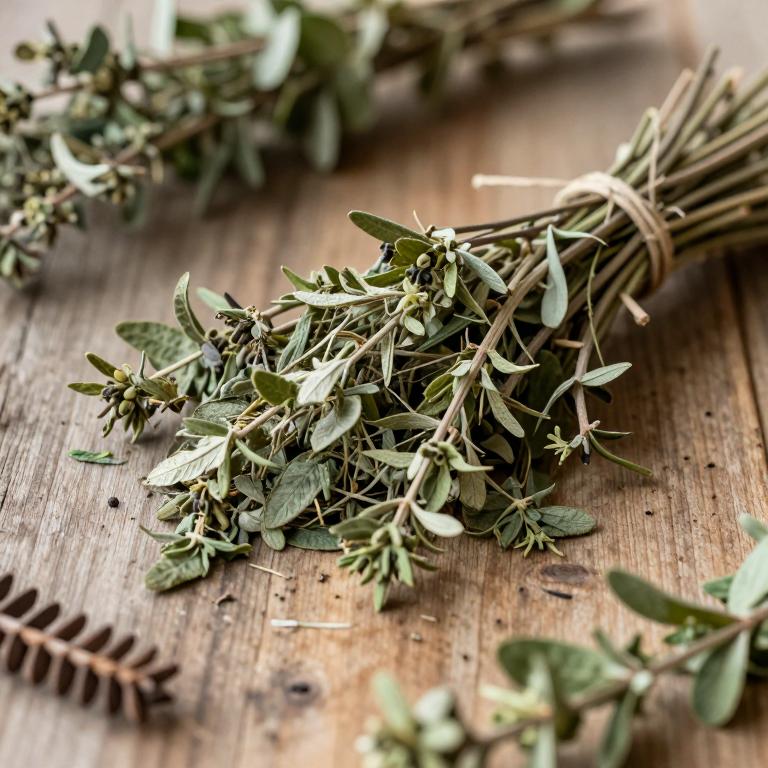
Gray speedwell, scientifically known as Veronica polita, is a charming perennial herb native to specific woodland habitats. Characterized by its delicate, small flowers and fine foliage, this plant offers unique aesthetic value. While less common in traditional pharmacopeias, its presence contributes to the rich biodiversity of its native ecosystems.
Names and Synonyms
Common Names
- gray speedwell
- grey field speedwell
- wayside speedwell
- Grey Field-Speedwell
- Elegant speedwell
- Grey Speedwell
Scientific Names
Accepted name
Veronica politaSynonyms
- Veronica agrestis var. polita
- Pocilla polita
- Veronica agrestis subsp. polita
- Veronica agrestis var. polita
- Veronica agrestis subsp. polita
Regional and Traditional Names
Spanish:
- Veronica agrestis subsp. polita
- Veronica de campo
- Verónica de campo
- Veronica alsiphila
- Cardia didyma
- Veronica thellungiana
- Veronica didyma
- Veronica obscura
- Veronica nitidula
- Veronica agrestis subsp. didyma
- Veronica agrestis subsp polita
- Pocilla polita
- Veronica agrestis subsp didyma
German:
- Glänzender Ehrenpreis
- Glanz-Ehrenpreis
- Glänzender Ehrenpreis
- Glaenzender Ehrenpreis
French:
- Véronique luisante
- Véronique polie
- Véronique brillante
- véronique à feuilles luisantes
- véronique luisante
- véronique à feuilles luisantes
- Veronique luisante
- Véronique brillante
Sources: Wikidata, Catalogue of Life
Taxonomical Classification
This plant belongs to the kingdom Plantae and is classified under the phylum Streptophyta within the class Equisetopsida. As a member of the subclass Magnoliidae and the order Lamiales, it is positioned in the family Plantaginaceae. It is specifically identified by the genus Veronica.
| Rank | Classification |
|---|---|
| Kingdom | Plantae |
| Phylum | Streptophyta |
| Class | Equisetopsida |
| Subclass | Magnoliidae |
| Order | Lamiales |
| Family | Plantaginaceae |
| Genus | Veronica |
Sources: The World Checklist of Vascular Plants (WCVP)
Distribution
This plant is found across several specific regions within Northern Europe. Its geographical range includes the coastal and inland areas of Denmark. Furthermore, it can be located throughout the landscapes of Finland. The distribution extends westward to include both Great Britain and Ireland. Finally, the species is also documented to inhabit the territory of Norway.
| Region | Area |
|---|---|
| Northern Europe | Denmark |
| Northern Europe | Finland |
| Northern Europe | Great Britain |
| Northern Europe | Ireland |
| Northern Europe | Norway |
| Northern Europe | Sweden |
| Middle Europe | Austria |
| Middle Europe | Belgium |
| Middle Europe | Czechia-Slovakia |
| Middle Europe | Germany |
Sources: The World Checklist of Vascular Plants (WCVP)
Botanical Identification
Ecology
The ecology of Veronica polita is characterized by a broad altitudinal distribution, allowing it to inhabit environments ranging from sea level up to a maximum elevation of 2800 m AMSL. Its habitat preferences include anthropogenic areas (Área Antrópica), indicating an ability to persist in landscapes modified by human activity.
- Elevational range max:
- 2800 m AMSL
- Elevational range min:
- 0 m AMSL
- Habitat :
- Área Antrópica
Life history
The life history of Veronica polita is characterized by an annual lifecycle, meaning it completes its entire developmental process from germination to seed production within a single growing season. As a therophyte, the plant survives the unfavorable seasons primarily in the form of seeds, which remain dormant until conditions are optimal for growth. Its physical structure and physiological habits align with the therophyte life form, allowing it to rapidly exploit available resources during its short lifespan. In terms of its vegetative state, the species is classified as evergreen, maintaining its green tissues throughout its active period.
- Deciduousness :
- evergreen
- Life form :
- therophyte
- Lifecycle :
- annual
Morphology
The morphology of Veronica polita is characterized by its growth form as a non-woody herb and forb. This independent, non-parasitic plant is primarily terrestrial in its habitat and does not exhibit epiphytic behavior. The plant is self-supporting rather than acting as a liana or vine, typically displaying an ascending shoot orientation. In terms of dimensions, the plant maintains a relatively low profile with a height ranging from a minimum of 0.03 m to a maximum of 0.3 m, resulting in a mean plant height of approximately 0.2375 m. Its shoots are similarly compact, with lengths measured between a minimum of 5 cm and a maximum of 35 cm.
- Aquatic :
- terrestrial
- Climber :
- self-supporting
- Epiphyte :
- terrestrial
- Growth form :
- herb
- Growth form :
- forb
- Parasite :
- independent
- Plant height max:
- 0.3 m
- Plant height mean:
- 0.2375 m
- Plant height min:
- 0.03 m
- Shoot length max:
- 35 cm
- Shoot length min:
- 5 cm
- Shoot orientation :
- ascending
- Woodiness :
- non-woody
Physiology
The physiology of Veronica polita is characterized by a C3 photosynthetic pathway, indicating a standard metabolic process for carbon fixation typical of many temperate species. The plant is non-carnivorous and does not function as a nitrogen fixer, relying instead on soil-based nutrient uptake. Its vegetative morphology is defined by elliptic leaf forms with a mean leaf size of approximately 1.08333 cm². The dimensions of the leaves vary, with a minimum leaf length of 0.6 cm and a maximum length of 1.7 cm, while the leaf width ranges from a minimum of 0.5 cm to a maximum of 1.5 cm, resulting in a mean leaf width of 0.5 cm. Furthermore, the plant exhibits a mean Specific Leaf Area (SLA) of 273.5 cm²/g, reflecting its leaf mass per area and its physiological adaptation to its specific environmental niche.
- Carnivory :
- non-carnivorous
- Leaf form :
- elliptic
- Leaf length max:
- 1.7 cm
- Leaf length min:
- 0.6 cm
- Leaf size mean:
- 1.08333 cm²
- Leaf width max:
- 1.5 cm
- Leaf width mean:
- 0.5 cm
- Nitrogen fixer :
- no
- Photosynthetic pathway :
- C3
- Specific Leaf Area (SLA) mean:
- 273.5 cm²/g
Reproduction
Reproduction in Veronica polita is achieved through sexual processes, as the plant is bisexual and lacks asexual reproduction methods. The flowering period is extensive, typically beginning in March and continuing through October, with flowers characterized by a blue color and widths ranging from 0.4 cm to 0.8 cm. The pollination process is biotic, specifically involving insects, with flies identified as a key pollinator. Self-fertilization is present within the species. Following pollination, the plant develops dry, dehiscient capsules as its fruit type. These fruits are relatively small, with a mean length of 0.4 cm (ranging from 0.3 cm to 0.5 cm) and a mean width of 0.5 cm (ranging from 0.4 cm to 0.6 cm). Each capsule is highly productive, containing between 101 and 1000 seeds. The seeds themselves are minute, possessing a mean mass of 0.000338 g (ranging from 0.00032 g to 0.00038 g) and a consistent mean volume of 0.3 mm³. Seed dispersal is characterized by an unspecialized syndrome, though it also exhibits anthropochorous tendencies, suggesting movement via human activity.
- Dehiscence :
- dehiscent
- Dispersal syndrome :
- unspecialized
- Dispersal syndrome :
- anthropochorous
- Flower colour :
- blue
- Flower width max:
- 0.8 cm
- Flower width min:
- 0.4 cm
- Flowering time :
- Mar
- Flowering time :
- Oct
- Fruit dryness :
- dry
- Fruit length max:
- 0.5 cm
- Fruit length mean:
- 0.4 cm
- Fruit length min:
- 0.3 cm
- Fruit type :
- capsule
- Fruit width max:
- 0.6 cm
- Fruit width min:
- 0.4 cm
- Pollination syndrome :
- insect
- Pollination syndrome :
- fly
- Pollination syndrome :
- biotic
- Reproduction asexual :
- absent
- Reproduction sexual :
- bisexual
- Seed mass max:
- 0.00038 g
- Seed mass mean:
- 0.000338 g
- Seed mass min:
- 0.00032 g
- Seed volume max:
- 0.3 mm³
- Seeds_per_fruit :
- 101-1000
- Self fertilization :
- present
Sources: Global Inventory of Floras and Traits (GIFT)
Chemicals
Veronica polita has 8 reported phytochemicals identified across 0 scientific publications and several other databases. The most consistently reported chemicals include Flavonoid, Flavonol, Isoflavone, Vanillic acid, apigenin.
| Chemical | Supporting sources | Consensus |
|---|---|---|
| Flavonoid | 1 supporting sources | ★☆☆☆☆ |
| Flavonol | 1 supporting sources | ★☆☆☆☆ |
| Isoflavone | 1 supporting sources | ★☆☆☆☆ |
| Vanillic acid | 1 supporting sources | ★☆☆☆☆ |
| apigenin | 1 supporting sources | ★☆☆☆☆ |
| caffeic acid | 1 supporting sources | ★☆☆☆☆ |
| gentisic acid | 1 supporting sources | ★☆☆☆☆ |
| p-Hydroxybenzoic acid | 1 supporting sources | ★☆☆☆☆ |
Flavonoid
- Biomedicine & pharmacotherapy = Biomedecine & pharmacotherapie
Flavonol
- Food chemistry
Isoflavone
- Food chemistry
Vanillic acid
- Antioxidants (Basel, Switzerland)
apigenin
- Antioxidants (Basel, Switzerland)
caffeic acid
- Antioxidants (Basel, Switzerland)
gentisic acid
- Antioxidants (Basel, Switzerland)
p-Hydroxybenzoic acid
- Antioxidants (Basel, Switzerland)
Activities
Veronica polita has 1 reported activities identified across 0 scientific publications and several other databases. The most consistently reported activities include Antioxidant.
| Activity | Supporting sources | Consensus |
|---|---|---|
| Antioxidant | 2 supporting sources | ★☆☆☆☆ |
Antioxidant
- Biomedicine & pharmacotherapy = Biomedecine & pharmacotherapie
- Antioxidants (Basel, Switzerland)
Conditions
Veronica polita has 5 reported investigations on conditions identified across 0 scientific publications and several other databases. The most consistently reported conditions include antioxidant activity, colitis, inflammatory bowel disease, ulcerative colitis, weight loss.
| Condition | Supporting sources | Consensus |
|---|---|---|
| Antioxidant activity | 1 supporting sources | ★☆☆☆☆ |
| Colitis | 1 supporting sources | ★☆☆☆☆ |
| Inflammatory bowel disease | 1 supporting sources | ★☆☆☆☆ |
| Ulcerative colitis | 1 supporting sources | ★☆☆☆☆ |
| Weight loss | 1 supporting sources | ★☆☆☆☆ |
Antioxidant activity
- Antioxidants (Basel, Switzerland)
Colitis
- Biomedicine & pharmacotherapy = Biomedecine & pharmacotherapie
Inflammatory bowel disease
- Biomedicine & pharmacotherapy = Biomedecine & pharmacotherapie
Ulcerative colitis
- Biomedicine & pharmacotherapy = Biomedecine & pharmacotherapie
Weight loss
- Biomedicine & pharmacotherapy = Biomedecine & pharmacotherapie
Preparations
Veronica polita has 1 reported preparations identified across 0 scientific publications and several other databases. The most consistently reported preparations include VP extract.
| Preparation | Supporting sources | Consensus |
|---|---|---|
| Vp extract | 1 supporting sources | ★☆☆☆☆ |
Vp extract
- Biomedicine & pharmacotherapy = Biomedecine & pharmacotherapie