ironweed
Vernonia · Accepted scientific name
Scientific literature: Very Sparse (7 studies) · ★☆☆☆☆
Ironweed, scientifically known as Vernonia, is a resilient perennial celebrated for its striking purple blooms and profound medicinal history. Renowned in traditional herbalism, various species offer potent antioxidant and anti-inflammatory properties. This versatile plant serves as a vital resource for treating diverse ailments through its unique bioactive compounds.
- Family
- Asteraceae
- Native range
- Europe
- Parts used
- Leaf
- Common names
- Ironweed · Ironweeds
- Scientific synonyms
- Centrapalus · Tecmarsis · 3 more
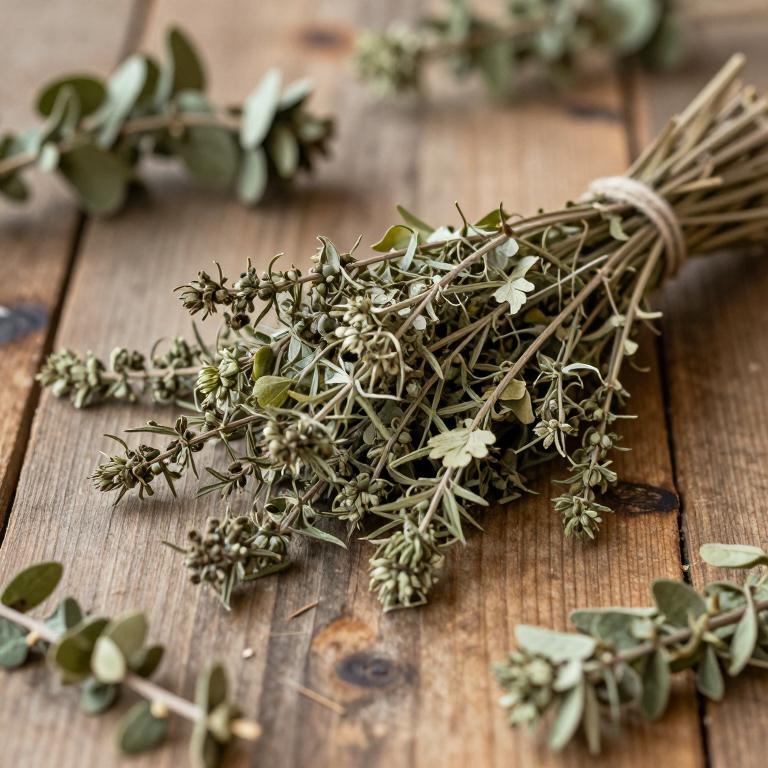
Names and Synonyms
Common Names
- ironweed
- ironweeds
Scientific Names
Accepted name
VernoniaSynonyms
- Centrapalus
- Tecmarsis
- Alkibias
- Achyrocoma
- Aostea
Regional and Traditional Names
Spanish:
- Eremosis
- Leiboldia
- Palos de fierro
German:
- Scheinastern
- Vernonien
- Scheinastern
French:
- Vernonies
Sources: Wikidata, Catalogue of Life
Taxonomical Classification
This plant belongs to the kingdom Plantae and the phylum Streptophyta, falling under the class Equisetopsida and subclass Magnoliidae. Within the order Asterales, it is classified under the family Asteraceae. Finally, it is identified by its specific genus, Vernonia.
| Rank | Classification |
|---|---|
| Kingdom | Plantae |
| Phylum | Streptophyta |
| Class | Equisetopsida |
| Subclass | Magnoliidae |
| Order | Asterales |
| Family | Asteraceae |
| Genus | Vernonia |
Sources: The World Checklist of Vascular Plants (WCVP)
Distribution
This plant exhibits a diverse geographical distribution that spans across several continents and distinct climatic zones. In Middle Europe, its presence can be observed specifically within Germany. The species also extends to the Macaronesian region, with occurrences noted in Cape Verde. Moving towards West Tropical Africa, the plant is found in the territories of Benin and Burkina. Additionally, its range continues through the West Tropical African nation of Gambia.
| Region | Area |
|---|---|
| Middle Europe | Germany |
| Macaronesia | Cape Verde |
| West Tropical Africa | Benin |
| West Tropical Africa | Burkina |
| West Tropical Africa | Gambia |
| West Tropical Africa | Ghana |
| West Tropical Africa | Guinea-Bissau |
| West Tropical Africa | Guinea |
| West Tropical Africa | Ivory Coast |
| West Tropical Africa | Liberia |
Sources: The World Checklist of Vascular Plants (WCVP)
Plant Parts
Vernonia has 1 reported plant parts identified across 1 scientific publications and several other databases that are studied for medicinal purposes. The most consistently reported plant part include leaf.
| Plant part | Supporting sources | Consensus |
|---|---|---|
| Leaf | 1 supporting sources | ★☆☆☆☆ |
Leaf
- Biotechnology and applied biochemistry
Chemicals
Vernonia has 3 reported phytochemicals identified across 1 scientific publications and several other databases. The most consistently reported chemicals include Saponins, Vernolide A, polyphenols.
| Chemical | Supporting sources | Consensus |
|---|---|---|
| Saponins | 1 supporting sources | ★☆☆☆☆ |
| Vernolide A | 1 supporting sources | ★☆☆☆☆ |
| polyphenols | 1 supporting sources | ★☆☆☆☆ |
Saponins
- Journal of ethnopharmacology
Vernolide A
- Journal of ethnopharmacology
polyphenols
- Journal of ethnopharmacology
Activities
Vernonia has 1 reported activities identified across 1 scientific publications and several other databases. The most consistently reported activities include Anthelmintic.
| Activity | Supporting sources | Consensus |
|---|---|---|
| Anthelmintic | 1 supporting sources | ★☆☆☆☆ |
Anthelmintic
- Journal of ethnopharmacology
Conditions
Vernonia has 1 reported investigations on conditions identified across 1 scientific publications and several other databases. The most consistently reported conditions include undernutrition.
| Condition | Supporting sources | Consensus |
|---|---|---|
| Undernutrition | 1 supporting sources | ★☆☆☆☆ |
Undernutrition
- Journal of ethnopharmacology