Bee bush
Vernonanthura polyanthes · Accepted scientific name
Scientific literature: Very Sparse (13 studies) · ★☆☆☆☆
Bee bush, scientifically known as Vernonanthura polyanthes, is a versatile medicinal shrub native to tropical regions. Renowned for its therapeutic properties, it is frequently utilized in traditional medicine to treat inflammatory conditions, skin ailments, and digestive issues. This potent plant offers valuable bioactive compounds for holistic wellness and healing.
- Family
- Asteraceae
- Native range
- Africa
- Parts used
- Leaf
- Common names
- Bee Bush
- Scientific synonyms
- Vernonia Compacta · Vernonia Polyanthes · 2 more
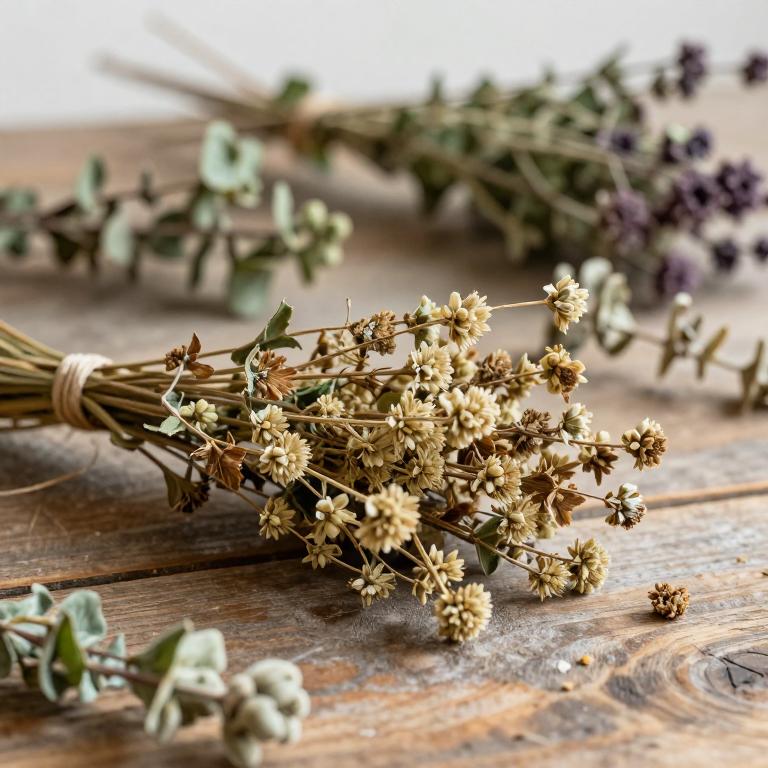
Names and Synonyms
Common Names
- Bee bush
Scientific Names
Accepted name
Vernonanthura polyanthesSynonyms
- Vernonia compacta
- Vernonia polyanthes
- Cacalia compacta
- Cacalia polyanthes
Sources: Wikidata, Catalogue of Life
Taxonomical Classification
This plant, Vernonanthura polyanthes, belongs to the kingdom Plantae and the phylum Streptophyta. It is classified under the class Equisetopsida and the subclass Magnoliidae within the order Asterales. Finally, it is a member of the family Asteraceae and is situated within the genus Vernonanthura.
| Rank | Classification |
|---|---|
| Kingdom | Plantae |
| Phylum | Streptophyta |
| Class | Equisetopsida |
| Subclass | Magnoliidae |
| Order | Asterales |
| Family | Asteraceae |
| Genus | Vernonanthura |
Sources: The World Checklist of Vascular Plants (WCVP)
Distribution
This plant exhibits a wide geographical distribution spanning across several continents and diverse regions. In South Tropical Africa, its presence is specifically noted within Mozambique. Moving to Western South America, it can be found inhabiting the territories of both Bolivia and Ecuador. Within Brazil, the species is distributed across the West-Central and Northeast regions. Consequently, these locations highlight the expansive natural range of Vernonanthura polyanthes.
| Region | Area |
|---|---|
| South Tropical Africa | Mozambique |
| Western South America | Bolivia |
| Western South America | Ecuador |
| Brazil | Brazil West-Central |
| Brazil | Brazil Northeast |
| Brazil | Brazil Southeast |
| Brazil | Brazil North |
| Brazil | Brazil South |
Sources: The World Checklist of Vascular Plants (WCVP)
Botanical Identification
Ecology
The ecology of Vernonanthura polyanthes is characterized by a broad adaptive capacity across diverse altitudinal gradients, allowing it to colonize a wide variety of landscapes. This species thrives within an expansive elevational range, spanning from sea level at 0 m AMSL up to high-altitude environments reaching a maximum of 2000 m AMSL. This significant vertical distribution suggests a high degree of ecological plasticity, enabling the plant to withstand varying temperature regimes, atmospheric pressures, and moisture availability associated with different mountain tiers. Such a wide altitudinal breadth typically indicates that the species can occupy multiple successional stages and diverse habitat types, ranging from lowland tropical or subtropical zones to more temperate montane ecosystems.
- Elevational range max:
- 2000 m AMSL
- Elevational range min:
- 0 m AMSL
Life history
The life history of Vernonanthura polyanthes is characterized by its status as a perennial organism, allowing it to persist in its environment through multiple growing seasons. As a long-lived species, it does not complete its biological cycle within a single year or two, but instead establishes a stable presence that can withstand seasonal fluctuations. This perennial nature enables the plant to invest resources into robust structural development and repeated reproductive efforts over time, rather than focusing solely on rapid seed production and senescence. Its survival strategy relies on this sustained growth pattern, which supports its ability to occupy and maintain its ecological niche across various developmental stages.
- Lifecycle :
- perennial
Morphology
The morphology of Vernonanthura polyanthes is characterized by its growth form, which can manifest as either a shrub or a tree depending on environmental conditions. It is a self-supporting plant that does not function as a climber, maintaining a stable structural habit. In terms of its ecological positioning, the species is terrestrial, functioning as an independent organism rather than acting as a parasite or an epiphyte. While it exhibits structural development typical of its growth forms, its woodiness is classified as non-woody in specific developmental stages or contexts, though it primarily occupies terrestrial habitats rather than aquatic or semiaquatic environments.
- Aquatic :
- terrestrial
- Climber :
- self-supporting
- Epiphyte :
- terrestrial
- Growth form :
- tree
- Growth form :
- shrub
- Parasite :
- independent
- Woodiness :
- non-woody
Sources: Global Inventory of Floras and Traits (GIFT)
Plant Parts
Vernonanthura polyanthes has 1 reported plant parts identified across 2 scientific publications and several other databases that are studied for medicinal purposes. The most consistently reported plant part include leaf.
| Plant part | Supporting sources | Consensus |
|---|---|---|
| Leaf | 2 supporting sources | ★☆☆☆☆ |
Leaf
- World journal of microbiology & biotechnology
- Brazilian journal of biology = Revista brasleira de biologia
Chemicals
Vernonanthura polyanthes has 9 reported phytochemicals identified across 2 scientific publications and several other databases. The most consistently reported chemicals include 3',4'-Dimethoxyluteolin, 3,7-Dimethoxy-5,3',4'-trihydroxyflavone, Chrysoeriol, Glaucolide A, Kaempferide.
| Chemical | Supporting sources | Consensus |
|---|---|---|
| 3',4'-Dimethoxyluteolin | 1 supporting sources | ★☆☆☆☆ |
| 3,7-Dimethoxy-5,3',4'-trihydroxyflavone | 1 supporting sources | ★☆☆☆☆ |
| Chrysoeriol | 1 supporting sources | ★☆☆☆☆ |
| Glaucolide A | 1 supporting sources | ★☆☆☆☆ |
| Kaempferide | 1 supporting sources | ★☆☆☆☆ |
| PIPTOCARPHIN A | 1 supporting sources | ★☆☆☆☆ |
| acacetin | 1 supporting sources | ★☆☆☆☆ |
| apigenin | 1 supporting sources | ★☆☆☆☆ |
| glutathione | 1 supporting sources | ★☆☆☆☆ |
3',4'-Dimethoxyluteolin
- Antibiotics (Basel, Switzerland)
3,7-Dimethoxy-5,3',4'-trihydroxyflavone
- Antibiotics (Basel, Switzerland)
Chrysoeriol
- Antibiotics (Basel, Switzerland)
Glaucolide A
- Antibiotics (Basel, Switzerland)
Kaempferide
- Antibiotics (Basel, Switzerland)
PIPTOCARPHIN A
- Antibiotics (Basel, Switzerland)
acacetin
- Antibiotics (Basel, Switzerland)
apigenin
- Antibiotics (Basel, Switzerland)
glutathione
- ACS omega
Activities
Vernonanthura polyanthes has 1 reported activities identified across 2 scientific publications and several other databases. The most consistently reported activities include Cytotoxic.
| Activity | Supporting sources | Consensus |
|---|---|---|
| Cytotoxic | 1 supporting sources | ★☆☆☆☆ |
Cytotoxic
- Antibiotics (Basel, Switzerland)
Conditions
Vernonanthura polyanthes has 1 reported investigations on conditions identified across 2 scientific publications and several other databases. The most consistently reported conditions include oxidative stress.
| Condition | Supporting sources | Consensus |
|---|---|---|
| Oxidative stress | 1 supporting sources | ★☆☆☆☆ |
Oxidative stress
- ACS omega
Preparations
Vernonanthura polyanthes has 2 reported preparations identified across 2 scientific publications and several other databases. The most consistently reported preparations include leaves aqueous extract, methanol extracts.
| Preparation | Supporting sources | Consensus |
|---|---|---|
| Leaves aqueous extract | 1 supporting sources | ★☆☆☆☆ |
| Methanol extracts | 1 supporting sources | ★☆☆☆☆ |
Leaves aqueous extract
- Brazilian journal of biology = Revista brasleira de biologia
Methanol extracts
- Journal of ethnopharmacology