Vernonanthura brasiliana
Vernonanthura brasiliana · Accepted scientific name
Scientific literature: Very Sparse (5 studies) · ★☆☆☆☆
, scientifically known as Vernonanthura brasiliana, is a medicinal shrub native to Brazil, commonly called "erva-de-passarinho." Renowned for its potent bioactive compounds, it is widely utilized in traditional medicine to treat inflammatory conditions, skin ailments, and digestive issues, offering significant therapeutic potential in modern ethnobotanical research and pharmacology.
- Family
- Asteraceae
- Native range
- Southern America
- Parts used
- Stem
- Common names
- Not available
- Scientific synonyms
- Vernonia Odoratissima · Vernonia Odoratissima Var. Caracasana · 9 more
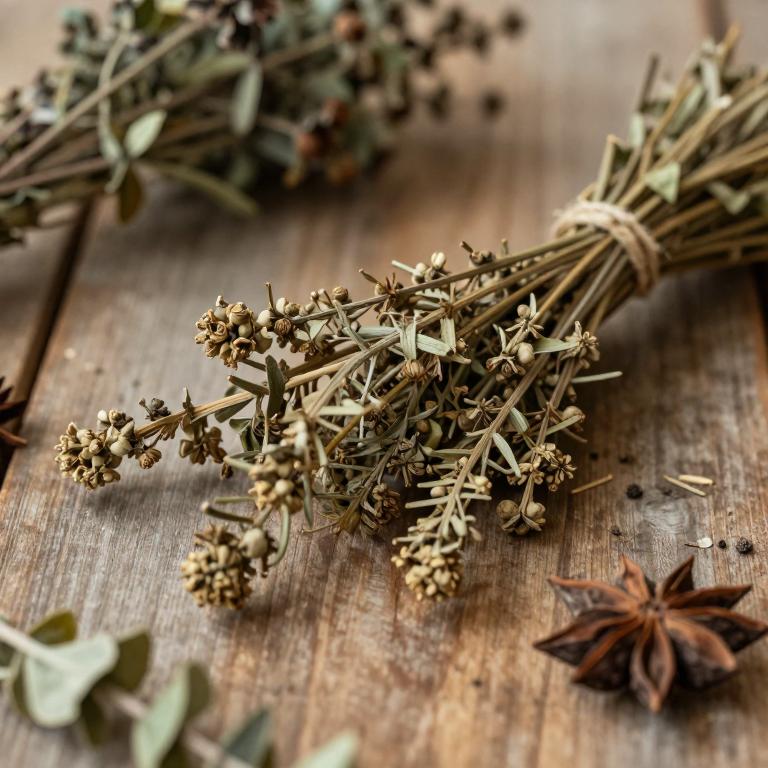
Names and Synonyms
Scientific Names
Accepted name
Vernonanthura brasilianaSynonyms
- Vernonia odoratissima
- Vernonia odoratissima var. caracasana
- Vernonia scabra
- Vernonia assans
- Baccharis brasiliana
- Vernonia scabra var. acuminata
- Cacalia brasiliana
- Vernonia odoratissima var. guianensis
- Conyza clethrifolia
- Conyza martii
- Vernonia brasiliana
Sources: Wikidata
Taxonomical Classification
This plant, known scientifically as Vernonanthura brasiliana, belongs to the kingdom Plantae and the phylum Streptophyta. It is classified under the class Equisetopsida and subclass Magnoliidae, falling within the order Asterales. Finally, it is a member of the family Asteraceae and the genus Vernonanthura.
| Rank | Classification |
|---|---|
| Kingdom | Plantae |
| Phylum | Streptophyta |
| Class | Equisetopsida |
| Subclass | Magnoliidae |
| Order | Asterales |
| Family | Asteraceae |
| Genus | Vernonanthura |
Sources: The World Checklist of Vascular Plants (WCVP)
Distribution
This plant exhibits a wide distribution across several regions in the Neotropics. In Central America, its presence is specifically noted in Nicaragua. Moving into Northern South America, the species can be found throughout French Guiana. It is also widely distributed across the Guiana Shield, including Guyana and Suriname. Finally, its range extends into the northern territories of Venezuela.
| Region | Area |
|---|---|
| Central America | Nicaragua |
| Northern South America | French Guiana |
| Northern South America | Guyana |
| Northern South America | Suriname |
| Northern South America | Venezuela |
| Western South America | Bolivia |
| Western South America | Colombia |
| Western South America | Peru |
| Brazil | Brazil West-Central |
| Brazil | Brazil Northeast |
Sources: The World Checklist of Vascular Plants (WCVP)
Botanical Identification
Ecology
The ecology of Vernonanthura brasiliana is characterized by its ability to thrive across a diverse array of Brazilian biomes, including the Caatinga (strictu sensu), Campinarana, Campo Rupestre, and Cerrado (latu sensu). This species exhibits a broad altitudinal distribution, ranging from sea level up to a maximum elevation of 1700 m AMSL, with a mean elevational range centered around 400 m AMSL. This wide environmental tolerance allows it to occupy various ecological niches, from low-lying semi-arid shrublands to higher-altitude rocky fields and savanna ecosystems.
- Elevational range max:
- 1700 m AMSL
- Elevational range mean:
- 400 m AMSL
- Elevational range min:
- 0 m AMSL
- Habitat :
- Caatinga (stricto sensu), Campinarana, Campo Rupestre, Cerrado (lato sensu)
Life history
The life history of Vernonanthura brasiliana is characterized by a perennial lifecycle, allowing the species to persist in its environment over multiple growing seasons. As a phanerophyte, its regenerative buds are located high above the ground on woody stems, a structural trait that defines its life form in both its nanophanerophyte and phanerophyte classifications. This growth strategy enables the plant to maintain a significant vertical presence, navigating its ecological niche through sustained vegetative development and long-term survival.
- Life form :
- phanerophyte
- Lifecycle :
- perennial
Morphology
The morphology of Vernonanthura brasiliana is characterized by a woody growth form, specifically categorized as a shrub. It is a self-supporting plant that does not exhibit climbing habits such as being a liana or vine, nor does it function as an obligatory or facultative climber. As a terrestrial species, it lacks aquatic or semiaquatic adaptations and does not function as an epiphyte, whether as a holoepiphyte, hemiepiphyte, or any other epiphytic form. Furthermore, the plant is an independent organism, showing no parasitic tendencies, and maintains a strictly terrestrial existence rather than occupying niches as a parasite or an epiphyte.
- Aquatic :
- terrestrial
- Climber :
- self-supporting
- Epiphyte :
- terrestrial
- Growth form :
- shrub
- Parasite :
- independent
- Woodiness :
- woody
Reproduction
The reproduction of Vernonanthura brasiliana is characterized by the production of specialized seeds that play a crucial role in its dispersal and establishment within its habitat. Based on quantitative reproductive data, the species exhibits a highly uniform seed morphology in terms of weight. The seed mass is remarkably consistent, with a mean mass of 4e-05 g. This uniformity is reflected in the extreme narrowness of its weight distribution, as both the maximum and minimum recorded seed masses are also 4e-05 g. Such minute and consistent seed mass suggests a reproductive strategy focused on the production of a high volume of lightweight seeds, which likely facilitates efficient dispersal mechanisms essential for the colonization of new environments.
- Seed mass mean:
- 4e-05 g
Sources: Global Inventory of Floras and Traits (GIFT)
Plant Parts
Vernonanthura brasiliana has 1 reported plant parts identified across 1 scientific publications and several other databases that are studied for medicinal purposes. The most consistently reported plant part include stem.
| Plant part | Supporting sources | Consensus |
|---|---|---|
| Stem | 1 supporting sources | ★☆☆☆☆ |
Stem
- Journal of ethnopharmacology
Chemicals
Vernonanthura brasiliana has 3 reported phytochemicals identified across 1 scientific publications and several other databases. The most consistently reported chemicals include Flavonoids, apigenin, luteolin.
| Chemical | Supporting sources | Consensus |
|---|---|---|
| Flavonoids | 1 supporting sources | ★☆☆☆☆ |
| apigenin | 1 supporting sources | ★☆☆☆☆ |
| luteolin | 1 supporting sources | ★☆☆☆☆ |
Flavonoids
- Metabolites
apigenin
- Metabolites
luteolin
- Metabolites
Conditions
Vernonanthura brasiliana has 1 reported investigations on conditions identified across 1 scientific publications and several other databases. The most consistently reported conditions include leishmaniasis.
| Condition | Supporting sources | Consensus |
|---|---|---|
| Leishmaniasis | 1 supporting sources | ★☆☆☆☆ |
Leishmaniasis
- Metabolites
Preparations
Vernonanthura brasiliana has 3 reported preparations identified across 1 scientific publications and several other databases. The most consistently reported preparations include crude extracts, V. brasiliana leaf extract, ethanolic extracts of stem from Mikania cordifolia and Vernonia brasiliana.
| Preparation | Supporting sources | Consensus |
|---|---|---|
| Crude extracts | 2 supporting sources | ★☆☆☆☆ |
| V. brasiliana leaf extract | 1 supporting sources | ★☆☆☆☆ |
| Ethanolic extracts of stem from mikania cordifolia and vernonia brasiliana | 1 supporting sources | ★☆☆☆☆ |
Crude extracts
- Brazilian journal of medical and biological research = Revista brasileira de pesquisas medicas e biologicas
- Memorias do Instituto Oswaldo Cruz
V. brasiliana leaf extract
- Metabolites
Ethanolic extracts of stem from mikania cordifolia and vernonia brasiliana
- Journal of ethnopharmacology