hoary vervain
Verbena stricta · Accepted scientific name
Scientific literature: Very Sparse (4 studies) · ★☆☆☆☆
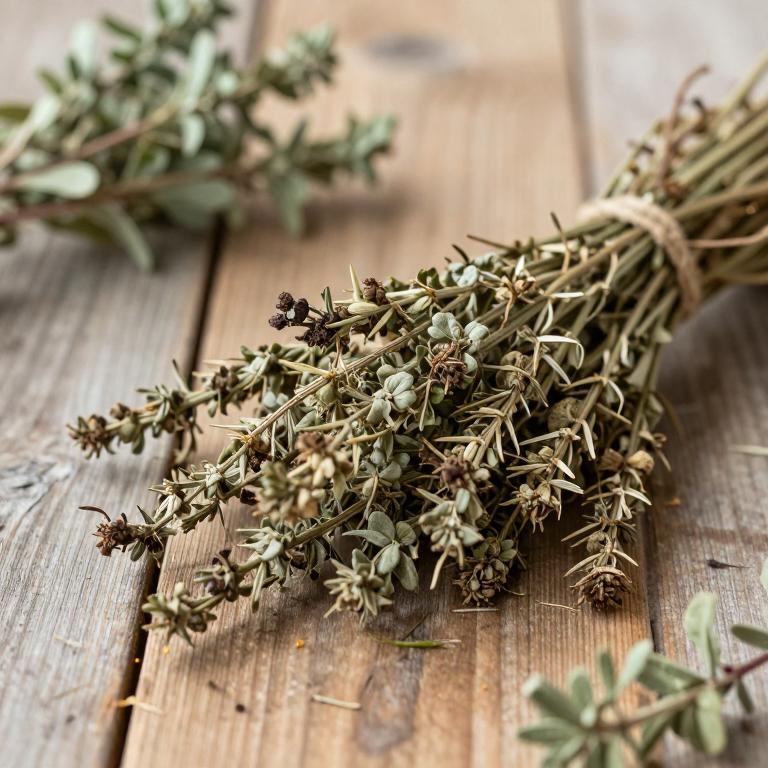
Hoary vervain, scientifically known as Verbena stricta, is a hardy, perennial herb native to North America. Characterized by its upright stems and clusters of small, purple flowers, this plant is valued in traditional herbalism for its restorative properties, often used to support digestive health and calm the nervous system.
Names and Synonyms
Common Names
- hoary vervain
- mullein-leaved vervain
- woolly vervain
- woolly verbena
Scientific Names
Accepted name
Verbena strictaSynonyms
- Verbena rigens
- Verbena stricta f. albiflora
- Verbena stricta f. roseiflora
- Verbena alopecurus
Regional and Traditional Names
French:
- verveine veloutée
Sources: Wikidata, Catalogue of Life
Taxonomical Classification
This plant, known scientifically as Verbena stricta, belongs to the kingdom Plantae and the phylum Streptophyta. Within the class Equisetopsida and subclass Magnoliidae, it is classified under the order Lamiales and the family Verbenaceae. Its taxonomic journey concludes within the genus Verbena.
| Rank | Classification |
|---|---|
| Kingdom | Plantae |
| Phylum | Streptophyta |
| Class | Equisetopsida |
| Subclass | Magnoliidae |
| Order | Lamiales |
| Family | Verbenaceae |
| Genus | Verbena |
Sources: The World Checklist of Vascular Plants (WCVP)
Distribution
This plant exhibits a wide geographical range that spans across several distinct regions of North America and Asia. In Asia, its presence is specifically noted within the Manchuria region of China. Moving across the continent to Eastern Canada, it can be found growing in both Ontario and Québec. The distribution also extends into the Northwestern United States, covering the states of Colorado and Montana. Together, these locations highlight the diverse habitats where the species thrives.
| Region | Area |
|---|---|
| China | Manchuria |
| Eastern Canada | Ontario |
| Eastern Canada | Québec |
| Northwestern U.S.A. | Colorado |
| Northwestern U.S.A. | Montana |
| Northwestern U.S.A. | Washington |
| Northwestern U.S.A. | Wyoming |
| North-Central U.S.A. | Illinois |
| North-Central U.S.A. | Iowa |
| North-Central U.S.A. | Kansas |
Sources: The World Checklist of Vascular Plants (WCVP)
Botanical Identification
Life history
The life history of Verbena stricta is characterized by a variable lifecycle, as it can function as an annual, biennial, or perennial depending on environmental conditions and regional climates. As a plant, it exhibits a hemicryptophyte life form, meaning its perennating buds are located at the soil surface, protected by leaf litter or the upper layer of the substrate during unfavorable seasons. This biological strategy allows the species to persist through varying seasonal shifts, ensuring survival and subsequent regrowth through its protected buds.
- Life form :
- hemicryptophyte
- Lifecycle :
- annual
Morphology
The morphology of Verbena stricta is characterized by a growth form categorized as both a herb and a forb, exhibiting a non-woody structure throughout its development. This species is a self-supporting plant, lacking any climbing, vine, or liana tendencies, and functions as an independent organism rather than a parasite. It is a terrestrial species, neither aquatic nor semiaquatic, and does not exhibit epiphytic behavior, maintaining its presence strictly within soil-based environments.
- Aquatic :
- terrestrial
- Climber :
- self-supporting
- Epiphyte :
- terrestrial
- Growth form :
- herb
- Growth form :
- forb
- Parasite :
- independent
- Woodiness :
- non-woody
Physiology
The physiology of Verbena stricta is characterized by a metabolic framework governed by the C3 photosynthetic pathway, where carbon fixation occurs directly through the Calvin cycle within the mesophyll cells without the specialized separation of processes seen in C4 or CAM species. This C3 mechanism involves the primary fixation of atmospheric carbon dioxide by the enzyme ribulose-1,5-bisphosphate carboxylase/oxygenase (RuBisCO), resulting in the immediate production of three-carbon molecules. To support this metabolic activity, the plant utilizes an efficient system of stomatal regulation to balance gas exchange with transpiration rates, ensuring sufficient CO2 uptake while mitigating water loss in its typical habitats. The energy transduction process relies on a standard light-dependent reaction involving chlorophyll-based photosystems to generate ATP and NADPH, which subsequently drive the enzymatic steps of the dark reactions to synthesize carbohydrates essential for its structural growth and reproductive development.
- Photosynthetic pathway :
- C3
Reproduction
The reproduction of Verbena stricta is characterized by a specific flowering window and the production of minute seeds. The flowering period typically begins in August and extends through September, though the timing can be variable throughout the year. During this reproductive phase, the plant produces seeds with a highly specialized mass profile; the average seed mass is approximately 0.001014167 g. Individual seed sizes vary within a narrow range, with the minimum recorded seed mass being 0.00075 g and the maximum reaching up to 0.0016 g.
- Flowering time :
- Aug
- Flowering time :
- Sep
- Seed mass max:
- 0.0016 g
- Seed mass mean:
- 0.001014167 g
- Seed mass min:
- 0.00075 g
Sources: Global Inventory of Floras and Traits (GIFT)
Chemicals
Verbena stricta has 4 reported phytochemicals identified across 0 scientific publications and several other databases. The most consistently reported chemicals include Delphinidin, Delphinidin 3-O-glucoside, Malvidin, delphinidin-3-O-galactoside.
| Chemical | Supporting sources | Consensus |
|---|---|---|
| Delphinidin | 1 supporting sources | ★☆☆☆☆ |
| Delphinidin 3-O-glucoside | 1 supporting sources | ★☆☆☆☆ |
| Malvidin | 1 supporting sources | ★☆☆☆☆ |
| delphinidin-3-O-galactoside | 1 supporting sources | ★☆☆☆☆ |
Delphinidin
- Genes
Delphinidin 3-O-glucoside
- Genes
Malvidin
- Genes
delphinidin-3-O-galactoside
- Genes