showy mullein
Verbascum speciosum · Accepted scientific name
Scientific literature: Very Sparse (7 studies) · ★☆☆☆☆
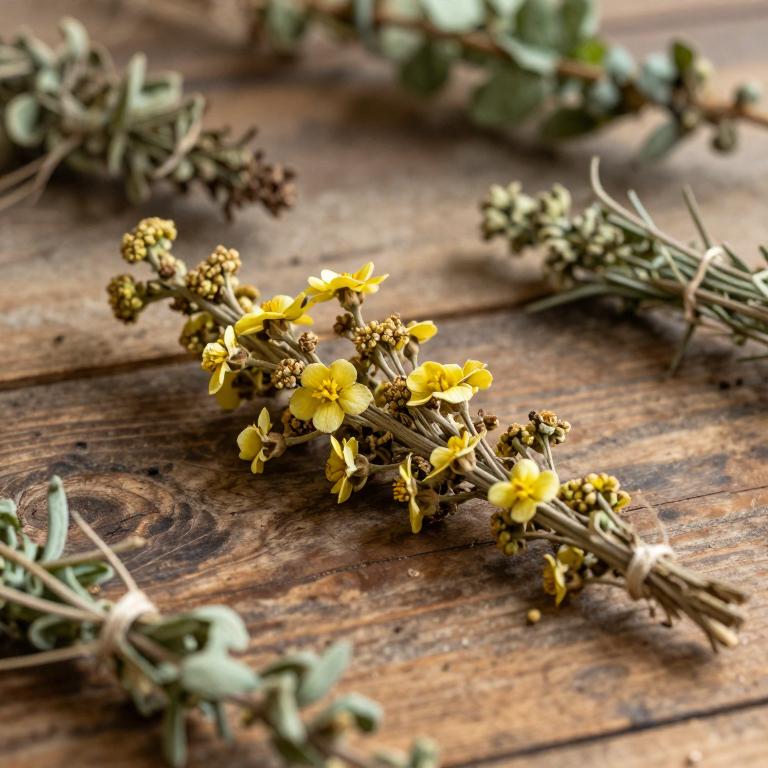
Showy mullein, scientifically known as Verbascum speciosum, is a striking perennial celebrated for its towering flower spikes and velvety foliage. Renowned in traditional herbalism, this plant offers various therapeutic properties. Its unique botanical features and medicinal potential make it a fascinating subject for both gardeners and holistic practitioners alike.
- Family
- Scrophulariaceae
- Native range
- Europe
- Parts used
- Flower
- Common names
- Hungarian Mullein
- Scientific synonyms
- Not available
Names and Synonyms
Common Names
- Hungarian Mullein
Scientific Names
Accepted name
Verbascum speciosumRegional and Traditional Names
German:
- Pracht-Königskerze
- Prächtige Königskerze
- Pracht-Koenigskerze
French:
- Molene splendide
Sources: Wikidata, Catalogue of Life
Taxonomical Classification
This plant, known scientifically as Verbascum speciosum, belongs to the kingdom Plantae and the phylum Streptophyta. Within the class Equisetopsida and subclass Magnoliidae, it is categorized under the order Lamiales and the family Scrophulariaceae. Its specific taxonomic placement is defined by the genus Verbascum.
| Rank | Classification |
|---|---|
| Kingdom | Plantae |
| Phylum | Streptophyta |
| Class | Equisetopsida |
| Subclass | Magnoliidae |
| Order | Lamiales |
| Family | Scrophulariaceae |
| Genus | Verbascum |
Sources: The World Checklist of Vascular Plants (WCVP)
Distribution
This plant exhibits a specific distribution across several regions of the European continent. In Northern Europe, its presence can be documented within Great Britain. The species is also widely spread throughout Middle Europe, where it is found in Austria. Additionally, it inhabits the territories of Czechia-Slovakia and Germany. Finally, its geographical range extends further into the Middle European landscape of Hungary.
| Region | Area |
|---|---|
| Northern Europe | Great Britain |
| Middle Europe | Austria |
| Middle Europe | Czechia-Slovakia |
| Middle Europe | Germany |
| Middle Europe | Hungary |
| Southwestern Europe | France |
| Southeastern Europe | Albania |
| Southeastern Europe | Bulgaria |
| Southeastern Europe | Greece |
| Southeastern Europe | Romania |
Sources: The World Checklist of Vascular Plants (WCVP)
Botanical Identification
Life history
The life history of Verbascum speciosum is characterized by a biennial lifecycle, meaning it typically completes its developmental stages over a period of two years, often spending the first year establishing a vegetative rosette before transitioning to reproductive maturity in the second year. Structurally, the species is classified as a hemicryptophyte, a life form in which the perennating buds are located at or just below the soil surface, protected by leaf litter or the ground layer during unfavorable conditions. This hemicryptophytic habit allows the plant to persist through seasonal changes by maintaining its regenerative potential at the soil level, facilitating its survival and subsequent flowering within its ecological niche.
- Life form :
- hemicryptophyte
- Lifecycle :
- biennial
Morphology
The morphology of Verbascum speciosum is characterized by its growth form as a non-woody herb and forb, functioning as a self-supporting plant that does not require climbing mechanisms. It is an independent species, not acting as a parasite, and maintains a terrestrial existence rather than being aquatic, semiaquatic, or epiphytic. The plant typically reaches a height ranging from a minimum of 0.7 m to a maximum of 2.5 m.
- Aquatic :
- terrestrial
- Climber :
- self-supporting
- Epiphyte :
- terrestrial
- Growth form :
- herb
- Growth form :
- forb
- Parasite :
- independent
- Plant height max:
- 2.5 m
- Plant height min:
- 0.7 m
- Woodiness :
- non-woody
Physiology
The physiology of Verbascum speciosum is characterized by a robust metabolic framework optimized for its specific ecological niche, most notably through its utilization of the C3 photosynthetic pathway. In this process, carbon dioxide is fixed directly from the atmosphere into a three-carbon compound via the enzyme RuBisCO during the Calvin cycle, a mechanism that dictates the plant's water-use efficiency and gas exchange patterns. This C3 pathway governs the energy assimilation processes that drive its vegetative growth and the subsequent synthesis of secondary metabolites. The plant's physiological efficiency is further supported by its structural adaptations, which manage transpiration rates and nutrient uptake to maintain cellular homeostasis. Through the coordination of its C3 metabolism with specialized vascular transport, Verbascum speciosum effectively regulates its internal osmotic potential and carbon partitioning, ensuring sustained metabolic activity throughout its developmental stages.
- Photosynthetic pathway :
- C3
Reproduction
The reproduction of Verbascum speciosum is characterized by a specific seasonal flowering window and the production of minute seeds. The flowering period typically commences in June and concludes in July, marking the peak interval for pollination and reproductive activity. Following successful fertilization, the plant produces seeds with a highly specific mass profile; the average seed mass is approximately 8.5e-05 g, with individual seed weights ranging from a minimum of 7e-05 g to a maximum of 9e-05 g.
- Flowering time :
- Jun
- Flowering time :
- Jul
- Seed mass max:
- 9e-05 g
- Seed mass mean:
- 8.5e-05 g
- Seed mass min:
- 7e-05 g
Sources: Global Inventory of Floras and Traits (GIFT)
Plant Parts
Verbascum speciosum has 1 reported plant parts identified across 1 scientific publications and several other databases that are studied for medicinal purposes. The most consistently reported plant part include flower.
| Plant part | Supporting sources | Consensus |
|---|---|---|
| Flower | 1 supporting sources | ★☆☆☆☆ |
Flower
- Journal of pharmacopuncture
Chemicals
Verbascum speciosum has 1 reported phytochemicals identified across 1 scientific publications and several other databases. The most consistently reported chemicals include Flavonoid.
| Chemical | Supporting sources | Consensus |
|---|---|---|
| Flavonoid | 1 supporting sources | ★☆☆☆☆ |
Flavonoid
- Journal of pharmacopuncture
Activities
Verbascum speciosum has 1 reported activities identified across 1 scientific publications and several other databases. The most consistently reported activities include Antibacterial.
| Activity | Supporting sources | Consensus |
|---|---|---|
| Antibacterial | 1 supporting sources | ★☆☆☆☆ |
Antibacterial
- Journal of pharmacopuncture
Conditions
Verbascum speciosum has 2 reported investigations on conditions identified across 1 scientific publications and several other databases. The most consistently reported conditions include Candida albicans, dental caries.
| Condition | Supporting sources | Consensus |
|---|---|---|
| Candida albicans | 1 supporting sources | ★☆☆☆☆ |
| Dental caries | 1 supporting sources | ★☆☆☆☆ |
Candida albicans
- Chinese journal of integrative medicine
Dental caries
- Journal of pharmacopuncture
Preparations
Verbascum speciosum has 4 reported preparations identified across 1 scientific publications and several other databases. The most consistently reported preparations include Hydro-alcoholic extracts from flowers, Hydro-alcoholic extracts from total aerial parts of the plant, extracts, sub-fractions.
| Preparation | Supporting sources | Consensus |
|---|---|---|
| Hydro-alcoholic extracts from flowers | 1 supporting sources | ★☆☆☆☆ |
| Hydro-alcoholic extracts from total aerial parts of the plant | 1 supporting sources | ★☆☆☆☆ |
| Extracts | 1 supporting sources | ★☆☆☆☆ |
| Sub-fractions | 1 supporting sources | ★☆☆☆☆ |
Hydro-alcoholic extracts from flowers
- Journal of pharmacopuncture
Hydro-alcoholic extracts from total aerial parts of the plant
- Journal of pharmacopuncture
Extracts
- Chinese journal of integrative medicine
Sub-fractions
- Chinese journal of integrative medicine