qetetina
Verbascum sinaiticum · Accepted scientific name
Scientific literature: Very Sparse (18 studies) · ★☆☆☆☆
Qetetina, scientifically known as Verbascum sinaiticum, is a resilient medicinal shrub native to the rugged landscapes of the Sinai Peninsula. Renowned in traditional folk medicine, this plant is highly valued for its therapeutic properties, particularly in treating respiratory ailments and inflammatory conditions through its potent bioactive compounds.
- Family
- Scrophulariaceae
- Native range
- Africa
- Parts used
- Leaf · Flower
- Common names
- Qetetina
- Scientific synonyms
- Verbascum Nubicum · Verbascum Fasciculatum · 3 more
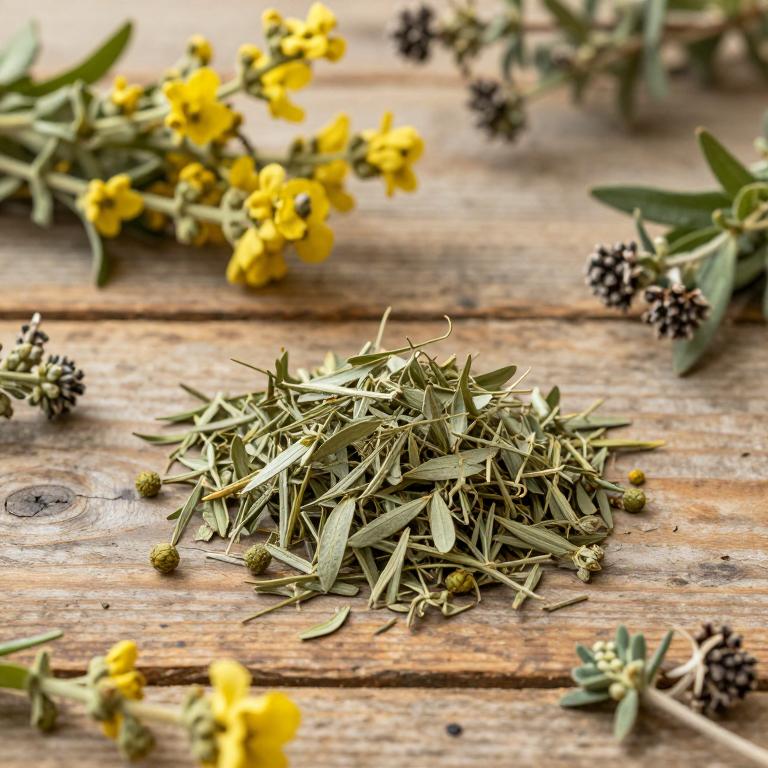
Names and Synonyms
Common Names
- qetetina
Scientific Names
Accepted name
Verbascum sinaiticumSynonyms
- Verbascum nubicum
- Verbascum fasciculatum
- Verbascum barradense
- Verbascum somaliense
- Verbascum ternacha
Sources: Wikidata, Catalogue of Life
Taxonomical Classification
This plant belongs to the kingdom Plantae and the phylum Streptophyta, falling under the class Equisetopsida and subclass Magnoliidae. Within the order Lamiales, it is classified under the family Scrophulariaceae. Its taxonomic hierarchy concludes with the genus Verbascum, specifically identified as the species Verbascum sinaiticum.
| Rank | Classification |
|---|---|
| Kingdom | Plantae |
| Phylum | Streptophyta |
| Class | Equisetopsida |
| Subclass | Magnoliidae |
| Order | Lamiales |
| Family | Scrophulariaceae |
| Genus | Verbascum |
Sources: The World Checklist of Vascular Plants (WCVP)
Distribution
This plant exhibits a specific distribution pattern concentrated within the tropical regions of East and Northeast Africa. Its range begins in Northeast Tropical Africa, where it can be found in Eritrea and Ethiopia. The species also extends across the Horn of Africa to include Somalia. Furthermore, its presence is noted within the territories of Sudan and South Sudan. Finally, the geographical reach of the plant continues into East Tropical Africa, specifically within Kenya.
| Region | Area |
|---|---|
| Northeast Tropical Africa | Eritrea |
| Northeast Tropical Africa | Ethiopia |
| Northeast Tropical Africa | Somalia |
| Northeast Tropical Africa | Sudan-South Sudan |
| East Tropical Africa | Kenya |
| Western Asia | Afghanistan |
| Western Asia | Iran |
| Western Asia | Iraq |
| Western Asia | Lebanon-Syria |
| Western Asia | Palestine |
Sources: The World Checklist of Vascular Plants (WCVP)
Botanical Identification
Life history
The life history of Verbascum sinaiticum is characterized by its nature as a perennial species, allowing it to persist through multiple growing seasons within its natural habitat. As a perennial, the plant undergoes a complex developmental cycle that enables it to establish a robust presence in its environment, often involving a period of vegetative growth before transitioning into its reproductive phase. This lifecycle supports its ability to survive varying environmental conditions, ensuring long-term survival and repeated flowering cycles that contribute to the stability of its population.
- Lifecycle :
- perennial
Morphology
The morphology of Verbascum sinaiticum is characterized by its growth form as a non-woody herb, functioning as a self-supporting plant rather than a climber, liana, or vine. It maintains an independent lifestyle, functioning as a non-parasitic species that does not rely on other plants for nutrients. As a terrestrial organism, it is not aquatic or semiaquatic, nor does it exhibit epiphytic behavior, instead establishing itself firmly in soil environments. Its physical structure is defined by its herbaceous nature, lacking any significant woodiness throughout its development.
- Aquatic :
- terrestrial
- Climber :
- self-supporting
- Epiphyte :
- terrestrial
- Growth form :
- herb
- Parasite :
- independent
- Woodiness :
- non-woody
Reproduction
The reproduction of Verbascum sinaiticum is characterized by the production of minute seeds that play a critical role in its life cycle and dispersal mechanisms. These seeds exhibit extreme uniformity in their physical properties, with a recorded seed mass mean of 0.00012 g. This consistency is reflected in the maximum and minimum recorded values, which both remain constant at 0.00012 g, indicating a highly standardized seed size across the sampled population. Such minimal mass suggests that the plant relies on high-volume seed production to ensure successful recruitment in its natural habitat.
- Seed mass mean:
- 0.00012 g
Sources: Global Inventory of Floras and Traits (GIFT)
Plant Parts
Verbascum sinaiticum has 3 reported plant parts identified across 4 scientific publications and several other databases that are studied for medicinal purposes. The most consistently reported plant part include leaf, flower, root.
| Plant part | Supporting sources | Consensus |
|---|---|---|
| Leaf | 2 supporting sources | ★☆☆☆☆ |
| Flower | 1 supporting sources | ★☆☆☆☆ |
| Root | 1 supporting sources | ★☆☆☆☆ |
Leaf
- Foods (Basel, Switzerland)
- Evidence-based complementary and alternative medicine : eCAM
Flower
- Molecules (Basel, Switzerland)
Root
- Heliyon
Chemicals
Verbascum sinaiticum has 7 reported phytochemicals identified across 4 scientific publications and several other databases. The most consistently reported chemicals include CHLOROGENIC ACID, Flavonoids, Gallic acid, Glycosides, RUTIN.
| Chemical | Supporting sources | Consensus |
|---|---|---|
| CHLOROGENIC ACID | 1 supporting sources | ★☆☆☆☆ |
| Flavonoids | 1 supporting sources | ★☆☆☆☆ |
| Gallic acid | 1 supporting sources | ★☆☆☆☆ |
| Glycosides | 1 supporting sources | ★☆☆☆☆ |
| RUTIN | 1 supporting sources | ★☆☆☆☆ |
| Saponins | 1 supporting sources | ★☆☆☆☆ |
| vanillin | 1 supporting sources | ★☆☆☆☆ |
CHLOROGENIC ACID
- Scientific reports
Flavonoids
- Foods (Basel, Switzerland)
Gallic acid
- Scientific reports
Glycosides
- Foods (Basel, Switzerland)
RUTIN
- Scientific reports
Saponins
- Foods (Basel, Switzerland)
vanillin
- Scientific reports
Conditions
Verbascum sinaiticum has 6 reported investigations on conditions identified across 4 scientific publications and several other databases. The most consistently reported conditions include blood pressure, cancer, diarrhea, liver diseases, rabies.
| Condition | Supporting sources | Consensus |
|---|---|---|
| Blood pressure | 1 supporting sources | ★☆☆☆☆ |
| Cancer | 1 supporting sources | ★☆☆☆☆ |
| Diarrhea | 1 supporting sources | ★☆☆☆☆ |
| Liver diseases | 1 supporting sources | ★☆☆☆☆ |
| Rabies | 1 supporting sources | ★☆☆☆☆ |
| Wounds | 1 supporting sources | ★☆☆☆☆ |
Blood pressure
- BioMed research international
Cancer
- Scientia pharmaceutica
Diarrhea
- Heliyon
Liver diseases
- Pharmaceutical biology
Rabies
- Journal of ethnobiology and ethnomedicine
Wounds
- Evidence-based complementary and alternative medicine : eCAM
Preparations
Verbascum sinaiticum has 4 reported preparations identified across 4 scientific publications and several other databases. The most consistently reported preparations include 80% Methanol Leaf Extract, Hydroalcoholic extracts, Plant extracts, Verbascum sinaiticum extract.
| Preparation | Supporting sources | Consensus |
|---|---|---|
| 80% methanol leaf extract | 1 supporting sources | ★☆☆☆☆ |
| Hydroalcoholic extracts | 1 supporting sources | ★☆☆☆☆ |
| Plant extracts | 1 supporting sources | ★☆☆☆☆ |
| Verbascum sinaiticum extract | 1 supporting sources | ★☆☆☆☆ |
80% methanol leaf extract
- Evidence-based complementary and alternative medicine : eCAM
Hydroalcoholic extracts
- Journal of ethnopharmacology
Plant extracts
- Evidence-based complementary and alternative medicine : eCAM
Verbascum sinaiticum extract
- Foods (Basel, Switzerland)