Verbascum pinnatifidum
Verbascum pinnatifidum · Accepted scientific name
Scientific literature: Very Sparse (4 studies) · ★☆☆☆☆
, scientifically known as Verbascum pinnatifidum, is a distinctive perennial herb native to North American woodlands. Often called cutleaf mullein, this plant is characterized by its deeply lobed, fern-like foliage. Historically valued in traditional medicine, it is studied for its potential therapeutic properties and unique botanical contributions to ecosystems.
- Family
- Scrophulariaceae
- Native range
- Europe
- Parts used
- Leaf
- Common names
- Not available
- Scientific synonyms
- Verbascum Bipinnatifidum · Verbascum Ceratophyllum
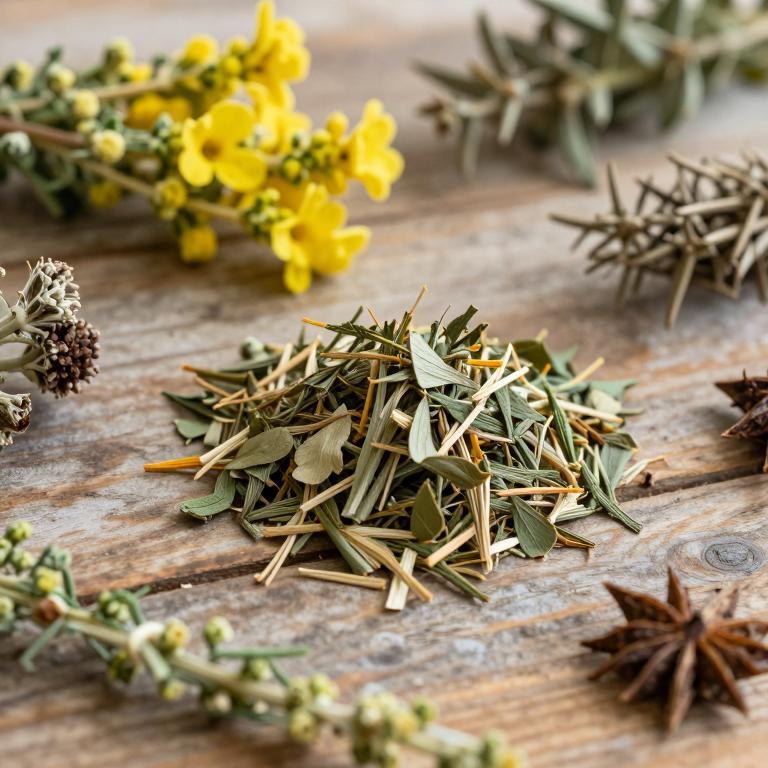
Names and Synonyms
Scientific Names
Accepted name
Verbascum pinnatifidumSynonyms
- Verbascum bipinnatifidum
- Verbascum ceratophyllum
Sources: Wikidata, Catalogue of Life
Taxonomical Classification
This plant, Verbascum pinnatifidum, belongs to the kingdom Plantae and the phylum Streptophyta. Within the class Equisetopsida and subclass Magnoliidae, it is classified under the order Lamiales and the family Scrophulariaceae. Its taxonomic hierarchy concludes with the genus Verbascum.
| Rank | Classification |
|---|---|
| Kingdom | Plantae |
| Phylum | Streptophyta |
| Class | Equisetopsida |
| Subclass | Magnoliidae |
| Order | Lamiales |
| Family | Scrophulariaceae |
| Genus | Verbascum |
Sources: The World Checklist of Vascular Plants (WCVP)
Distribution
This plant exhibits a broad geographical distribution across several key regions of Eurasia. In Southeastern Europe, its presence is noted in Greece and throughout the European portion of Türkiye. Moving eastward, the species is found in Eastern Europe, specifically within the Crimea region. Its range extends into the Caucasus mountains, where it inhabits the North Caucasus area. Finally, the plant is also widely distributed across the Transcaucasus region.
| Region | Area |
|---|---|
| Southeastern Europe | Greece |
| Southeastern Europe | Türkiye-in-Europe |
| Eastern Europe | Krym |
| Caucasus | North Caucasus |
| Caucasus | Transcaucasus |
| Western Asia | East Aegean Is. |
| Western Asia | Türkiye |
Sources: The World Checklist of Vascular Plants (WCVP)
Botanical Identification
Ecology
The ecology of Verbascum pinnatifidum is defined by its adaptation to specialized coastal environments, where it thrives primarily in substrates composed of sand, near the sea, and along various types of shores. This plant occupies niche coastal zones that are often subject to high salinity, wind exposure, and shifting soil dynamics, requiring specific physiological tolerances to survive in such volatile habitats. By colonizing these sandy shorelines, it plays a role in the stabilization of coastal fringes and interacts with the unique microclimates created by the interface of marine and terrestrial ecosystems.
- Habitat :
- sand, sea, shores
Life history
The life history of Verbascum pinnatifidum is characterized by a perennial lifecycle, allowing the plant to persist through multiple growing seasons. In terms of its structural growth strategy and survival mechanism, it is classified as a hemicryptophyte, meaning its perennating buds are located at or just below the soil surface, protected by leaf litter or soil during unfavorable conditions. This life form ensures its ability to regenerate annually from these protected buds, establishing a stable presence within its ecological niche.
- Life form :
- hemicryptophyte
- Lifecycle :
- annual
Morphology
The morphology of Verbascum pinnatifidum is characterized by its growth as a non-woody herb, typically manifesting in a growth form that is entirely herbaceous rather than woody. This plant exhibits a relatively low stature, with a plant height ranging from a minimum of 0.3 m to a maximum of 0.5 m. In terms of its ecological habitat and moisture requirements, the species displays a versatile distribution across aquatic, semiaquatic, and terrestrial environments, though it is primarily classified as terrestrial.
- Aquatic :
- terrestrial
- Growth form :
- herb
- Plant height max:
- 0.5 m
- Plant height min:
- 0.3 m
- Woodiness :
- non-woody
Reproduction
The reproduction of Verbascum pinnatifidum is characterized by a specific seasonal flowering window that facilitates its reproductive cycle. The flowering process begins in June and concludes within the same month, resulting in a concentrated period of floral activity. This brief but synchronized timing in June is essential for the plant's reproductive success, ensuring that the flowering stage is completed within this specific summer timeframe.
- Flowering time :
- Jun
Sources: Global Inventory of Floras and Traits (GIFT)
Plant Parts
Verbascum pinnatifidum has 1 reported plant parts identified across 1 scientific publications and several other databases that are studied for medicinal purposes. The most consistently reported plant part include leaf.
| Plant part | Supporting sources | Consensus |
|---|---|---|
| Leaf | 1 supporting sources | ★☆☆☆☆ |
Leaf
- Frontiers in pharmacology
Chemicals
Verbascum pinnatifidum has 1 reported phytochemicals identified across 1 scientific publications and several other databases. The most consistently reported chemicals include Verbascoside.
| Chemical | Supporting sources | Consensus |
|---|---|---|
| Verbascoside | 1 supporting sources | ★☆☆☆☆ |
Verbascoside
- Nutrients
Activities
Verbascum pinnatifidum has 2 reported activities identified across 1 scientific publications and several other databases. The most consistently reported activities include Cytotoxic, Neuroprotective.
| Activity | Supporting sources | Consensus |
|---|---|---|
| Cytotoxic | 1 supporting sources | ★☆☆☆☆ |
| Neuroprotective | 1 supporting sources | ★☆☆☆☆ |
Cytotoxic
- Molecules (Basel, Switzerland)
Neuroprotective
- Nutrients
Preparations
Verbascum pinnatifidum has 4 reported preparations identified across 1 scientific publications and several other databases. The most consistently reported preparations include Hexane extracts, Verbascoside, hydroethanolic extracts, infusions.
| Preparation | Supporting sources | Consensus |
|---|---|---|
| Hexane extracts | 1 supporting sources | ★☆☆☆☆ |
| Verbascoside | 1 supporting sources | ★☆☆☆☆ |
| Hydroethanolic extracts | 1 supporting sources | ★☆☆☆☆ |
| Infusions | 1 supporting sources | ★☆☆☆☆ |
Hexane extracts
- Frontiers in pharmacology
Verbascoside
- Nutrients
Hydroethanolic extracts
- Molecules (Basel, Switzerland)
Infusions
- Molecules (Basel, Switzerland)