orange mullein
Verbascum phlomoides · Accepted scientific name
Scientific literature: Very Sparse (5 studies) · ★☆☆☆☆
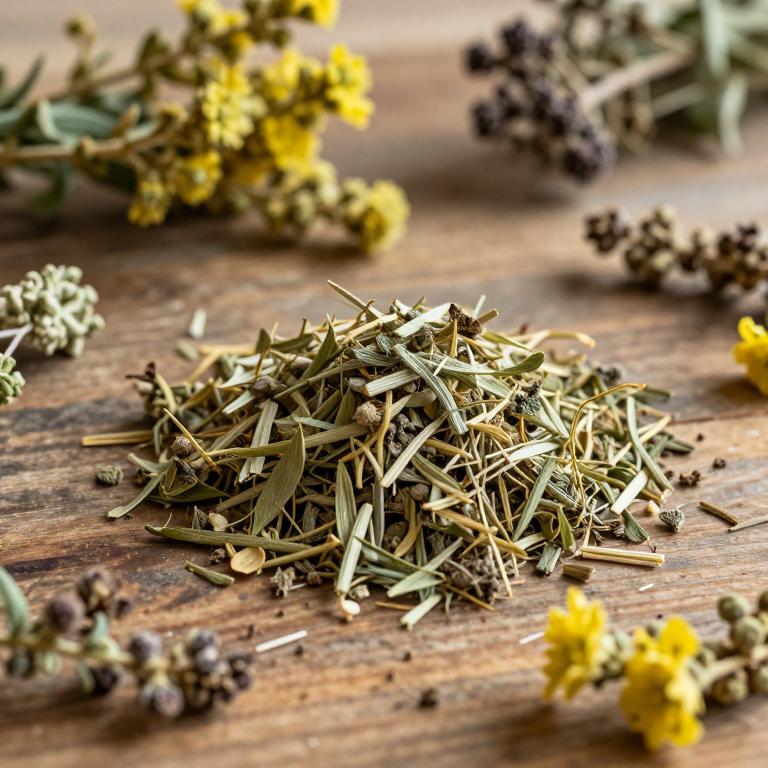
Orange mullein, scientifically known as Verbascum phlomoides, is a striking perennial celebrated for its towering spikes of vivid, trumpet-shaped flowers. Native to Mediterranean climates, this hardy plant is valued in traditional herbalism for its soothing properties, often used to support respiratory health and calm skin irritations naturally.
Names and Synonyms
Common Names
- clasping mullein
- clasping-leaved mullein
- orange mullein
- woolly mullein
- mullein
Scientific Names
Accepted name
Verbascum phlomoidesSynonyms
- Verbascum phlomoides var. condensatum
- Verbascum phlomoides var. australe
- Verbascum thapsiforme var. condensatum
- Verbascum phlomoides subsp. australe
- Verbascum phlomoides subsp. australe
- Verbascum phlomoides var. denudatum
- Flomosia condensata
- Verbascum phlomoides var. glabrescens
- Verbascum italicum
- Verbascum phlomoides var. flavum
- Flomosia nemarosa
- Verbascum phlomoides var. album
- Flomosia phlomoides
- Verbascum phlomoides var. kochii
- Verbascum phlomoides var. nemorosum
- Verbascum phlomoides var. decurrens
- Verbascum thapsus var. condensatum
- Verbascum rolletianum
- Verbascum phlomoides proles nemorosum
- Verbascum phlomoides var. ramosum
- Verbascum phlomoides var. condensatum
- Verbascum semidecurrens
- Verbascum phlomoides var. macranthum
- Verbascum viminale
- Verbascum phlomoides var. semidecurrens
- Verbascum tomentosum
- Verbascum rugulosum
- Verbascum slavonicum
- Verbascum australe
- Verbascum phlomoides f. eramosum
- Verbascum bulgaricum
- Verbascum calvescens
- Verbascum argyrostachyon
- Verbascum belasitzae
- Verbascum condensatum
- Verbascum formanekii
- Thapsus phlomoides
Regional and Traditional Names
Spanish:
- Gordolobo anaranjado
- Gordolobo bastardo
German:
- Windblumen-Königskerze
- Gewöhnlich-Königskerze
- Windblumen-Königskerze
- Filzige Koenigskerze
- Filziges Wollkraut
French:
- Molène faux Phlomis
- Molene faux Phlomis
- molène faux-phlomis
- cierge de Notre-Dame
- herbe de Saint-Fiacre
- molène fausse-phlomide
- molène faux-phlomis
- Molene rugueuse
Sources: Wikidata, Catalogue of Life
Taxonomical Classification
This plant belongs to the kingdom Plantae and the phylum Streptophyta, falling under the class Equisetopsida and subclass Magnoliidae. Within the order Lamiales, it is classified under the family Scrophulariaceae. Finally, its taxonomic identity is defined by the genus Verbascum.
| Rank | Classification |
|---|---|
| Kingdom | Plantae |
| Phylum | Streptophyta |
| Class | Equisetopsida |
| Subclass | Magnoliidae |
| Order | Lamiales |
| Family | Scrophulariaceae |
| Genus | Verbascum |
Sources: The World Checklist of Vascular Plants (WCVP)
Distribution
This plant exhibits a specific range across various parts of the European continent. In Northern Europe, its presence can be documented within Great Britain. Moving into Middle Europe, it is found in countries such as Austria and Belgium. The species also extends its reach through the territories of Czechia-Slovakia. Finally, its distribution continues through the landscape of Germany.
| Region | Area |
|---|---|
| Northern Europe | Great Britain |
| Middle Europe | Austria |
| Middle Europe | Belgium |
| Middle Europe | Czechia-Slovakia |
| Middle Europe | Germany |
| Middle Europe | Hungary |
| Middle Europe | Poland |
| Middle Europe | Switzerland |
| Southwestern Europe | Corse |
| Southwestern Europe | France |
Sources: The World Checklist of Vascular Plants (WCVP)
Botanical Identification
Ecology
The ecology of Verbascum phlomoides is characterized by its ability to thrive in diverse and often rugged terrains, demonstrating a broad adaptability to varying topographical and geological conditions. It is commonly found colonizing hills and mountains, where it often occupies open, sun-exposed spaces. The species exhibits a wide range of substrate preferences, frequently establishing itself in sandy soils and within the varied textures of steppe environments. Furthermore, it is integrated into shrubberies and can be found in proximity to rivers, suggesting a tolerance for different moisture gradients and soil compositions. This versatility allows the plant to persist across a mosaic of landscapes, from arid, open plains to more complex, vegetated hilly regions.
- Habitat :
- hills, mountains, rivers, sand, shrubberies, steppe
Life history
The life history of Verbascum phlomoides is characterized by a biennial lifecycle, typically completing its primary biological stages over a two-year period. As a hemicryptophyte, its perennating buds are located at or just below the soil surface, allowing it to withstand seasonal environmental changes. The plant exhibits a deciduous nature, shedding its foliage as part of its seasonal cycle.
- Deciduousness :
- deciduous
- Life form :
- hemicryptophyte
- Lifecycle :
- biennial
Morphology
The morphology of Verbascum phlomoides is characterized by its growth form as a non-woody herb and forb. This self-supporting plant typically reaches a height ranging from a minimum of 0.5 m to a maximum of 1.5 m, with an average height of approximately 0.988 m. As a terrestrial species, it is neither aquatic nor an epiphyte, growing independently in its environment without being a parasite. Its structure is non-woody and it does not exhibit climbing habits, functioning instead as a self-supporting herbaceous organism.
- Aquatic :
- terrestrial
- Climber :
- self-supporting
- Epiphyte :
- terrestrial
- Growth form :
- herb
- Growth form :
- forb
- Parasite :
- independent
- Plant height max:
- 1.5 m
- Plant height mean:
- 0.988 m
- Plant height min:
- 0.5 m
- Woodiness :
- non-woody
Physiology
The physiology of Verbascum phlomoides is characterized by a C3 photosynthetic pathway, which governs its carbon fixation processes and metabolic efficiency. The plant exhibits a non-carnivorous nutritional strategy, relying on traditional autotrophic methods for nutrient acquisition rather than capturing prey. Morphologically, its foliage is defined by a mean leaf size of 52.47 cm², supporting a specific leaf area (SLA) with a mean value of 180.8 cm²/g, which reflects its leaf thickness and the structural allocation of biomass relative to its surface area.
- Carnivory :
- non-carnivorous
- Leaf size mean:
- 52.47 cm²
- Photosynthetic pathway :
- C3
- Specific Leaf Area (SLA) mean:
- 180.8 cm²/g
Reproduction
The reproduction of Verbascum phlomoides is characterized by a sexual reproductive cycle, as asexual reproduction is notably absent. This mono-carpic species follows a specific flowering phenology, with the blooming period beginning in July and concluding in August. During this time, the plant employs a biotic pollination syndrome, specifically relying on insects to facilitate the transfer of pollen. The reproductive structures culminate in the development of a capsule fruit, which is characterized as a dehiscent type, meaning it opens at maturity to release its contents. The resulting seeds are extremely fine, with a mean seed mass of 0.000147 g and a range spanning from a minimum of 0.00014 g to a maximum of 0.00014 g. These seeds are dispersed via an anemochorous syndrome, utilizing wind as the primary mechanism for movement. Furthermore, the species is capable of self-fertilization, ensuring reproductive success within its ecological niche.
- Dehiscence :
- dehiscent
- Dispersal syndrome :
- anemochorous
- Flowering time :
- Jul
- Flowering time :
- Aug
- Fruit type :
- capsule
- Monocarpy :
- monocarp
- Pollination syndrome :
- insect
- Pollination syndrome :
- biotic
- Reproduction asexual :
- absent
- Seed mass max:
- 0.00014 g
- Seed mass mean:
- 0.000147 g
- Self fertilization :
- present
Sources: Global Inventory of Floras and Traits (GIFT)
Chemicals
Verbascum phlomoides has 2 reported phytochemicals identified across 0 scientific publications and several other databases. The most consistently reported chemicals include Tamarixetin 7-rutinoside, diosmin.
| Chemical | Supporting sources | Consensus |
|---|---|---|
| Tamarixetin 7-rutinoside | 1 supporting sources | ★☆☆☆☆ |
| diosmin | 1 supporting sources | ★☆☆☆☆ |
Tamarixetin 7-rutinoside
- Phytochemical analysis : PCA
diosmin
- Phytochemical analysis : PCA
Conditions
Verbascum phlomoides has 3 reported investigations on conditions identified across 0 scientific publications and several other databases. The most consistently reported conditions include asthma, inflammation, respiratory tract diseases.
| Condition | Supporting sources | Consensus |
|---|---|---|
| Asthma | 1 supporting sources | ★☆☆☆☆ |
| Inflammation | 1 supporting sources | ★☆☆☆☆ |
| Respiratory tract diseases | 1 supporting sources | ★☆☆☆☆ |
Asthma
- Phytochemical analysis : PCA
Inflammation
- Phytochemical analysis : PCA
Respiratory tract diseases
- Phytochemical analysis : PCA