Verbascum ovalifolium
Verbascum ovalifolium · Accepted scientific name
Scientific literature: Very Sparse (7 studies) · ★☆☆☆☆
Scientifically known as Verbascum ovalifolium, is a remarkable medicinal herb valued for its diverse therapeutic properties. Often found in rocky, mountainous terrains, this plant is rich in bioactive compounds. It is traditionally utilized to treat respiratory ailments, reduce inflammation, and support overall wellness through its potent natural extracts.
- Family
- Scrophulariaceae
- Native range
- Europe
- Parts used
- Not available
- Common names
- Not available
- Scientific synonyms
- Not available
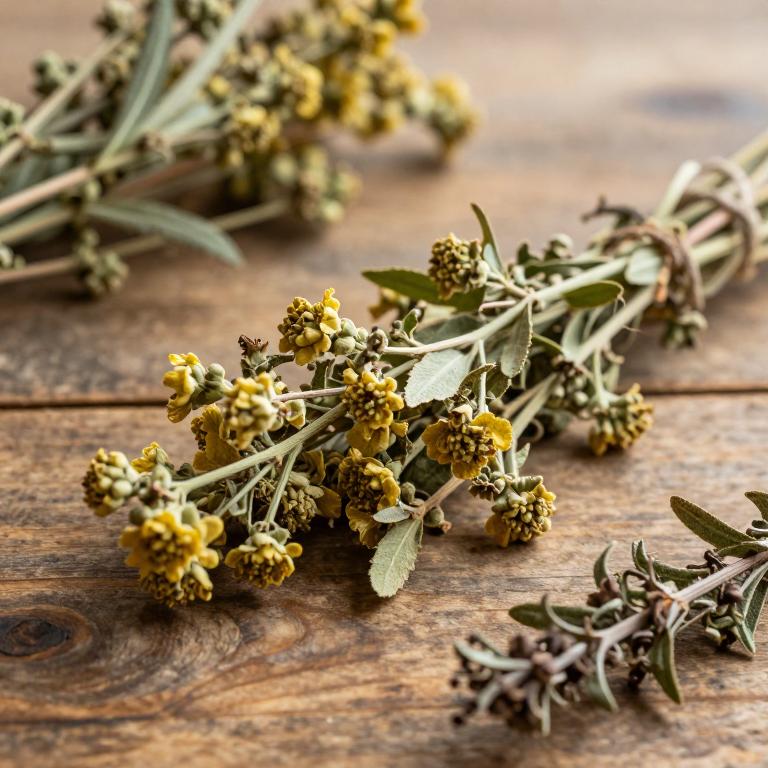
Names and Synonyms
Scientific Names
Accepted name
Verbascum ovalifoliumSources: Wikidata, Catalogue of Life
Taxonomical Classification
This plant, Verbascum ovalifolium, belongs to the kingdom Plantae and the phylum Streptophyta. Within the class Equisetopsida and subclass Magnoliidae, it is classified under the order Lamiales and the family Scrophulariaceae. Ultimately, it is categorized under the genus Verbascum.
| Rank | Classification |
|---|---|
| Kingdom | Plantae |
| Phylum | Streptophyta |
| Class | Equisetopsida |
| Subclass | Magnoliidae |
| Order | Lamiales |
| Family | Scrophulariaceae |
| Genus | Verbascum |
Sources: The World Checklist of Vascular Plants (WCVP)
Distribution
This plant exhibits a diverse geographical distribution across several key regions of the continent. In Middle Europe, it can be found growing within the borders of Germany. Its presence extends into Southeastern Europe, specifically inhabiting the landscapes of Bulgaria and Romania. Furthermore, it is located in the European portion of Türkiye. Finally, the species is also recorded in Eastern Europe, specifically within the Crimea region.
| Region | Area |
|---|---|
| Middle Europe | Germany |
| Southeastern Europe | Bulgaria |
| Southeastern Europe | Romania |
| Southeastern Europe | Türkiye-in-Europe |
| Eastern Europe | Krym |
| Eastern Europe | South European Russia |
| Eastern Europe | Ukraine |
| Caucasus | North Caucasus |
| Western Asia | Türkiye |
Sources: The World Checklist of Vascular Plants (WCVP)
Botanical Identification
Ecology
The ecology of Verbascum ovalifolium is characterized by its ability to thrive in open, well-lit environments where there is minimal competition from dense canopy vegetation. It is most commonly found occupying habitats such as meadows, roadsides, sandy terrains, and steppe ecosystems. These locations typically provide the dry, well-drained soil conditions and high solar exposure necessary for its growth. By colonizing disturbed sites like roadsides and shifting sandy substrates, the species demonstrates an adaptability to nutrient-poor or unstable ground, playing a role in the pioneer or early-successional stages of these specific landscapes.
- Habitat :
- meadows, roadsides, sand, steppe
Life history
The life history of Verbascum ovalifolium is characterized by a variable lifecycle that can manifest as an annual, biennial, or perennial depending on environmental conditions and local ecological stability. The plant typically begins its development from seed, establishing a basal rosette of leaves during its initial phase. As it progresses through its life stages, it undergoes a transition from vegetative growth to reproductive maturity, eventually producing a tall flowering spike that bears its characteristic blossoms. This variability in its lifespan allows the species to adapt to diverse habitats, where it may complete its cycle within a single year or persist through multiple growing seasons to maximize reproductive success.
- Lifecycle :
- annual
Morphology
The morphology of Verbascum ovalifolium is characterized by its growth form as a herb, exhibiting a non-woody structure throughout its development. The plant maintains a relatively low stature, with a height that typically ranges from a minimum of 0.3 m to a maximum of 1 m.
- Growth form :
- herb
- Plant height max:
- 1 m
- Plant height min:
- 0.3 m
- Woodiness :
- non-woody
Reproduction
The reproduction of Verbascum ovalifolium is characterized by a specific seasonal flowering cycle that facilitates its pollination and subsequent seed production. The reproductive phase of the plant is concentrated in the early summer months, with the flowering period beginning in June. This floral display continues through the month of July, marking the end of its primary blooming window. This relatively brief and defined flowering interval is critical for the plant's life cycle, ensuring that its reproductive efforts are synchronized with the availability of pollinators and favorable environmental conditions.
- Flowering time :
- Jun
- Flowering time :
- Jul
Sources: Global Inventory of Floras and Traits (GIFT)
Chemicals
Verbascum ovalifolium has 4 reported phytochemicals identified across 0 scientific publications and several other databases. The most consistently reported chemicals include Verbascoside, CHLOROGENIC ACID, Flavonoid, Flavonoids.
| Chemical | Supporting sources | Consensus |
|---|---|---|
| Verbascoside | 2 supporting sources | ★☆☆☆☆ |
| CHLOROGENIC ACID | 1 supporting sources | ★☆☆☆☆ |
| Flavonoid | 1 supporting sources | ★☆☆☆☆ |
| Flavonoids | 1 supporting sources | ★☆☆☆☆ |
Verbascoside
- Journal of biochemical and molecular toxicology
- Phytochemical analysis : PCA
CHLOROGENIC ACID
- Phytochemical analysis : PCA
Flavonoid
- Phytochemical analysis : PCA
Flavonoids
- Phytochemical analysis : PCA
Activities
Verbascum ovalifolium has 2 reported activities identified across 0 scientific publications and several other databases. The most consistently reported activities include Antioxidant, Free-Radical Scavenging.
| Activity | Supporting sources | Consensus |
|---|---|---|
| Antioxidant | 1 supporting sources | ★☆☆☆☆ |
| Free-Radical Scavenging | 1 supporting sources | ★☆☆☆☆ |
Antioxidant
- Phytochemical analysis : PCA
Free-Radical Scavenging
- Phytochemical analysis : PCA