Flaky-Barked Cherry-Orange
Vepris trichocarpa · Accepted scientific name
Scientific literature: Very Sparse (10 studies) · ★☆☆☆☆
Flaky-Barked Cherry-Orange, scientifically known as Vepris trichocarpa, is a remarkable medicinal plant valued for its therapeutic properties. Native to tropical regions, this species is traditionally utilized to treat various ailments, ranging from digestive issues to skin inflammations. Its unique bark and fruit contain bioactive compounds essential for holistic healing.
- Family
- Rutaceae
- Native range
- Africa
- Parts used
- Not available
- Common names
- Flaky-Barked Cherry-Orange · Inzanyana
- Scientific synonyms
- Teclea Angustialata · Teclea Villosa · 6 more
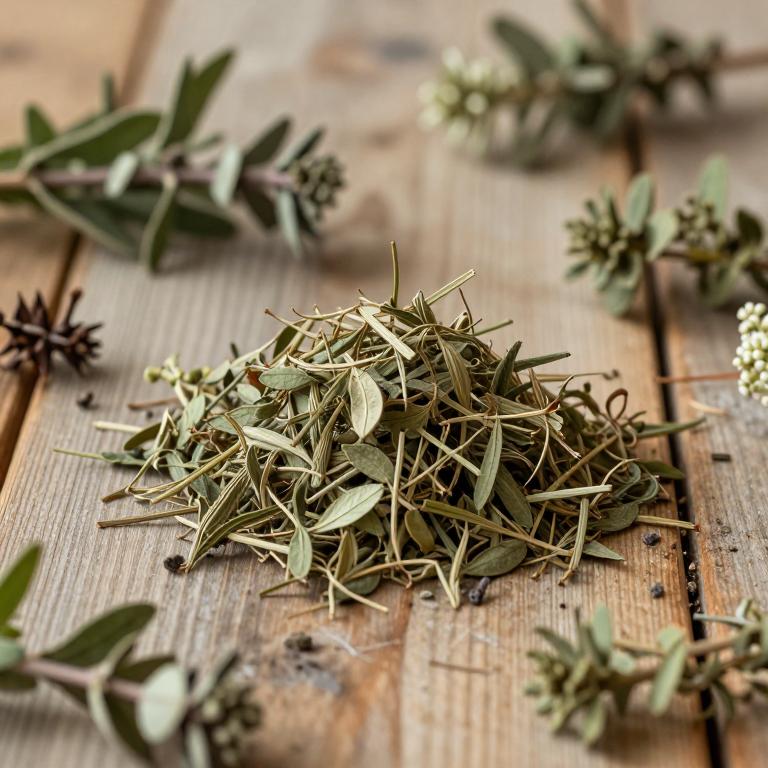
Names and Synonyms
Common Names
- Flaky-Barked Cherry-Orange
- Inzanyana
Scientific Names
Accepted name
Vepris trichocarpaSynonyms
- Teclea angustialata
- Teclea villosa
- Toddalia trichocarpa
- Teclea stuhlmannii
- Teclea trichocarpa
- Toddalia fischeri
- Teclea engleriana
- Teclea fischeri
Sources: Wikidata, Catalogue of Life
Taxonomical Classification
This plant belongs to the kingdom Plantae within the phylum Streptophyta and the class Equisetopsida. It is further classified under the subclass Magnoliidae in the order Sapindales and the family Rutaceae. Finally, it is identified by the genus Vepris, specifically as the species Vepris trichocarpa.
| Rank | Classification |
|---|---|
| Kingdom | Plantae |
| Phylum | Streptophyta |
| Class | Equisetopsida |
| Subclass | Magnoliidae |
| Order | Sapindales |
| Family | Rutaceae |
| Genus | Vepris |
Sources: The World Checklist of Vascular Plants (WCVP)
Distribution
This plant exhibits a broad presence across several key regions in the African continent. In West-Central Tropical Africa, its distribution includes the Democratic Republic of the Congo and Rwanda. The species also extends into East Tropical Africa, where it can be found in Kenya. Furthermore, its range encompasses the neighboring territories of Tanzania and Uganda. Together, these locations highlight the plant's significant ecological footprint across the tropical belt.
| Region | Area |
|---|---|
| West-Central Tropical Africa | Rwanda |
| West-Central Tropical Africa | DR Congo |
| East Tropical Africa | Kenya |
| East Tropical Africa | Tanzania |
| East Tropical Africa | Uganda |
| South Tropical Africa | Malawi |
| South Tropical Africa | Mozambique |
| South Tropical Africa | Zambia |
| South Tropical Africa | Zimbabwe |
| Southern Africa | Cape Provinces |
Sources: The World Checklist of Vascular Plants (WCVP)
Botanical Identification
Ecology
The ecology of Vepris trichocarpa is characterized by its ability to thrive in diverse forest environments across its native range. It is frequently found within dry forest ecosystems, where it may occur as a common species, but it also exhibits significant ecological plasticity by inhabiting riverine forests. Additionally, this plant is integrated into Brachystegia woodland communities and can be found growing within dense thickets, suggesting an adaptation to varying levels of light availability and moisture gradients within these distinct vegetation structures.
- Habitat :
- dry forest (may be common), riverine forest, Brachystegia woodland, or in thickets
Morphology
The morphology of Vepris trichocarpa is characterized by a woody growth habit that manifests in forms ranging from a shrub to a tree, with an average height reaching approximately 6 meters. As a terrestrial organism, it does not exhibit aquatic or epiphytic tendencies and functions as an independent species rather than a parasite. Although it possesses a structural capacity described as self-supporting, it lacks the climbing mechanisms associated with lianas or vines, maintaining a stable, upright stature.
- Aquatic :
- terrestrial
- Climber :
- self-supporting
- Epiphyte :
- terrestrial
- Growth form :
- tree
- Growth form :
- shrub
- Parasite :
- independent
- Plant height mean:
- 6 m
- Woodiness :
- woody
Physiology
The physiology of Vepris trichocarpa is characterized by a fundamental metabolic framework defined by its photosynthetic pathway, which follows the C3 mechanism. As a C3 plant, its carbon fixation process occurs primarily through the Calvin cycle, where atmospheric carbon dioxide is directly captured by the enzyme RuBisCO to produce three-carbon compounds. This metabolic strategy indicates that the plant is optimized for environments where moisture is sufficiently available to support transpiration without the high metabolic costs associated with alternative pathways like C4 or CAM. This C3 pathway dictates its gas exchange patterns and water-use efficiency, influencing how the species regulates stomatal conductance and manages photosynthetic output in response to varying light intensities and ambient temperatures.
- Photosynthetic pathway :
- C3
Reproduction
The reproduction of Vepris trichocarpa involves the production of seeds that exhibit high levels of uniformity in their physical properties. Based on reproductive data, the seeds produced by this species maintain a highly consistent mass, with a calculated mean seed mass of 0.06078 g. This consistency is reflected in the specific range of the seed weight, as both the maximum and minimum recorded seed mass values are identical at 0.06078 g. Such a lack of variance in seed mass suggests a highly regulated developmental process during the maturation of the reproductive structures, ensuring that each seed within a given sample possesses the same energetic investment and physical scale.
- Seed mass mean:
- 0.06078 g
Sources: Global Inventory of Floras and Traits (GIFT)
Chemicals
Vepris trichocarpa has 7 reported phytochemicals identified across 0 scientific publications and several other databases. The most consistently reported chemicals include Arborinine, Skimmianine, 6-methoxytecleanthine, Dictamnine, Melicopicine.
| Chemical | Supporting sources | Consensus |
|---|---|---|
| Arborinine | 2 supporting sources | ★☆☆☆☆ |
| Skimmianine | 2 supporting sources | ★☆☆☆☆ |
| 6-methoxytecleanthine | 1 supporting sources | ★☆☆☆☆ |
| Dictamnine | 1 supporting sources | ★☆☆☆☆ |
| Melicopicine | 1 supporting sources | ★☆☆☆☆ |
| Normelicopicine | 1 supporting sources | ★☆☆☆☆ |
| Tecleanthine | 1 supporting sources | ★☆☆☆☆ |
Arborinine
- Journal of natural products
- Journal of ethnopharmacology
Skimmianine
- Journal of natural products
- Journal of ethnopharmacology
6-methoxytecleanthine
- Journal of natural products
Dictamnine
- Journal of natural products
Melicopicine
- Journal of natural products
Normelicopicine
- Journal of natural products
Tecleanthine
- Journal of natural products
Activities
Vepris trichocarpa has 1 reported activities identified across 0 scientific publications and several other databases. The most consistently reported activities include Toxic.
| Activity | Supporting sources | Consensus |
|---|---|---|
| Toxic | 1 supporting sources | ★☆☆☆☆ |
Toxic
- Journal of ethnopharmacology