Vepris glandulosa
Vepris glandulosa · Accepted scientific name
Scientific literature: Very Sparse (2 studies) · ★☆☆☆☆
Vepris glandulosa, scientifically known as Vepris glandulosa, is a fascinating medicinal plant valued for its diverse therapeutic properties. Often found in tropical ecosystems, this species contains bioactive compounds utilized in traditional medicine to treat various ailments, offering significant potential for modern pharmacological research and natural healthcare applications.
- Family
- Rutaceae
- Native range
- Africa
- Parts used
- Not available
- Common names
- Not available
- Scientific synonyms
- Tecleopsis Glandulosa
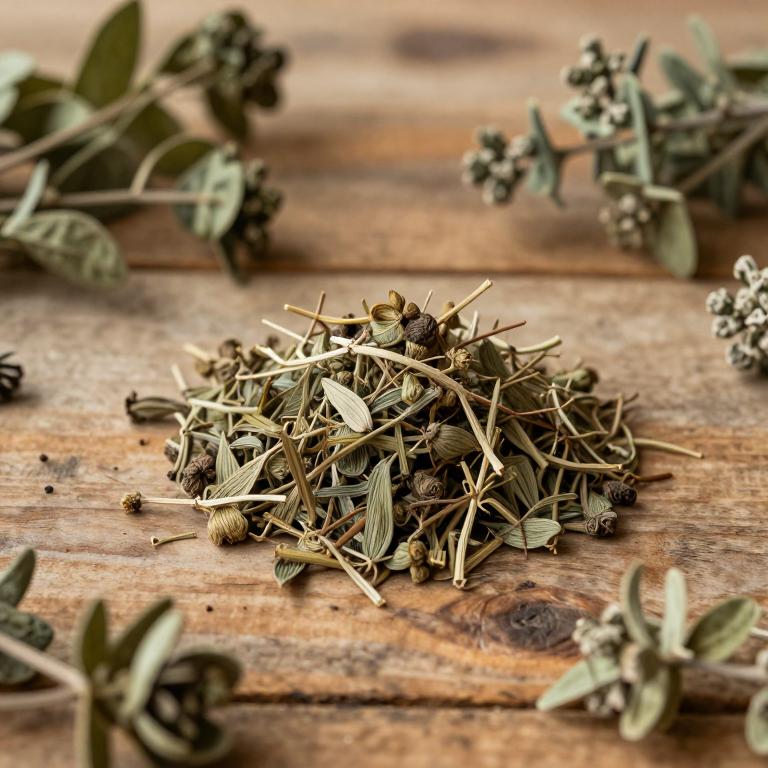
Names and Synonyms
Scientific Names
Accepted name
Vepris glandulosaSynonyms
- Tecleopsis glandulosa
Sources: Wikidata
Taxonomical Classification
This plant belongs to the kingdom Plantae and is classified under the phylum Streptophyta within the class Equisetopsida. It is further categorized under the subclass Magnoliidae and the order Sapindales, falling into the family Rutaceae. Ultimately, it is identified by the genus Vepris, specifically as the species Vepris glandulosa.
| Rank | Classification |
|---|---|
| Kingdom | Plantae |
| Phylum | Streptophyta |
| Class | Equisetopsida |
| Subclass | Magnoliidae |
| Order | Sapindales |
| Family | Rutaceae |
| Genus | Vepris |
Sources: The World Checklist of Vascular Plants (WCVP)
Distribution
This plant, known scientifically as Vepris glandulosa, exhibits a specific geographical distribution within the African continent. Its presence is primarily documented within the region of East Tropical Africa. Specifically, the species can be found growing in the natural landscapes of Kenya. This localized range suggests that the plant is well-adapted to the unique environmental conditions found in this particular area. Consequently, researchers focusing on East African flora often include this medicinal species in their studies.
| Region | Area |
|---|---|
| East Tropical Africa | Kenya |
Sources: The World Checklist of Vascular Plants (WCVP)
Botanical Identification
Life history
The life history of Vepris glandulosa is characterized by its status as a perennial plant, allowing it to persist in its environment over multiple growing seasons. Throughout its existence, it maintains an evergreen habit, retaining its foliage year-round rather than shedding leaves seasonally.
- Deciduousness :
- evergreen
- Lifecycle :
- perennial
Morphology
The morphology of Vepris glandulosa is characterized by its stature as a tree with a significant height, reaching a mean of approximately 6 m. It exhibits a woody nature, providing a robust structural framework for its growth form. Although it possesses characteristics common to climbing structures, it is classified as a self-supporting plant rather than an obligatory or facultative climber.
- Climber :
- self-supporting
- Growth form :
- tree
- Plant height mean:
- 6 m
- Woodiness :
- woody
Physiology
The physiology of Vepris glandulosa is characterized by complex metabolic processes centered around its specialized glandular structures and nutrient acquisition strategies. The plant utilizes a robust photosynthetic mechanism to convert light energy into chemical energy, supporting its growth in various ecological niches. In terms of nutrient cycling, the plant does not engage in symbiotic nitrogen fixation; specifically, it is not a nitrogen fixer, as it lacks the specialized root nodules required to host nitrogen-fixing bacteria. Instead, it relies on the uptake of dissolved nitrates and ammonium from the soil through its root system. Its physiological profile is further defined by the production of secondary metabolites, often sequestered within its characteristic glands, which serve defensive and signaling functions within its biological framework.
- Nitrogen fixer :
- no
Sources: Global Inventory of Floras and Traits (GIFT)
Chemicals
Vepris glandulosa has 1 reported phytochemicals identified across 0 scientific publications and several other databases. The most consistently reported chemicals include Choisyine.
| Chemical | Supporting sources | Consensus |
|---|---|---|
| Choisyine | 1 supporting sources | ★☆☆☆☆ |
Choisyine
- Chemistry & biodiversity
Activities
Vepris glandulosa has 1 reported activities identified across 0 scientific publications and several other databases. The most consistently reported activities include Antidiabetic.
| Activity | Supporting sources | Consensus |
|---|---|---|
| Antidiabetic | 1 supporting sources | ★☆☆☆☆ |
Antidiabetic
- Chemistry & biodiversity