Slimleaf Rosewood
Vauquelinia corymbosa · Accepted scientific name
Scientific literature: Very Sparse (22 studies) · ★☆☆☆☆
Slimleaf Rosewood, scientifically known as Vauquelinia corymbosa, is a versatile medicinal plant native to tropical regions. Renowned for its potent bioactive compounds, it is traditionally utilized in folk medicine to treat various ailments. This species offers significant pharmacological potential, particularly in exploring its antioxidant and antimicrobial therapeutic properties.
- Family
- Rosaceae
- Native range
- Northern America
- Parts used
- Not available
- Common names
- Slimleaf Rosewood
- Scientific synonyms
- Vauquelinia Corymbosa Subsp. Heterodon · Vauquelinia Heterodon · 5 more
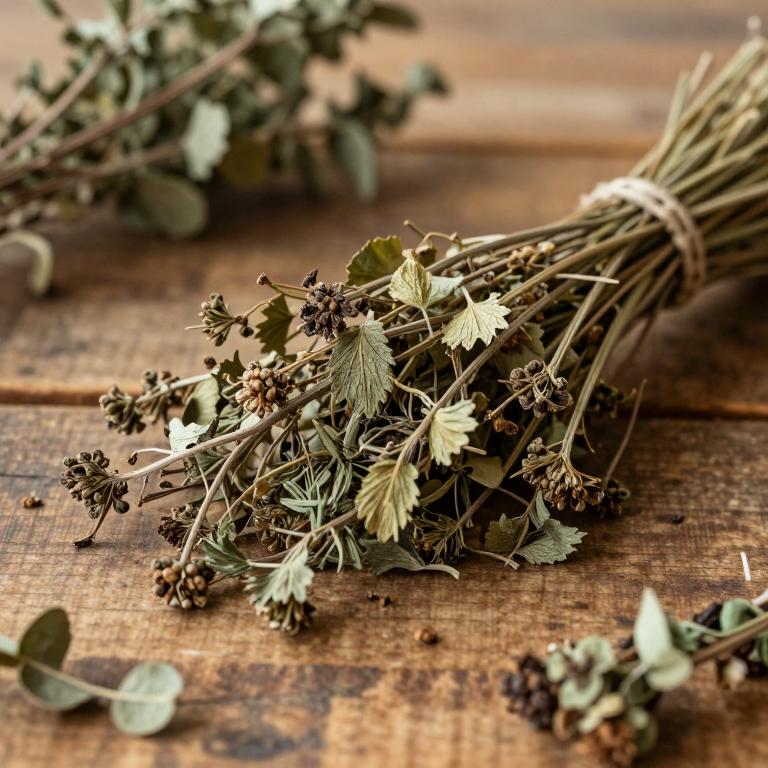
Names and Synonyms
Common Names
- Slimleaf Rosewood
Scientific Names
Accepted name
Vauquelinia corymbosaSynonyms
- Vauquelinia corymbosa subsp. heterodon
- Vauquelinia heterodon
- Vauquelinia karwinskyi
- Vauquelinia corymbosa subsp. karwinskyi
- Vauquelinia corymbosa subsp. latifolia
- Vauquelinia corymbosa subsp. saltilloensis
- Vauquelinia latifolia
Regional and Traditional Names
Spanish:
- Palo Alto
- Ucas
- Árbol Prieto
- Palo prieto
Sources: Wikidata, Catalogue of Life
Taxonomical Classification
This plant belongs to the kingdom Plantae and is classified under the phylum Streptophyta and class Equisetopsida. Within the subclass Magnoliidae, it follows the order Rosales and is a member of the family Rosaceae. Finally, it is categorized under the genus Vauquelinia, specifically identified as Vauquelinia corymbosa.
| Rank | Classification |
|---|---|
| Kingdom | Plantae |
| Phylum | Streptophyta |
| Class | Equisetopsida |
| Subclass | Magnoliidae |
| Order | Rosales |
| Family | Rosaceae |
| Genus | Vauquelinia |
Sources: The World Checklist of Vascular Plants (WCVP)
Distribution
This plant exhibits a specific geographical distribution within the country of Mexico. It can be found growing across the northeastern regions of the nation. Additionally, its habitat extends into the areas surrounding the Mexican Gulf. These specific locations define the primary natural range for the species. Therefore, its presence is concentrated within these particular Mexican territories.
| Region | Area |
|---|---|
| Mexico | Mexico Northeast |
| Mexico | Mexico Gulf |
Sources: The World Checklist of Vascular Plants (WCVP)
Botanical Identification
Life history
The life history of Vauquelinia corymbosa is characterized by its status as a perennial organism, allowing it to persist in its environment over many years. As a long-lived woody species, it does not follow the rapid turnover of annual or biennial plants but instead invests energy into sustained structural growth and long-term survival. Its developmental trajectory involves established vegetative stages that support continuous physiological processes, enabling the plant to withstand seasonal fluctuations and contribute to the stability of its ecosystem through a stable, multi-year existence.
- Lifecycle :
- perennial
Morphology
The morphology of Vauquelinia corymbosa is characterized by its distinct growth form and structural composition. It manifests primarily as a shrub, exhibiting a perennial habit typical of its classification. The plant is fundamentally woody in nature, possessing rigid, lignified tissues that provide structural integrity to its branches. While it possesses a robust framework, its climbing habit is classified as self-supporting, meaning it does not rely on external structures or other plants to maintain its upright posture, instead utilizing its own woody architecture to achieve its stature.
- Climber :
- self-supporting
- Growth form :
- shrub
- Woodiness :
- woody
Sources: Global Inventory of Floras and Traits (GIFT)
Chemicals
Vauquelinia corymbosa has 3 reported phytochemicals identified across 0 scientific publications and several other databases. The most consistently reported chemicals include betulinic acid, Ursolic acid, Uvaol.
| Chemical | Supporting sources | Consensus |
|---|---|---|
| betulinic acid | 2 supporting sources | ★☆☆☆☆ |
| Ursolic acid | 1 supporting sources | ★☆☆☆☆ |
| Uvaol | 1 supporting sources | ★☆☆☆☆ |
betulinic acid
- Dr. Duke
- Journal of pharmaceutical sciences
Ursolic acid
- Journal of pharmaceutical sciences
Uvaol
- Journal of pharmaceutical sciences
Activities
Vauquelinia corymbosa has 18 reported activities identified across 0 scientific publications and several other databases. The most consistently reported activities include Anthelmintic, AntiHIV, Antibacterial, Anticancer, Anticarcinomic.
| Activity | Supporting sources | Consensus |
|---|---|---|
| Anthelmintic | 1 supporting sources | ★☆☆☆☆ |
| AntiHIV | 1 supporting sources | ★☆☆☆☆ |
| Antibacterial | 1 supporting sources | ★☆☆☆☆ |
| Anticancer | 1 supporting sources | ★☆☆☆☆ |
| Anticarcinomic | 1 supporting sources | ★☆☆☆☆ |
| Antiedemic | 1 supporting sources | ★☆☆☆☆ |
| Antiinflammatory | 1 supporting sources | ★☆☆☆☆ |
| Antileukemic | 1 supporting sources | ★☆☆☆☆ |
| Antimalarial | 1 supporting sources | ★☆☆☆☆ |
| Antimelanomic | 1 supporting sources | ★☆☆☆☆ |
Anthelmintic
- Dr. Duke
AntiHIV
- Dr. Duke
Antibacterial
- Dr. Duke
Anticancer
- Dr. Duke
Anticarcinomic
- Dr. Duke
Antiedemic
- Dr. Duke
Antiinflammatory
- Dr. Duke
Antileukemic
- Dr. Duke
Antimalarial
- Dr. Duke
Antimelanomic
- Dr. Duke