Vassobia breviflora
Vassobia breviflora · Accepted scientific name
Scientific literature: Very Sparse (16 studies) · ★☆☆☆☆
Vassobia breviflora, scientifically known as Vassobia breviflora, is a resilient shrub native to the South American pampas. Often valued in traditional folk medicine, this plant is studied for its unique phytochemical properties. Understanding its botanical characteristics and potential therapeutic applications offers valuable insights into natural pharmacology and regional biodiversity.
- Family
- Solanaceae
- Native range
- Southern America
- Parts used
- Not available
- Common names
- Not available
- Scientific synonyms
- Acnistus Bornmuelleri · Dierbachia Breviflora · 28 more
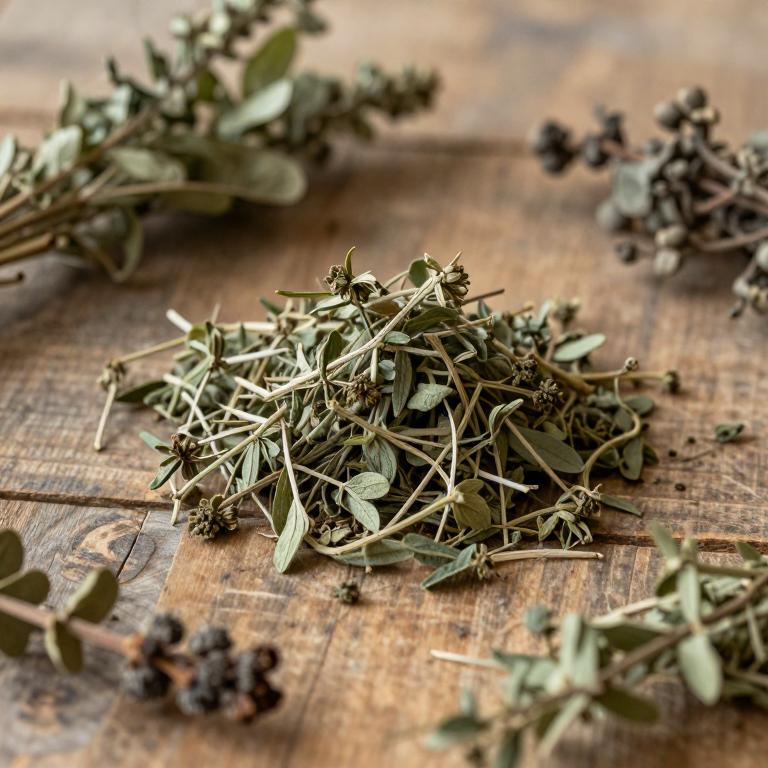
Names and Synonyms
Scientific Names
Accepted name
Vassobia brevifloraSynonyms
- Acnistus bornmuelleri
- Dierbachia breviflora
- Fregirardia spina-alba
- Acnistus breviflorus
- Dierbachia parviflora
- Acnistus breviflorus var. glabratus
- Iochroma arboreum
- Bassovia spina-alba
- Acnistus breviflorus f. indutus
- Bassovia pyraster
- Acnistus breviflorus subsp. pubescens
- Acnistus breviflorus var. spinescens
- Acnistus breviflorus subsp. tomentosus
- Acnistus galanderi
- Acnistus glabratus
- Acnistus lycioides
- Acnistus mollis
- Acnistus parviflorus
- Acnistus schunckii
- Acnistus sellowii
- Acnistus spinescens
- Acnistus spinosus
- Acnistus ulei
- Capsicum pyraster
- Capsicum glandulosum
- Capsicum breviflorum
- Dunalia breviflora
- Dunalia breviflora var. glabrata
- Capsicum spina-alba
- Acnistus parviflorus var. arboreus
Regional and Traditional Names
Spanish:
- Chal chal de gallina
Sources: Wikidata, Catalogue of Life
Taxonomical Classification
This plant belongs to the kingdom Plantae and is classified under the phylum Streptophyta and class Equisetopsida. Within the subclass Magnoliidae, it is organized under the order Solanales and the family Solanaceae. Finally, its taxonomic identity is completed within the genus Vassobia.
| Rank | Classification |
|---|---|
| Kingdom | Plantae |
| Phylum | Streptophyta |
| Class | Equisetopsida |
| Subclass | Magnoliidae |
| Order | Solanales |
| Family | Solanaceae |
| Genus | Vassobia |
Sources: The World Checklist of Vascular Plants (WCVP)
Distribution
This plant exhibits a broad geographical distribution across several regions of South America. In Western South America, its presence is documented within the borders of Bolivia. Moving toward the east, it can be found in both the Southeast and South regions of Brazil. The species also extends into Southern South America, specifically occupying the Northeast area of Argentina. Additionally, its range covers the Northwest portion of Argentina, completing its wide continental spread.
| Region | Area |
|---|---|
| Western South America | Bolivia |
| Brazil | Brazil Southeast |
| Brazil | Brazil South |
| Southern South America | Argentina Northeast |
| Southern South America | Argentina Northwest |
| Southern South America | Paraguay |
| Southern South America | Uruguay |
Sources: The World Checklist of Vascular Plants (WCVP)
Botanical Identification
Ecology
The ecology of Vassobia breviflora is defined by its specific environmental preferences and its distribution across varying altitudinal gradients. This species is primarily found within low-shrubland habitats (bosque bajo) situated on saturated soil, indicating a preference for moisture-rich substrates. Its vertical distribution is quite broad, spanning an elevational range that begins at 500 m AMSL and extends up to a maximum of 2100 m AMSL.
- Elevational range max:
- 2100 m AMSL
- Elevational range min:
- 500 m AMSL
- Habitat :
- Bosque bajo on saturated soil
Life history
The life history of Vassobia breviflora is characterized by a perennial lifecycle, allowing the plant to persist in its environment over multiple growing seasons. As a perennial species, it avoids the complete senescence seen in annuals, instead focusing on long-term survival and the gradual accumulation of resources within its structural framework. This enduring growth habit enables the plant to withstand seasonal fluctuations and establish a stable presence within its ecological niche, often contributing to the structural complexity of its habitat through repeated cycles of vegetative growth and reproductive effort.
- Lifecycle :
- perennial
Morphology
The morphology of Vassobia breviflora is characterized by a woody growth form, specifically developing into a tree-like structure. It is a terrestrial species, functioning as an independent organism rather than a parasite or an epiphyte. In terms of its structural habit, the plant is self-supporting and does not exhibit climbing behaviors such as a liana or vine. It maintains a substantial physical presence, reaching a maximum plant height of approximately 4 meters.
- Aquatic :
- terrestrial
- Climber :
- liana
- Climber :
- self-supporting
- Epiphyte :
- terrestrial
- Growth form :
- tree
- Parasite :
- independent
- Plant height max:
- 4 m
- Woodiness :
- woody
Physiology
The physiology of Vassobia breviflora is fundamentally characterized by its reliance on the C3 photosynthetic pathway, a metabolic strategy where carbon dioxide is fixed directly into a three-carbon compound during the Calvin cycle. This carbon fixation process occurs within the mesophyll cells, utilizing the enzyme RuBisCO to facilitate the initial carboxylation. As a C3 plant, its physiological efficiency and gas exchange patterns are heavily influenced by environmental variables such as light intensity, temperature, and water availability, which dictate the rate of transpiration and the potential for photorespiration. The metabolic framework of this species involves the conversion of light energy into chemical energy through the light-dependent reactions, subsequently driving the synthesis of carbohydrates to support its growth and structural development.
- Photosynthetic pathway :
- C3
Reproduction
The reproduction of Vassobia breviflora is characterized by specific morphological metrics regarding its seed production. The seeds produced by this species exhibit a highly uniform size distribution, with no variance observed across the sampled population. Specifically, the seed volume remains constant at a value of 0.52 mm³, which serves as both the minimum and maximum recorded volume, as well as the mean volume for the species. This consistency in seed volume suggests a stable reproductive strategy regarding the energy investment per individual seed unit.
- Seed volume max:
- 0.52 mm³
Sources: Global Inventory of Floras and Traits (GIFT)
Chemicals
Vassobia breviflora has 9 reported phytochemicals identified across 0 scientific publications and several other databases. The most consistently reported chemicals include Withaferin A, Allyl disulfide, DICHLOROMETHANE, Pharbilignoside, Withalongolide A.
| Chemical | Supporting sources | Consensus |
|---|---|---|
| Withaferin A | 2 supporting sources | ★☆☆☆☆ |
| Allyl disulfide | 1 supporting sources | ★☆☆☆☆ |
| DICHLOROMETHANE | 1 supporting sources | ★☆☆☆☆ |
| Pharbilignoside | 1 supporting sources | ★☆☆☆☆ |
| Withalongolide A | 1 supporting sources | ★☆☆☆☆ |
| Withalongolide B | 1 supporting sources | ★☆☆☆☆ |
| Withalongolide C | 1 supporting sources | ★☆☆☆☆ |
| Withalongolide H | 1 supporting sources | ★☆☆☆☆ |
| Withanolides | 1 supporting sources | ★☆☆☆☆ |
Withaferin A
- Pure and applied chemistry. Chimie pure et appliquee
- Journal of natural products
Allyl disulfide
- Journal of toxicology and environmental health. Part A
DICHLOROMETHANE
- Letters in applied microbiology
Pharbilignoside
- Journal of toxicology and environmental health. Part A
Withalongolide A
- Pure and applied chemistry. Chimie pure et appliquee
Withalongolide B
- Pure and applied chemistry. Chimie pure et appliquee
Withalongolide C
- Pure and applied chemistry. Chimie pure et appliquee
Withalongolide H
- Pure and applied chemistry. Chimie pure et appliquee
Withanolides
- Pure and applied chemistry. Chimie pure et appliquee
Activities
Vassobia breviflora has 2 reported activities identified across 0 scientific publications and several other databases. The most consistently reported activities include Antioxidant, Cytotoxic.
| Activity | Supporting sources | Consensus |
|---|---|---|
| Antioxidant | 1 supporting sources | ★☆☆☆☆ |
| Cytotoxic | 1 supporting sources | ★☆☆☆☆ |
Antioxidant
- Journal of toxicology and environmental health. Part A
Cytotoxic
- Journal of natural products
Conditions
Vassobia breviflora has 3 reported investigations on conditions identified across 0 scientific publications and several other databases. The most consistently reported conditions include Enterococcus faecium, Staphylococcus aureus, head and neck squamous cell carcinoma.
| Condition | Supporting sources | Consensus |
|---|---|---|
| Enterococcus faecium | 1 supporting sources | ★☆☆☆☆ |
| Staphylococcus aureus | 1 supporting sources | ★☆☆☆☆ |
| Head and neck squamous cell carcinoma | 1 supporting sources | ★☆☆☆☆ |
Enterococcus faecium
- Letters in applied microbiology
Staphylococcus aureus
- Letters in applied microbiology
Head and neck squamous cell carcinoma
- Journal of natural products
Preparations
Vassobia breviflora has 3 reported preparations identified across 0 scientific publications and several other databases. The most consistently reported preparations include crude extract of the aerial parts, ethyl acetate fraction, extraction with dichloromethane.
| Preparation | Supporting sources | Consensus |
|---|---|---|
| Crude extract of the aerial parts | 1 supporting sources | ★☆☆☆☆ |
| Ethyl acetate fraction | 1 supporting sources | ★☆☆☆☆ |
| Extraction with dichloromethane | 1 supporting sources | ★☆☆☆☆ |
Crude extract of the aerial parts
- Journal of natural products
Ethyl acetate fraction
- Journal of toxicology and environmental health. Part A
Extraction with dichloromethane
- Letters in applied microbiology