black-sage
Varronia polycephala · Accepted scientific name
Scientific literature: Very Sparse (2 studies) · ★☆☆☆☆
Black-sage, scientifically known as Varroniia polycephala, is a versatile medicinal shrub native to tropical regions. Renowned for its potent antioxidant and antimicrobial properties, it is widely utilized in traditional medicine to treat skin ailments, inflammation, and digestive issues. This hardy plant offers significant therapeutic potential for modern pharmacology.
- Family
- Boraginaceae
- Native range
- Northern America
- Parts used
- Not available
- Common names
- Black-Sage
- Scientific synonyms
- Lithocardium Mariquitense · Ulmarronia Patens · 46 more
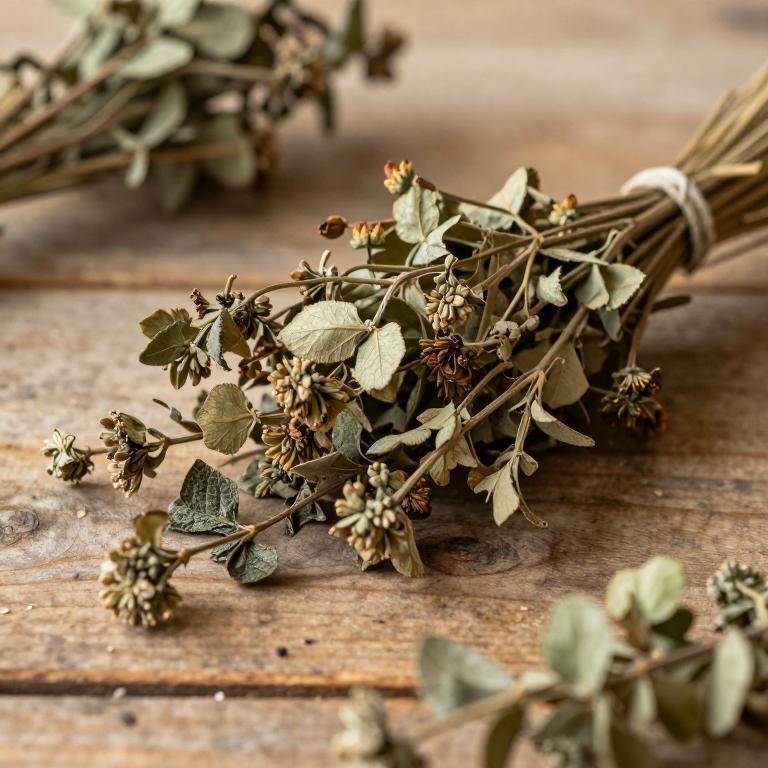
Names and Synonyms
Common Names
- black-sage
Scientific Names
Accepted name
Varronia polycephalaSynonyms
- Lithocardium mariquitense
- Ulmarronia patens
- Varronia mariguitensis
- Varronia mariquitensis
- Varronia boliviana
- Varronia hermanniifolia
- Varronia ulmifolia
- Varronia paniculata
- Lithocardium corymbosum var. patens
- Lithocardium corymbosum var. monogynum
- Lithocardium corymbosum
- Cordia ulmifolia
- Varronia monosperma
- Cordia polycephala
- Lithocardium guazumifolium
- Varronia patens
- Cordia patens f. polycephala
- Varronia paraguariensis
- Lithocardium adnatum
- Cordia patens
- Cordia corymbosa
- Cordia patens var. angustifolia
- Cordia paraguariensis
- Cordia monosperma
- Cordia salzmannii
- Ulmarronia mariquitensis
- Cordia salzmannii
- Cordia salzmannii var. albiflora
- Cordia salzmannii var. lanceolata
- Cordia sulfurata
- Cordia hermanniifolia
- Cordia hermanniifolia var. calycina
- Cordia mariquitensis
- Cordia lapensis
- Cordia ulmifolia
- Cordia ulmifolia var. ovalis
- Cordia ulmifolia var. ovata
- Cordia wickstroemii
- Cordiopsis monosperma
- Cordia adnata
- Cordia boliviana
- Cordia corymbosa f. hirsuta
- Cordia corymbosa f. intonsa
- Cordia corymbosa f. typica
- Lithocardium corymbosum var. lineatum
- Lithocardium corymbosum var. subedentatum
- Lithocardium corymbosum var. humile
- Lithocardium corymbosum f. glabriusculum
Sources: Wikidata, Catalogue of Life
Taxonomical Classification
This plant belongs to the kingdom Plantae and the phylum Streptophyta, falling under the class Equisetopsida and subclass Magnoliidae. It is further classified within the order Boraginales and the family Boraginaceae. Finally, its taxonomic identity is defined by the genus Varronia.
| Rank | Classification |
|---|---|
| Kingdom | Plantae |
| Phylum | Streptophyta |
| Class | Equisetopsida |
| Subclass | Magnoliidae |
| Order | Boraginales |
| Family | Boraginaceae |
| Genus | Varronia |
Sources: The World Checklist of Vascular Plants (WCVP)
Distribution
This plant exhibits a broad geographical distribution across several regions of North and Central America. In Mexico, its presence is noted throughout the Gulf region as well as the Southwest. Moving into Central America, the species can be found growing in the landscapes of Guatemala and Belize. Additionally, its range extends further south into the country of Costa Rica. Collectively, these locations define the diverse habitats where the plant thrives.
| Region | Area |
|---|---|
| Mexico | Mexico Gulf |
| Mexico | Mexico Southwest |
| Central America | Belize |
| Central America | Costa Rica |
| Central America | Guatemala |
| Central America | Honduras |
| Central America | Nicaragua |
| Central America | Panamá |
| Caribbean | Dominican Republic |
| Caribbean | Haiti |
Sources: The World Checklist of Vascular Plants (WCVP)
Botanical Identification
Ecology
The ecology of Varronia polycephala is characterized by its significant adaptability across a broad altitudinal gradient, ranging from sea level (0 m AMSL) to high-altitude environments reaching a maximum of 2440 m AMSL. This wide elevational range allows the species to occupy diverse ecological niches and varying climatic conditions. A primary component of its ecological distribution is its association with the Cerrado biome, where it thrives within this unique tropical savanna ecosystem.
- Elevational range max:
- 2440 m AMSL
- Elevational range min:
- 0 m AMSL
- Habitat :
- Cerrado
Life history
The life history of Varronia polycephala is characterized by its status as a perennial plant, allowing it to persist through multiple growing seasons. In terms of its structural development and growth habit, it is classified as a phanerophyte, specifically exhibiting traits associated with both phanerophyte and nanophanerophyte life forms, which indicates that its perennating buds are located high above the ground on aerial shoots.
- Life form :
- phanerophyte
- Lifecycle :
- perennial
Morphology
The morphology of Varronia polycephala is characterized by a woody growth form, specifically manifesting as a shrub. This plant is a self-supporting species that reaches an average height of approximately 3 meters. It functions as an independent organism, lacking any parasitic tendencies, and is strictly terrestrial in its ecological habit, neither possessing aquatic nor epiphytic characteristics.
- Aquatic :
- terrestrial
- Climber :
- self-supporting
- Epiphyte :
- terrestrial
- Growth form :
- shrub
- Parasite :
- independent
- Plant height mean:
- 3 m
- Woodiness :
- woody
Physiology
The physiology of Varronia polycephala is characterized by metabolic processes adapted to its specific environmental niche, primarily focusing on nutrient acquisition and secondary metabolite synthesis. Regarding its nitrogen metabolism, the plant does not function as a nitrogen fixer, meaning it lacks the symbiotic relationship with nitrogen-fixing bacteria, such as Rhizobium, required to convert atmospheric nitrogen into bioavailable forms; instead, it relies on the uptake of nitrates and ammonium from the soil through its root system. Its physiological activity is heavily directed toward the production of bioactive compounds, including alkaloids, flavonoids, and terpenoids, which are synthesized through complex enzymatic pathways to serve as defense mechanisms against herbivory and environmental stress. Photosynthetic efficiency and water regulation are critical to its survival, with physiological adaptations that allow for efficient carbon fixation while managing transpiration rates in varying climatic conditions.
- Nitrogen fixer :
- no
Reproduction
Reproduction in Varronia polycephala is characterized by the production of specialized seeds that serve as the primary vehicle for propagation. Based on quantitative morphological data, the seeds produced by this species exhibit a highly consistent mass, showing no variance across observed samples. The seed mass is recorded with a mean value of 0.00245 g, a figure that is identical to both the maximum (0.00245 g) and minimum (0.00245 g) recorded values. This uniformity in seed mass suggests a highly stabilized reproductive output, where each individual seed maintains a precise weight of 0.00245 g, ensuring standardized dispersal and germination potential within its ecological niche.
- Seed mass mean:
- 0.00245 g
Sources: Global Inventory of Floras and Traits (GIFT)
Chemicals
Varronia polycephala has 1 reported phytochemicals identified across 0 scientific publications and several other databases. The most consistently reported chemicals include Flavonoids.
| Chemical | Supporting sources | Consensus |
|---|---|---|
| Flavonoids | 1 supporting sources | ★☆☆☆☆ |
Flavonoids
- Farmaco (Societa chimica italiana : 1989)
Activities
Varronia polycephala has 1 reported activities identified across 0 scientific publications and several other databases. The most consistently reported activities include Analgesic.
| Activity | Supporting sources | Consensus |
|---|---|---|
| Analgesic | 1 supporting sources | ★☆☆☆☆ |
Analgesic
- Farmaco (Societa chimica italiana : 1989)
Preparations
Varronia polycephala has 1 reported preparations identified across 0 scientific publications and several other databases. The most consistently reported preparations include crude methanol extract.
| Preparation | Supporting sources | Consensus |
|---|---|---|
| Crude methanol extract | 1 supporting sources | ★☆☆☆☆ |
Crude methanol extract
- Journal of ethnopharmacology