Varronia cylindrostachya
Varronia cylindristachya · Accepted scientific name
Scientific literature: Very Sparse (1 studies) · ★☆☆☆☆
Varroniia cylindrostachyia, scientifically known as Varroniia cylindristachya, is a significant medicinal shrub valued in traditional healing practices. Renowned for its potent bioactive compounds, this plant is frequently utilized to treat inflammatory conditions, skin ailments, and various infections, offering a natural approach to wellness through its diverse therapeutic properties.
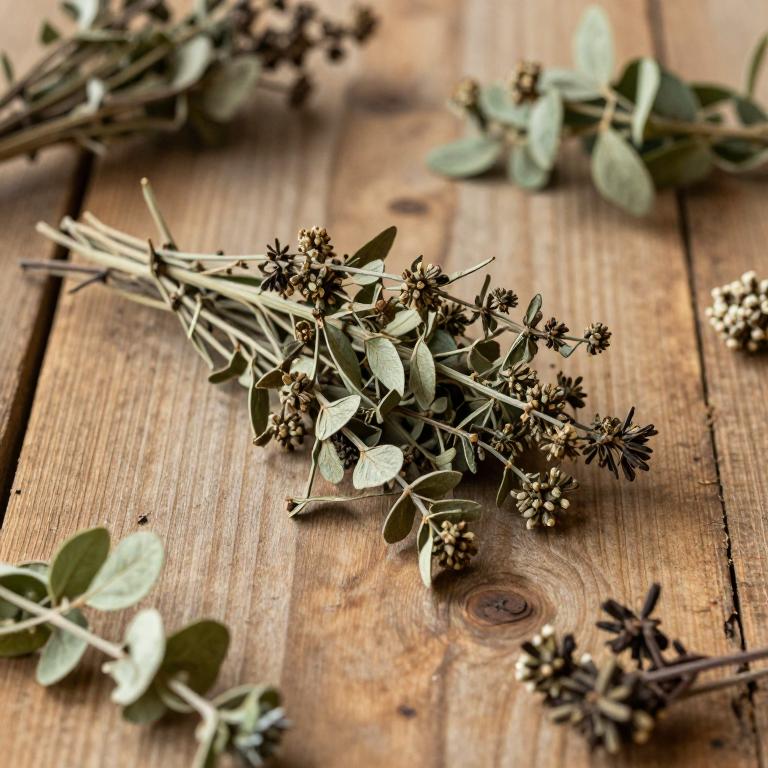
Names and Synonyms
Common Names
- Varronia curassavica
- black-sage
- wild sage
Scientific Names
Accepted name
Varronia cylindristachyaSynonyms
- Montjolya floribunda
- Montjolya macrostachya
- Lithocardium caracasanum
- Varronia lanata
- Montjolya mollis
- Lithocardium cylindrostachyum var. cinerascens
- Varronia salviifolia
- Varronia caracasana
- Lithocardium cylindrostachyum
- Montjolya cylindristachya
- Varronia humboldtii
- Lithocardium cylindrostachyum var. platyphyllum
- Lithocardium cylindrostachyum var. interruptum
- Varronia floribunda
- Cordia subserrata
- Cordia tarmensis
- Cordia rubescens
- Cordia floribunda
- Cordia llanense
- Cordia linearicalycina
- Cordia humboldtii
- Cordia lanata
- Cordia caracasana
- Cordia caracasana var. velutina
- Cordia cylindristachya
- Cordia cylindristachya var. floribunda
- Varronia macrostachya
Regional and Traditional Names
Spanish:
- Varronia cylindrostachya
- Cordia curassavica
- María negra
- bolita prieta
- Salvio Negro
- orégano-cimarrón
German:
- Varronia cylindrostachya
- Varronia curassavica
French:
- Varronia cylindrostachya
- Varronia curassavica
- herbe condé
Sources: Wikidata, Catalogue of Life
Taxonomical Classification
This plant belongs to the kingdom Plantae and the phylum Streptophyta, situated within the class Equisetopsida and subclass Magnoliidae. It is further classified under the order Boraginales and the family Boraginaceae. Ultimately, this medicinal species is identified by its genus, Varroniia.
| Rank | Classification |
|---|---|
| Kingdom | Plantae |
| Phylum | Streptophyta |
| Class | Equisetopsida |
| Subclass | Magnoliidae |
| Order | Boraginales |
| Family | Boraginaceae |
| Genus | Varronia |
Sources: The World Checklist of Vascular Plants (WCVP)
Distribution
This plant exhibits a wide geographical distribution across several distinct tropical regions. Within the Malesia region, it can be found specifically in Malaya. Its range extends to the Caribbean, where it inhabits the Venezuelan Antilles. In Northern South America, the species is documented to grow in Venezuela. Finally, its presence is noted in Western South America within the countries of Bolivia and Colombia.
| Region | Area |
|---|---|
| Malesia | Malaya |
| Caribbean | Venezuelan Antilles |
| Northern South America | Venezuela |
| Western South America | Bolivia |
| Western South America | Colombia |
| Western South America | Ecuador |
| Western South America | Peru |
Sources: The World Checklist of Vascular Plants (WCVP)
Botanical Identification
Ecology
The ecology of Varronia cylindristachya is characterized by its remarkable adaptability across diverse and varied environmental landscapes. This species inhabits a wide spectrum of ecosystems, ranging from anthropized areas (Área Antrópica) to distinct natural biomes including the Caatinga (strictu sensu), Cerrado (lato sensu), Seasonal Semi-deciduous Forest (Floresta Estacional Semidecidual), Ombrophilous Forest (Floresta Ombrófila/Pluvial), and Restinga. Its distribution is marked by an extensive altitudinal gradient, allowing it to thrive from sea level (0 m AMSL) up to significant heights. Depending on the specific ecological niche and regional variation, its elevational range spans from a minimum of 400 m AMSL to a maximum of either 2400 m AMSL or as high as 3400 m AMSL, demonstrating its capacity to occupy both lowland coastal environments and high-altitude montane settings.
- Elevational range max:
- 3400 m AMSL
- Elevational range max:
- 2400 m AMSL
- Elevational range min:
- 400 m AMSL
- Elevational range min:
- 0 m AMSL
- Habitat :
- Área Antrópica, Caatinga (stricto sensu), Cerrado (lato sensu), Floresta Estacional Semidecidual, Floresta Ombrófila (= Floresta Pluvial), Restinga
Life history
The life history of Varronia cylindristachya is characterized by its status as a perennial organism, allowing it to persist through multiple growing seasons rather than completing its cycle within a single year. In terms of its structural growth habit and ecological positioning, the species is classified as a phanerophyte, specifically exhibiting characteristics of both phanerophyte and nanophanerophyte forms, which indicates that its regenerative buds are located high above the ground level on aerial stems or woody structures.
- Life form :
- phanerophyte
- Lifecycle :
- perennial
Morphology
The morphology of Varronia cylindristachya is characterized by a diverse growth habit that can manifest as either a shrub or a small tree. Depending on the specific specimen or environmental conditions, the plant exhibits varying degrees of woodiness, ranging from non-woody to woody structures. In its shrub form, it maintains a self-supporting growth habit, functioning as an independent organism without being a parasite or an epiphyte, typically thriving in terrestrial habitats rather than aquatic or semiaquatic environments. When growing in its tree-like form, it can reach a minimum height of 2 meters, with a mean height of approximately 2.5 meters and a maximum potential height of up to 7 meters. While it is primarily self-supporting, some morphological expressions may lean toward a liana or vine-like structure, though it remains fundamentally categorized as a self-supporting plant rather than an obligatory climber.
- Aquatic :
- terrestrial
- Climber :
- self-supporting
- Epiphyte :
- terrestrial
- Growth form :
- tree
- Growth form :
- shrub
- Parasite :
- independent
- Plant height max:
- 7 m
- Plant height mean:
- 2.5 m
- Plant height min:
- 2 m
- Woodiness :
- woody
- Woodiness :
- non-woody
Physiology
The physiology of Varronia cylindricaustrycha is characterized by specific structural and biomass allocation patterns, particularly regarding its stem and leaf compositions. The plant exhibits a highly consistent stem specific density (SSD), with a mean, minimum, and maximum value all recorded at 580 mg/cm³, indicating a uniform structural density within its woody tissues. The foliar physiology is defined by a Leaf Dry Matter Content (LDMC) that remains constant at 391.7 mg/g, suggesting a stable concentration of non-water biomass within the leaf tissue. Furthermore, the Specific Leaf Area (SLA) displays a fixed value of 164.08798 cm²/g across its measured range, reflecting a specific leaf thickness and surface area ratio that dictates its photosynthetic strategy and water-use efficiency. Regarding its nutrient acquisition capabilities, the species does not function as a nitrogen fixer.
- Leaf dry matter content (LDMC) mean:
- 391.7 mg/g
- Nitrogen fixer :
- no
- Specific Leaf Area (SLA) min:
- 164.08798 cm²/g
- Stem specific density (SSD) min:
- 580 mg/cm³
Reproduction
The reproduction of Varronia cylindricistachya is characterized by specific seed morphologies and specialized dispersal mechanisms. The seeds produced by this species exhibit a notable range in mass, with individual seed weights varying from a minimum of 0.00332 g to a maximum of 0.0112 g. On average, the seed mass is approximately 0.00726 g. In terms of propagation strategies, the plant utilizes a zoochorous dispersal syndrome, relying on animals to transport its seeds to new locations, which plays a critical role in its reproductive success and spatial distribution.
- Dispersal syndrome :
- zoochorous
- Seed mass max:
- 0.0112 g
- Seed mass mean:
- 0.00726 g
- Seed mass min:
- 0.00332 g
Sources: Global Inventory of Floras and Traits (GIFT)
Chemicals
Varronia cylindristachya has 1 reported phytochemicals identified across 0 scientific publications and several other databases. The most consistently reported chemicals include Cordialin A.
| Chemical | Supporting sources | Consensus |
|---|---|---|
| Cordialin A | 1 supporting sources | ★☆☆☆☆ |
Cordialin A
- Antioxidants (Basel, Switzerland)