Vanilla
Vanilla · Accepted scientific name
Scientific literature: Very Sparse (0 studies) · ★☆☆☆☆
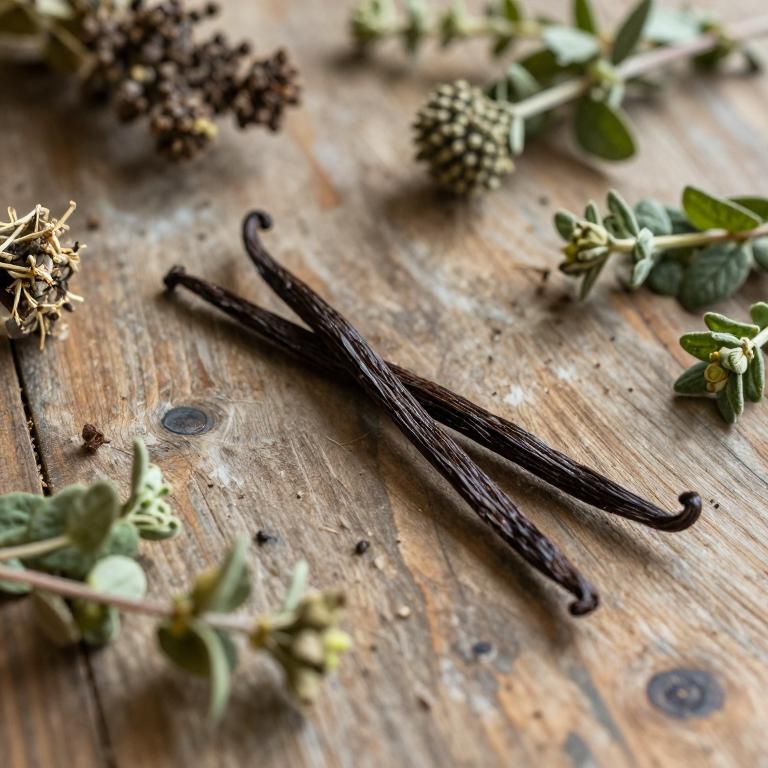
Vanilla is a fascinating tropical plant renowned worldwide for its distinct and comforting aroma. The primary chemical compound responsible for its iconic scent is vanillin, which defines its sensory profile. Beyond its raw form, the plant is often processed into various preparations, including essential oils. These extracts are highly valued for their widespread culinary use in desserts and beverages. Ultimately, this versatile plant remains a cornerstone of the global flavor industry.
- Synonyms
- Dictyophyllaria · Myrobroma · 1 more
- Common names
- Not available
- Family
- Orchidaceae
- Distribution
- Asia-Temperate
- Plant Parts
- Not available
Classification
Common Names
Vanilla is a versatile plant known by many different names across various cultures and languages. While most commonly referred to as Vanilla Orchids, it is also frequently called Baunilha or Vainillas in different regions. Some people may search for it using local variations such as vaniljat or vanilka to find specific varieties. These diverse common names reflect the widespread global popularity and botanical significance of this fragrant species. Understanding these linguistic connections helps enthusiasts identify the plant regardless of the terminology used.
Sources: Catalogue of Life (COL)
Synonyms
Vanilla is a genus of plants that has been subject to various taxonomic reclassifications throughout botanical history. Because of these shifting classifications, the plant is associated with several different scientific synonyms. For instance, it has been documented under the name Dictyophyllaria in certain historical contexts. Additionally, researchers have previously utilized the synonyms Miguelia and Myrobroma to describe members of this group. Understanding these overlapping names is essential for maintaining accuracy in botanical studies and plant identification.
Sources: The World Checklist of Vascular Plants (WCVP)
Taxonomy
Vanilla belongs to the vast kingdom Plantae, representing a diverse group of multicellular organisms. Within this kingdom, it is classified under the class Equisetopsida, reflecting its specific evolutionary lineage. The plant further belongs to the order Asparagales, a group known for its unique botanical characteristics. It is a distinguished member of the family Orchidaceae, sharing traits with many other exotic blooms. Ultimately, it is identified by its specific genus, Vanilla, which defines its unique identity in the natural world.
| Rank | Classification |
|---|---|
| Kingdom | Plantae |
| Phylum | Streptophyta |
| Class | Equisetopsida |
| Subclass | Magnoliidae |
| Order | Asparagales |
| Family | Orchidaceae |
| Genus | Vanilla |
Sources: The World Checklist of Vascular Plants (WCVP)
Distribution
Geographic Regions
Vanilla displays a diverse distribution across the African continent, spanning multiple distinct regions. In East Tropical Africa, the plant is notably established within the borders of Kenya, Tanzania, and Uganda. Its presence extends further north into Northeast Tropical Africa, specifically within the landscape of Ethiopia. Additionally, the species reaches into South Tropical Africa, finding suitable habitats in Angola. This wide geographical spread highlights the plant's ability to adapt to various tropical environments across the continent.
Sources: The World Checklist of Vascular Plants (WCVP)
Identification
Biological Activities
Compounds
Vanilla contains vanillin, a compound that shares a close structural relationship with zingerone found in ginger. While zingerone is produced when ginger is heated, it remains chemically linked to both vanillin and the eugenol found in cloves. This connection highlights how diverse natural products can share similar molecular frameworks despite originating from different plant species. Understanding these relationships helps scientists better categorize the chemical profiles of various medicinal plants. Ultimately, exploring these links provides deeper insight into the complex pharmacological potential of natural compounds.
Conditions
Preparations
Vanilla is prepared as essential oils (EOs) and is widely utilized for its culinary use. Research indicates that the essential oils of vanilla can exhibit weak anti-androgen activity regarding transcriptional activities. Furthermore, vanilla belongs to the extensive contemporary culinary use of orchids. These specific preparations and applications highlight the plant's versatility in both food and chemical study. Therefore, the plant serves significant roles through its essential oil extraction and its traditional dietary presence.