Smooth Wild-medlar
Vangueria madagascariensis · Accepted scientific name
Scientific literature: Very Sparse (26 studies) · ★☆☆☆☆
Smooth Wild-medlar, scientifically known as Vangueria madagascariensis, is a versatile medicinal plant native to tropical regions. Renowned for its diverse therapeutic properties, it is frequently utilized in traditional medicine to treat skin ailments, digestive issues, and inflammatory conditions. This resilient species serves as a vital natural resource for local communities.
- Family
- Rubiaceae
- Native range
- Africa
- Parts used
- Fruit · Leaf
- Common names
- Smooth Wild-Medlar · Spanish-Tamarind · 3 more
- Scientific synonyms
- Not available
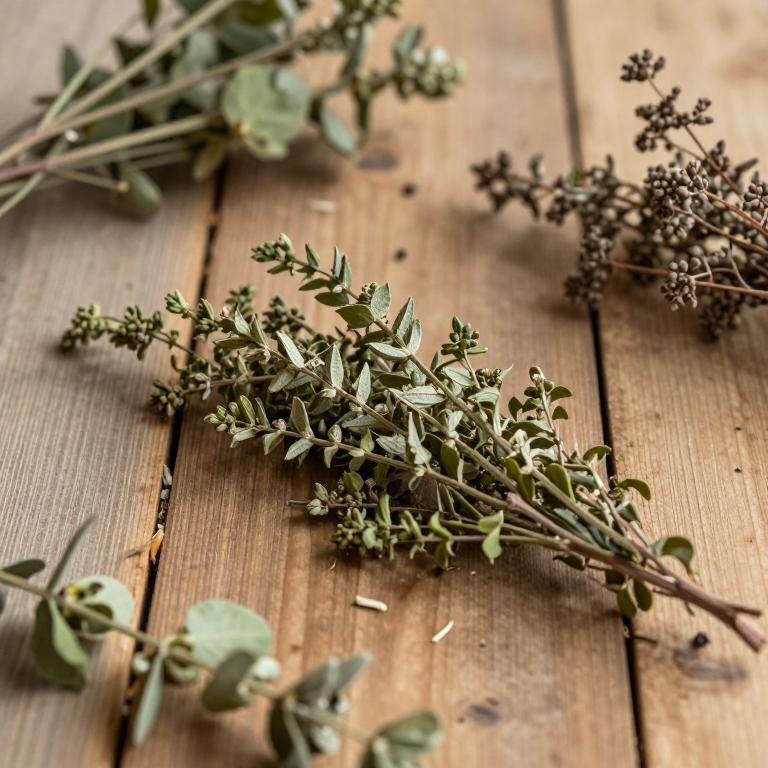
Names and Synonyms
Common Names
- Smooth Wild-medlar
- Spanish-tamarind
- tamarind-of-the-Indies
- Bush Medlar
- Smooth-Leaved Wild-Medlar
Scientific Names
Accepted name
Vangueria madagascariensisRegional and Traditional Names
Spanish:
- Dondisia foetida
- Vangueria acutiloba
- Vangueria floribunda
- Vavanga edulis
- Vangueria edulis
- Vangueria robynsii
- Vangueria commersonii
- Canthium maleolens
- Vavanga chinensis
- Vangueria cymosa
- Canthium edule
- Vangueria venosa
- Dondisia fetida
- Tamarindo redondo
- Voa-vanga
French:
- Vavangue
- Vavangue ou vangueria madagascariensis
- vavangue
- voavanguier
- tamarin des Indes
Sources: Wikidata, Catalogue of Life
Taxonomical Classification
This plant belongs to the kingdom Plantae within the phylum Streptophyta and the class Equisetopsida. As a member of the subclass Magnoliidae and the order Gentianaales, it is further classified under the family Rubiaceae. Its specific taxonomic identification is placed within the genus Vangueria, specifically as the species Vangueria madagascariensis.
| Rank | Classification |
|---|---|
| Kingdom | Plantae |
| Phylum | Streptophyta |
| Class | Equisetopsida |
| Subclass | Magnoliidae |
| Order | Gentianales |
| Family | Rubiaceae |
| Genus | Vangueria |
Sources: The World Checklist of Vascular Plants (WCVP)
Distribution
This plant exhibits a specific distribution pattern across several regions of the African continent. In West Tropical Africa, it can be found inhabiting the territories of Benin and Ghana. Its presence extends further into the West Tropical Africa zone through the country of Mali. Additionally, the species is documented within the borders of Nigeria. Finally, its range reaches into West-Central Tropical Africa, specifically within the Central African Republic.
| Region | Area |
|---|---|
| West Tropical Africa | Benin |
| West Tropical Africa | Ghana |
| West Tropical Africa | Mali |
| West Tropical Africa | Nigeria |
| West-Central Tropical Africa | Central African Republic |
| West-Central Tropical Africa | Cameroon |
| West-Central Tropical Africa | DR Congo |
| Northeast Tropical Africa | Chad |
| Northeast Tropical Africa | Eritrea |
| Northeast Tropical Africa | Ethiopia |
Sources: The World Checklist of Vascular Plants (WCVP)
Botanical Identification
Ecology
The ecology of Vangueria madagascariensis is characterized by its ability to thrive across a diverse altitudinal gradient, ranging from low-lying areas at 65 m AMSL to higher elevations reaching up to 1525 m AMSL. This wide vertical distribution allows the species to inhabit various microclimates within its range. Furthermore, its habitat preferences include anthropogenic areas (Área Antrópica), indicating a degree of adaptability to environments modified by human activity, where it can persist alongside human-influenced landscapes.
- Elevational range max:
- 1525 m AMSL
- Elevational range min:
- 65 m AMSL
- Habitat :
- Área Antrópica
Life history
The life history of Vangueria madagascariensis is characterized by its status as a perennial species, ensuring its long-term presence within its ecological niche. As a phanerophyte, the plant maintains its reproductive shoots well above the ground, a trait complemented by its classification as a nanophanerophyte, which indicates a relatively low-growing woody structure compared to larger forest trees. Throughout its existence, the plant exhibits an evergreen deciduousness pattern, meaning it retains its foliage year-round rather than shedding leaves seasonally, allowing for continuous metabolic activity and photosynthetic capability.
- Deciduousness :
- evergreen
- Life form :
- nanophanerophyte
- Life form :
- phanerophyte
- Lifecycle :
- perennial
Morphology
The morphology of Vangueria madagascariensis is characterized by a woody growth form, primarily manifesting as a shrub. This species is a terrestrial plant that functions independently, showing no parasitic behavior. In terms of stature, it exhibits significant vertical variability, with plant heights ranging from a minimum of 1.5 m to a maximum of 15 m, maintaining a mean height of approximately 7.5 m. Although it possesses a self-supporting structural habit rather than acting as a liana, vine, or obligatory climber, its robust woody development allows it to maintain its upright position in its natural habitat.
- Aquatic :
- terrestrial
- Climber :
- self-supporting
- Epiphyte :
- terrestrial
- Growth form :
- shrub
- Parasite :
- independent
- Plant height max:
- 15 m
- Plant height mean:
- 7.5 m
- Plant height min:
- 1.5 m
- Woodiness :
- woody
Physiology
The physiology of Vangueria madagascariensis is characterized by metabolic processes adapted to its specific ecological niche, focusing on efficient nutrient uptake and resource management. In terms of its symbiotic relationships and nutrient cycling, the plant is not a nitrogen fixer, meaning it lacks the specialized root nodules required to host diazotrophic bacteria for atmospheric nitrogen conversion. Consequently, its physiological nitrogen acquisition relies on the absorption of nitrates and ammonium ions from the soil through an extensive root system. Its metabolic activity supports robust growth and structural development, driven by photosynthetic pathways that facilitate carbon assimilation to sustain its vegetative and reproductive cycles.
- Nitrogen fixer :
- no
Reproduction
The reproduction of Vangueria madagascariensis is characterized by a biotic pollination syndrome, relying on living organisms rather than abiotic factors to facilitate fertilization. Specifically, the plant utilizes insect-based pollination, with a notable emphasis on bees as key pollinators. Once fertilization occurs, the resulting seeds exhibit highly consistent physical properties, characterized by a uniform seed mass with both a minimum and maximum value of approximately 1.30983 g. Furthermore, the seeds maintain a constant volume, with a minimum, maximum, and mean seed volume all measured at 1000 mm³, indicating a standardized reproductive output in terms of seed size and density.
- Pollination syndrome :
- insect
- Pollination syndrome :
- bee
- Pollination syndrome :
- biotic
- Seed mass mean:
- 1.30983 g
- Seed volume max:
- 1000 mm³
Sources: Global Inventory of Floras and Traits (GIFT)
Plant Parts
Vangueria madagascariensis has 2 reported plant parts identified across 2 scientific publications and several other databases that are studied for medicinal purposes. The most consistently reported plant part include fruit, leaf.
| Plant part | Supporting sources | Consensus |
|---|---|---|
| Fruit | 1 supporting sources | ★☆☆☆☆ |
| Leaf | 1 supporting sources | ★☆☆☆☆ |
Fruit
- Journal of traditional and complementary medicine
Leaf
- Journal of traditional and complementary medicine
Chemicals
Vangueria madagascariensis has 7 reported phytochemicals identified across 2 scientific publications and several other databases. The most consistently reported chemicals include Alcohols, Esters, Terpenoids, aldehydes, chloramphenicol.
| Chemical | Supporting sources | Consensus |
|---|---|---|
| Alcohols | 1 supporting sources | ★☆☆☆☆ |
| Esters | 1 supporting sources | ★☆☆☆☆ |
| Terpenoids | 1 supporting sources | ★☆☆☆☆ |
| aldehydes | 1 supporting sources | ★☆☆☆☆ |
| chloramphenicol | 1 supporting sources | ★☆☆☆☆ |
| gentamicin | 1 supporting sources | ★☆☆☆☆ |
| ketones | 1 supporting sources | ★☆☆☆☆ |
Alcohols
- Scientifica
Esters
- Scientifica
Terpenoids
- Scientifica
aldehydes
- Scientifica
chloramphenicol
- Journal of traditional and complementary medicine
gentamicin
- Journal of traditional and complementary medicine
ketones
- Scientifica
Activities
Vangueria madagascariensis has 7 reported activities identified across 2 scientific publications and several other databases. The most consistently reported activities include Antibacterial, Anticonvulsant, Antidiabetic, Antifungal, Antimalarial.
| Activity | Supporting sources | Consensus |
|---|---|---|
| Antibacterial | 2 supporting sources | ★☆☆☆☆ |
| Anticonvulsant | 1 supporting sources | ★☆☆☆☆ |
| Antidiabetic | 1 supporting sources | ★☆☆☆☆ |
| Antifungal | 1 supporting sources | ★☆☆☆☆ |
| Antimalarial | 1 supporting sources | ★☆☆☆☆ |
| Antioxidant | 1 supporting sources | ★☆☆☆☆ |
| Antiplasmodial | 1 supporting sources | ★☆☆☆☆ |
Antibacterial
- Journal of traditional and complementary medicine
- Scientifica
Anticonvulsant
- Scientifica
Antidiabetic
- Scientifica
Antifungal
- Scientifica
Antimalarial
- Scientifica
Antioxidant
- Scientifica
Antiplasmodial
- Scientifica
Conditions
Vangueria madagascariensis has 5 reported investigations on conditions identified across 2 scientific publications and several other databases. The most consistently reported conditions include bacterial infections, malaria, pain, parasitic worms, skin diseases.
| Condition | Supporting sources | Consensus |
|---|---|---|
| Bacterial infections | 2 supporting sources | ★☆☆☆☆ |
| Malaria | 1 supporting sources | ★☆☆☆☆ |
| Pain | 1 supporting sources | ★☆☆☆☆ |
| Parasitic worms | 1 supporting sources | ★☆☆☆☆ |
| Skin diseases | 1 supporting sources | ★☆☆☆☆ |
Bacterial infections
- Journal of traditional and complementary medicine
- BioMed research international
Malaria
- Scientifica
Pain
- Scientifica
Parasitic worms
- Scientifica
Skin diseases
- Scientifica