wild medlar
Vangueria infausta · Accepted scientific name
Scientific literature: Very Sparse (19 studies) · ★☆☆☆☆
Wild medlar, scientifically known as Vangueria infausta, is a versatile fruit-bearing tree native to sub-Saharan Africa. Renowned for its nutritional value, this species holds significant ethnobotanical importance. Various parts of the plant are utilized in traditional medicine to treat ailments ranging from digestive issues to skin infections and inflammation.
- Family
- Rubiaceae
- Native range
- Africa
- Parts used
- Leaf · Fruit
- Common names
- Medlar · Velvet Wild-Medlar · 3 more
- Scientific synonyms
- Canthium Infaustum
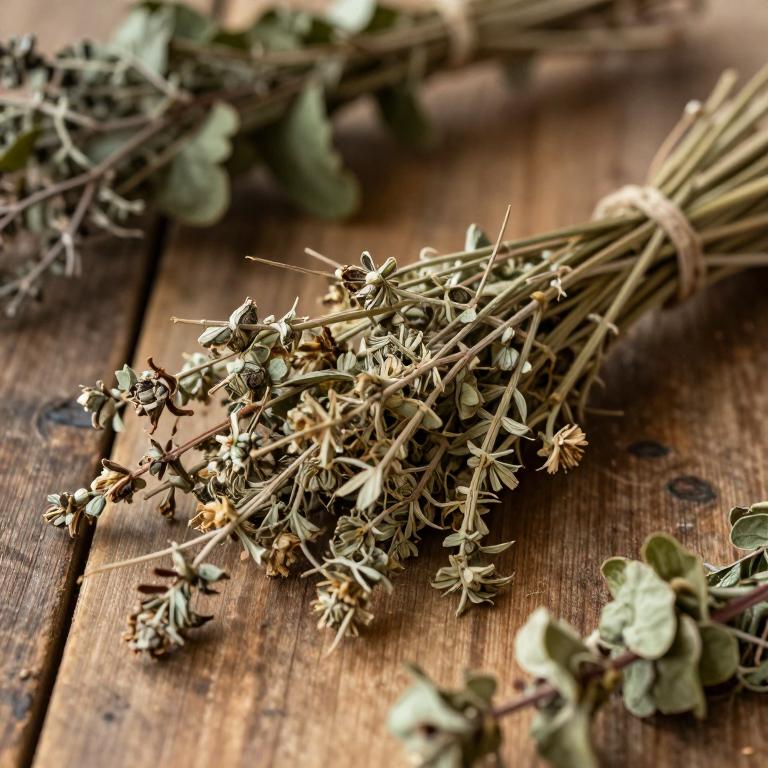
Names and Synonyms
Common Names
- medlar
- Velvet Wild-medlar
- Wild Medlar
- wild-medlar
- African medlar / wild medlar
Scientific Names
Accepted name
Vangueria infaustaSynonyms
- Canthium infaustum
Regional and Traditional Names
Spanish:
- Canthium infaustum
- Vangueria campanulata
- Vangueria barnimiana
- Vangueria infausta var. virescens
- Vangueria munjiro
- Vangueria tomentosa
- Vangueria velutina
- Vangueria rotundata
Sources: Wikidata, Catalogue of Life
Taxonomical Classification
This plant belongs to the kingdom Plantae and the phylum Streptophyta, situated within the class Equisetopsida and subclass Magnoliidae. It is classified under the order Gentianaales and falls into the family Rubiaceae. Specifically, its taxonomic identity is defined by the genus Vangueria, where it is known as Vangueria infausta.
| Rank | Classification |
|---|---|
| Kingdom | Plantae |
| Phylum | Streptophyta |
| Class | Equisetopsida |
| Subclass | Magnoliidae |
| Order | Gentianales |
| Family | Rubiaceae |
| Genus | Vangueria |
Sources: The World Checklist of Vascular Plants (WCVP)
Distribution
This plant exhibits a broad geographical distribution across several key regions of the African continent. In West-Central Tropical Africa, its presence is documented in Cameroon, Rwanda, and the Democratic Republic of the Congo. The species also extends into Northeast Tropical Africa, specifically within the territories of Sudan and South Sudan. Furthermore, its range reaches East Tropical Africa, where it can be found in Kenya. Collectively, these locations highlight the plant's ability to thrive across diverse tropical environments.
| Region | Area |
|---|---|
| West-Central Tropical Africa | Cameroon |
| West-Central Tropical Africa | Rwanda |
| West-Central Tropical Africa | DR Congo |
| Northeast Tropical Africa | Sudan-South Sudan |
| East Tropical Africa | Kenya |
| East Tropical Africa | Tanzania |
| East Tropical Africa | Uganda |
| South Tropical Africa | Angola |
| South Tropical Africa | Malawi |
| South Tropical Africa | Mozambique |
Sources: The World Checklist of Vascular Plants (WCVP)
Botanical Identification
Ecology
The ecology of Vangueria infausta is characterized by its adaptability to diverse landscape types, commonly flourishing within riverine forests or woodlands, as well as in rocky bushlands and dense thickets. This species exhibits a significant vertical distribution across various landscapes, occupying an extensive elevational range that begins at altitudes as low as 20 m AMSL and extends to a maximum height of 3333 m AMSL.
- Elevational range max:
- 3333 m AMSL
- Elevational range min:
- 20 m AMSL
- Habitat :
- riverine forest or -woodland, rocky bushland or thickets
Life history
The life history of Vangueria infausa is characterized by its status as a perennial species, ensuring its long-term presence within its ecosystem. As a phanerophyte, it maintains its photosynthetic organs well above the ground level, contributing to its structural dominance in its habitat. However, it can also be categorized under the nanophanerophyte life form, reflecting specific growth habits related to its height and branch structure. The plant exhibits a deciduous nature, undergoing seasonal shedding of its foliage as part of its survival strategy and life cycle regulation.
- Deciduousness :
- deciduous
- Life form :
- nanophanerophyte
- Life form :
- phanerophyte
- Lifecycle :
- perennial
Morphology
The morphology of Vangueria infausta is characterized by a woody growth form that can manifest as both a shrub and a tree. As a terrestrial plant, it functions as an independent organism rather than a parasite or an epiphyte. The plant is self-supporting and does not exhibit climbing behavior. In terms of stature, it displays significant vertical variability, with heights ranging from a minimum of 2 m to a maximum of 7 m, resulting in a mean plant height of approximately 5.33 m.
- Aquatic :
- terrestrial
- Climber :
- self-supporting
- Epiphyte :
- terrestrial
- Growth form :
- shrub
- Growth form :
- tree
- Parasite :
- independent
- Plant height max:
- 7 m
- Plant height mean:
- 5.33333333333333 m
- Plant height min:
- 2 m
- Woodiness :
- woody
Physiology
The physiology of Vangueria infausta is characterized by metabolic processes adapted to its role within diverse ecosystems, involving complex mechanisms for nutrient acquisition and energy conversion. Its photosynthetic pathways are optimized for survival in varying light intensities and seasonal moisture availability, driving the synthesis of organic compounds necessary for growth and structural development. In terms of its relationship with soil nutrients, the plant does not function as a nitrogen fixer; it lacks the specialized symbiotic relationships with diazotrophic bacteria, such as Rhizobium, required to convert atmospheric nitrogen into bioavailable forms. Consequently, its physiological nitrogen economy relies heavily on the uptake of nitrates and ammonium from the soil through its root systems to support protein synthesis and enzymatic functions. This dependency on soil nitrogen availability dictates its distribution and competitive strategies within its natural habitat.
- Nitrogen fixer :
- no
Reproduction
The reproduction of Vangueria infausta is characterized by a biotic pollination syndrome, primarily facilitated by insects, with bees playing a significant role in the pollination process. The plant produces fruit classified as a drupe, which is indehiscent, meaning it does not naturally split open at maturity to release its contents. The seeds contained within the fruit exhibit a mean mass of approximately 1.10446 g, with individual seed weights ranging from a minimum of 0.20892 g to a maximum of 2 g. Furthermore, the seed volume is highly consistent, measured at a mean, minimum, and maximum of 740 mm³. Dispersal is achieved through a zoochorous syndrome, where animals aid in the distribution of the seeds, ensuring the continued spread and colonization of the species.
- Dehiscence :
- indehiscent
- Dispersal syndrome :
- zoochorous
- Fruit type :
- drupe
- Pollination syndrome :
- insect
- Pollination syndrome :
- bee
- Pollination syndrome :
- biotic
- Seed mass max:
- 2 g
- Seed mass mean:
- 1.10446 g
- Seed mass min:
- 0.20892 g
- Seed volume max:
- 740 mm³
Sources: Global Inventory of Floras and Traits (GIFT)
Plant Parts
Vangueria infausta has 2 reported plant parts identified across 3 scientific publications and several other databases that are studied for medicinal purposes. The most consistently reported plant part include leaf, fruit.
| Plant part | Supporting sources | Consensus |
|---|---|---|
| Leaf | 2 supporting sources | ★☆☆☆☆ |
| Fruit | 1 supporting sources | ★☆☆☆☆ |
Leaf
- African journal of traditional, complementary, and alternative medicines : AJTCAM
- Methods and findings in experimental and clinical pharmacology
Fruit
- Pharmaceuticals (Basel, Switzerland)
Chemicals
Vangueria infausta has 3 reported phytochemicals identified across 3 scientific publications and several other databases. The most consistently reported chemicals include Anthraquinones, Flavonoids, Terpenoids.
| Chemical | Supporting sources | Consensus |
|---|---|---|
| Anthraquinones | 1 supporting sources | ★☆☆☆☆ |
| Flavonoids | 1 supporting sources | ★☆☆☆☆ |
| Terpenoids | 1 supporting sources | ★☆☆☆☆ |
Anthraquinones
- Methods and findings in experimental and clinical pharmacology
Flavonoids
- Methods and findings in experimental and clinical pharmacology
Terpenoids
- Methods and findings in experimental and clinical pharmacology
Activities
Vangueria infausta has 2 reported activities identified across 3 scientific publications and several other databases. The most consistently reported activities include Antiplasmodial, Cytotoxic.
| Activity | Supporting sources | Consensus |
|---|---|---|
| Antiplasmodial | 1 supporting sources | ★☆☆☆☆ |
| Cytotoxic | 1 supporting sources | ★☆☆☆☆ |
Antiplasmodial
- Methods and findings in experimental and clinical pharmacology
Cytotoxic
- BMC complementary and alternative medicine
Conditions
Vangueria infausta has 9 reported investigations on conditions identified across 3 scientific publications and several other databases. The most consistently reported conditions include Staphylococcus aureus, malaria, Aspergillus fumigatus, Aspergillus niger, Candida albicans.
| Condition | Supporting sources | Consensus |
|---|---|---|
| Staphylococcus aureus | 2 supporting sources | ★☆☆☆☆ |
| Malaria | 2 supporting sources | ★☆☆☆☆ |
| Aspergillus fumigatus | 1 supporting sources | ★☆☆☆☆ |
| Aspergillus niger | 1 supporting sources | ★☆☆☆☆ |
| Candida albicans | 1 supporting sources | ★☆☆☆☆ |
| Erwinia amylovora | 1 supporting sources | ★☆☆☆☆ |
| Hiv | 1 supporting sources | ★☆☆☆☆ |
| Pseudomonas syringae | 1 supporting sources | ★☆☆☆☆ |
| Staphylococcus epidermidis | 1 supporting sources | ★☆☆☆☆ |
Staphylococcus aureus
- BMC complementary and alternative medicine
- Journal of ethnopharmacology
Malaria
- Methods and findings in experimental and clinical pharmacology
- Journal of ethnopharmacology
Aspergillus fumigatus
- Journal of ethnopharmacology
Aspergillus niger
- African journal of traditional, complementary, and alternative medicines : AJTCAM
Candida albicans
- Journal of ethnopharmacology
Erwinia amylovora
- Journal of ethnopharmacology
Hiv
- BMC complementary and alternative medicine
Pseudomonas syringae
- Journal of ethnopharmacology
Staphylococcus epidermidis
- BMC complementary and alternative medicine
Preparations
Vangueria infausta has 6 reported preparations identified across 3 scientific publications and several other databases. The most consistently reported preparations include Leaf extracts, boiling water, cold water, ethyl acetate, leaf extract.
| Preparation | Supporting sources | Consensus |
|---|---|---|
| Leaf extracts | 1 supporting sources | ★☆☆☆☆ |
| Boiling water | 1 supporting sources | ★☆☆☆☆ |
| Cold water | 1 supporting sources | ★☆☆☆☆ |
| Ethyl acetate | 1 supporting sources | ★☆☆☆☆ |
| Leaf extract | 1 supporting sources | ★☆☆☆☆ |
| Methanol | 1 supporting sources | ★☆☆☆☆ |
Leaf extracts
- African journal of traditional, complementary, and alternative medicines : AJTCAM
Boiling water
- Journal of ethnopharmacology
Cold water
- Journal of ethnopharmacology
Ethyl acetate
- Journal of ethnopharmacology
Leaf extract
- Methods and findings in experimental and clinical pharmacology
Methanol
- Journal of ethnopharmacology