Fadogia agrestis
Vangueria agrestis · Accepted scientific name
Scientific literature: Very Sparse (10 studies) · ★☆☆☆☆
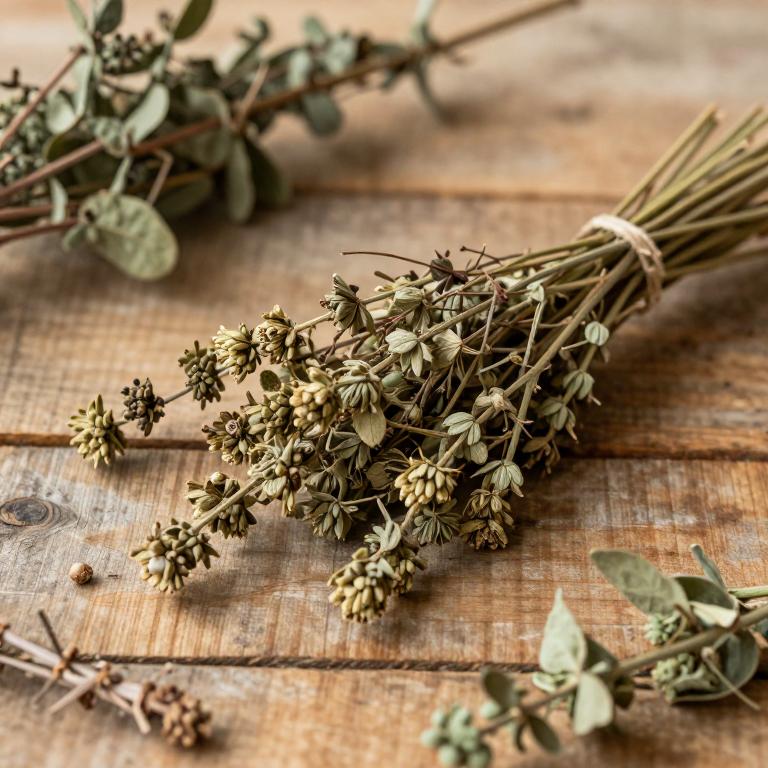
Fadogia agrestis, scientifically known as Vangueria agrestis, is a potent medicinal plant deeply rooted in traditional African herbalism. Renowned for its diverse therapeutic properties, it is frequently utilized to support hormonal balance, enhance reproductive health, and boost vitality, offering a natural approach to wellness through its unique phytochemical profile.
- Family
- Rubiaceae
- Native range
- Africa
- Parts used
- Root
- Common names
- Not available
- Scientific synonyms
- Fadogia Agrestis
Names and Synonyms
Scientific Names
Accepted name
Vangueria agrestisSynonyms
- Fadogia agrestis
Sources: Wikidata
Taxonomical Classification
This plant belongs to the kingdom Plantae and is classified under the phylum Streptophyta and class Equisetopsida. Within the subclass Magnoliidae, it is organized under the order Gentianaales and the family Rubiaceae. Finally, its specific taxonomic placement is within the genus Vangueria.
| Rank | Classification |
|---|---|
| Kingdom | Plantae |
| Phylum | Streptophyta |
| Class | Equisetopsida |
| Subclass | Magnoliidae |
| Order | Gentianales |
| Family | Rubiaceae |
| Genus | Vangueria |
Sources: The World Checklist of Vascular Plants (WCVP)
Distribution
This plant is primarily found throughout the West Tropical Africa region. Its documented presence includes the nation of Benin, where it grows within specific local ecosystems. It is also distributed across the territories of Burkina and Ghana. Furthermore, the species can be located within the borders of Guinea. Finally, its geographical range extends into the Ivory Coast.
| Region | Area |
|---|---|
| West Tropical Africa | Benin |
| West Tropical Africa | Burkina |
| West Tropical Africa | Ghana |
| West Tropical Africa | Guinea |
| West Tropical Africa | Ivory Coast |
| West Tropical Africa | Nigeria |
| West Tropical Africa | Togo |
| West-Central Tropical Africa | Central African Republic |
| West-Central Tropical Africa | Cameroon |
| West-Central Tropical Africa | Congo |
Sources: The World Checklist of Vascular Plants (WCVP)
Botanical Identification
Life history
The life history of Vangueria agrestis is characterized by its specific growth strategy and structural classification within its ecosystem. Regarding its life form, the species is categorized under two distinct classifications: it is identified as a chamaephyte in terms of its secondary life form classification and also as a chamaephyte under its primary life form classification. This indicates that the plant typically maintains its perennating buds close to the soil surface, allowing it to survive seasonal environmental fluctuations by protecting its vital reproductive structures just above the ground level.
- Life form :
- chamaephyte
Morphology
The morphology of Vangueria agrestis is characterized by a shrubby growth form and a woody structure. This plant typically attains a height ranging from a minimum of approximately 0.30 meters to a maximum of about 0.91 meters. It functions as a self-supporting plant, meaning it does not rely on other structures for climbing, and it exists as an independent organism rather than a parasite. Furthermore, it maintains a terrestrial life habit, growing directly in the soil rather than as an epiphyte.
- Climber :
- self-supporting
- Epiphyte :
- terrestrial
- Growth form :
- shrub
- Parasite :
- independent
- Plant height max:
- 0.914411119 m
- Plant height min:
- 0.304803706 m
- Woodiness :
- woody
Sources: Global Inventory of Floras and Traits (GIFT)
Plant Parts
Vangueria agrestis has 1 reported plant parts identified across 1 scientific publications and several other databases that are studied for medicinal purposes. The most consistently reported plant part include root.
| Plant part | Supporting sources | Consensus |
|---|---|---|
| Root | 1 supporting sources | ★☆☆☆☆ |
Root
- Planta medica
Chemicals
Vangueria agrestis has 3 reported phytochemicals identified across 1 scientific publications and several other databases. The most consistently reported chemicals include Anthraquinones, Flavonoids, Saponins.
| Chemical | Supporting sources | Consensus |
|---|---|---|
| Anthraquinones | 1 supporting sources | ★☆☆☆☆ |
| Flavonoids | 1 supporting sources | ★☆☆☆☆ |
| Saponins | 1 supporting sources | ★☆☆☆☆ |
Anthraquinones
- Asian journal of andrology
Flavonoids
- Asian journal of andrology
Saponins
- Asian journal of andrology
Activities
Vangueria agrestis has 3 reported activities identified across 1 scientific publications and several other databases. The most consistently reported activities include Aphrodisiac, Analgesic, Antiplasmodial.
| Activity | Supporting sources | Consensus |
|---|---|---|
| Aphrodisiac | 2 supporting sources | ★☆☆☆☆ |
| Analgesic | 1 supporting sources | ★☆☆☆☆ |
| Antiplasmodial | 1 supporting sources | ★☆☆☆☆ |
Aphrodisiac
- Asian journal of andrology
- Planta medica
Analgesic
- Planta medica
Antiplasmodial
- Journal of ethnopharmacology
Preparations
Vangueria agrestis has 1 reported preparations identified across 1 scientific publications and several other databases. The most consistently reported preparations include bark.
| Preparation | Supporting sources | Consensus |
|---|---|---|
| Bark | 1 supporting sources | ★☆☆☆☆ |
Bark
- Journal of ethnopharmacology