tearshrub
Vallesia glabra · Accepted scientific name
Scientific literature: Very Sparse (2 studies) · ★☆☆☆☆
Tearshrub, scientifically known as Vallesia glabra, is a rare medicinal plant valued for its potent bioactive compounds. Native to specific microclimates, it is traditionally utilized in holistic remedies to soothe inflammation and support digestive health. Understanding its unique botanical properties is essential for exploring its potential in modern pharmacology.
- Family
- Apocynaceae
- Native range
- Northern America
- Parts used
- Not available
- Common names
- Tearshrub
- Scientific synonyms
- Vallesia Inedita · Vallesia Punctata · 4 more
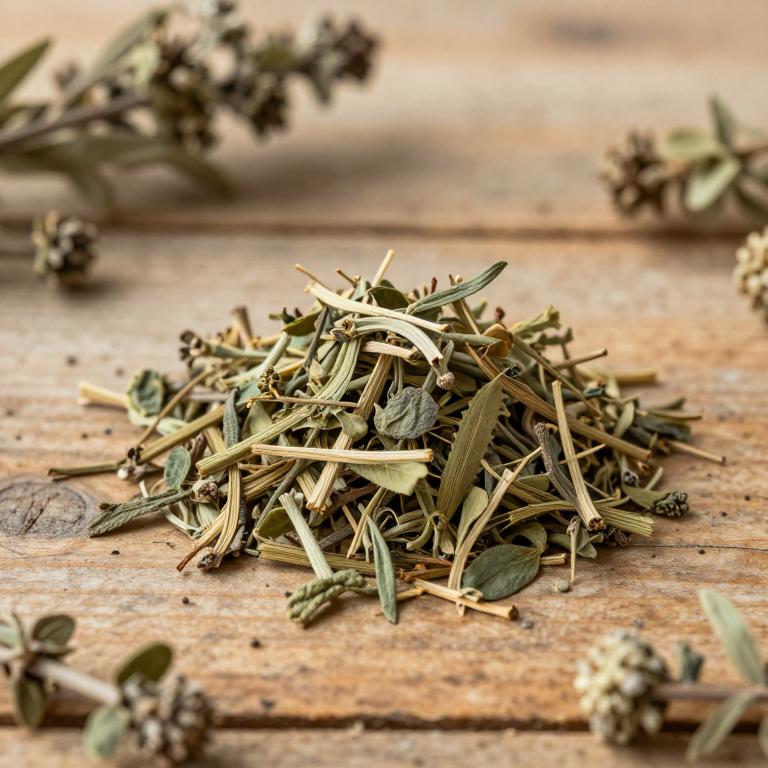
Names and Synonyms
Common Names
- tearshrub
Scientific Names
Accepted name
Vallesia glabraSynonyms
- Vallesia inedita
- Vallesia punctata
- Rauvolfia glabra
- Vallesia cymbifolia
- Vallesia dichotoma
- Vallesia chiococcoides
Regional and Traditional Names
Spanish:
- frutilla
- peralillo
- sauquillo
Sources: Wikidata, Catalogue of Life
Taxonomical Classification
This plant belongs to the kingdom Plantae and the phylum Streptophyta. It is classified under the class Equisetopsida and the subclass Magnoliidae, falling within the order Gentianales. Finally, its taxonomic lineage concludes with the family Apocynaceae and the genus Vallesia.
| Rank | Classification |
|---|---|
| Kingdom | Plantae |
| Phylum | Streptophyta |
| Class | Equisetopsida |
| Subclass | Magnoliidae |
| Order | Gentianales |
| Family | Apocynaceae |
| Genus | Vallesia |
Sources: The World Checklist of Vascular Plants (WCVP)
Distribution
This plant exhibits a wide geographical distribution spanning across North and South America. In Mexico, its presence is documented throughout the Northeast and the Gulf regions. Additionally, the species can be found in the Northwest and Southwest territories of Mexico. Beyond North America, its range extends into Western South America. Specifically, the plant is known to inhabit the country of Bolivia.
| Region | Area |
|---|---|
| Mexico | Mexico Northeast |
| Mexico | Mexico Gulf |
| Mexico | Mexico Northwest |
| Mexico | Mexico Southwest |
| Western South America | Bolivia |
| Western South America | Colombia |
| Western South America | Peru |
| Brazil | Brazil North |
| Southern South America | Argentina Northeast |
| Southern South America | Argentina Northwest |
Sources: The World Checklist of Vascular Plants (WCVP)
Botanical Identification
Ecology
The ecology of Vallesia glabra is defined by a broad altitudinal distribution that allows it to inhabit a diverse array of landscapes. This species exhibits remarkable environmental plasticity, occupying an elevational range that spans from sea level (0 m AMSL) up to high-altitude montane or sub-alpine zones reaching 3000 m AMSL. This extensive vertical gradient suggests that the plant is capable of adapting to varying temperature regimes, atmospheric pressures, and moisture availability across its habitat. By thriving from low-lying coastal or lowland areas to significant elevations, Vallesia glabra occupies multiple ecological niches, facilitating its presence in a wide variety of topographical settings within its geographical range.
- Elevational range max:
- 3000 m AMSL
- Elevational range min:
- 0 m AMSL
Life history
The life history of Vallesia glabra is characterized by a perennial lifecycle, allowing the plant to persist through multiple growing seasons. In terms of its structural growth and survival strategy, it is classified as a nanophanerophyte, reflecting its low-growing stature where the perennating buds are located just above the ground level. Additionally, its developmental classification includes phanerophyte characteristics, which informs its overall vegetative architecture and its ability to sustain itself within its specific ecological niche.
- Life form :
- nanophanerophyte
- Life form :
- phanerophyte
- Lifecycle :
- perennial
Morphology
The morphology of Vallesia glabra is characterized by a woody growth form, specifically categorized as a shrub. It functions as an independent organism, showing no parasitic tendencies, and is classified as a terrestrial plant rather than an aquatic or semiaquatic species. While it possesses a self-supporting structure, it does not exhibit climbing habits such as lianas or vines, nor does it function as an epiphyte, maintaining a strictly terrestrial existence. This shrubby species can reach a maximum plant height of 6 meters.
- Aquatic :
- terrestrial
- Climber :
- self-supporting
- Epiphyte :
- terrestrial
- Growth form :
- shrub
- Parasite :
- independent
- Plant height max:
- 6 m
- Woodiness :
- woody
Reproduction
The reproduction of Valleesia glabra is characterized by specific seed and fruit metrics that define its reproductive output. The plant produces fruits categorized by a dry texture, contrasting with fleshy types. The seeds generated during this process exhibit a highly consistent volume, with both the minimum and maximum recorded values, as well as the mean volume, stabilized at exactly 24 mm³. In terms of mass, the seeds show slight variability, with a minimum mass of 0.0216 g and a maximum mass of 0.02671 g, resulting in an overall mean seed mass of 0.024155 g.
- Fruit dryness :
- dry
- Seed mass max:
- 0.02671 g
- Seed mass mean:
- 0.024155 g
- Seed mass min:
- 0.0216 g
- Seed volume max:
- 24 mm³
Sources: Global Inventory of Floras and Traits (GIFT)
Chemicals
Vallesia glabra has 1 reported phytochemicals identified across 0 scientific publications and several other databases. The most consistently reported chemicals include Vallesine.
| Chemical | Supporting sources | Consensus |
|---|---|---|
| Vallesine | 1 supporting sources | ★☆☆☆☆ |
Vallesine
- Biomolecules
Conditions
Vallesia glabra has 1 reported investigations on conditions identified across 0 scientific publications and several other databases. The most consistently reported conditions include anti-oxidant.
| Condition | Supporting sources | Consensus |
|---|---|---|
| Anti-oxidant | 1 supporting sources | ★☆☆☆☆ |
Anti-oxidant
- Biomolecules