Valeriana sisymbriifolia
Valeriana sisymbriifolia · Accepted scientific name
Scientific literature: Very Sparse (2 studies) · ★☆☆☆☆
Valeriana sisymbriifolia, scientifically known as Valeriana sisymbriifolia, is a medicinal shrub native to the high-altitude regions of the Andes. Renowned in traditional medicine, it is primarily utilized for its sedative and anti-inflammatory properties. This plant offers significant therapeutic potential in treating anxiety, insomnia, and various inflammatory conditions.
- Family
- Caprifoliaceae
- Native range
- Asia-Temperate
- Parts used
- Not available
- Common names
- Not available
- Scientific synonyms
- Not available
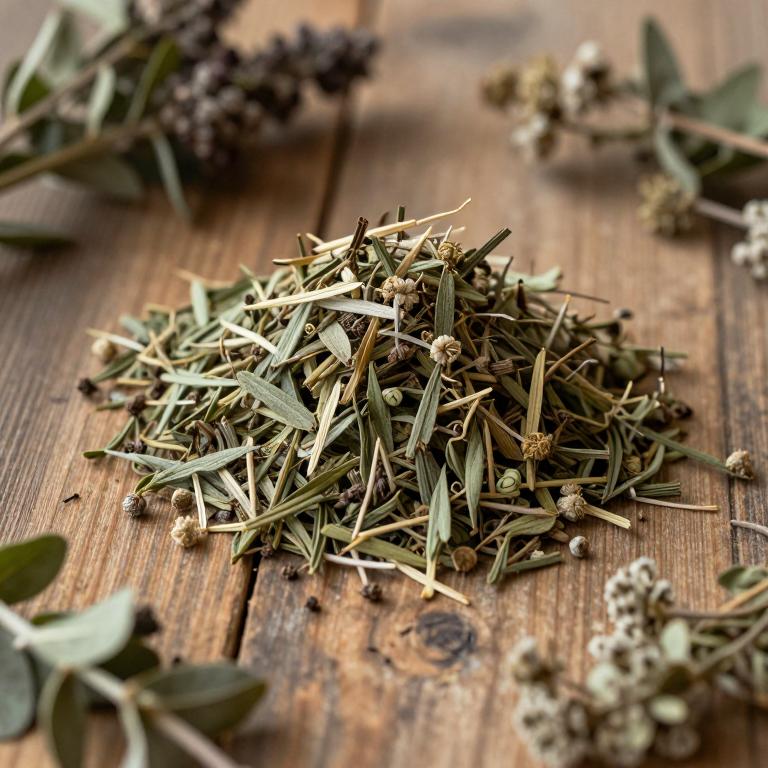
Names and Synonyms
Scientific Names
Accepted name
Valeriana sisymbriifoliaSources: Wikidata
Taxonomical Classification
This plant belongs to the kingdom Plantae and the phylum Streptophyta, falling under the class Equisetopsida and subclass Magnoliidae. Within the order Dipsacales and family Caprifoliaceae, it is classified under the genus Valeriana.
| Rank | Classification |
|---|---|
| Kingdom | Plantae |
| Phylum | Streptophyta |
| Class | Equisetopsida |
| Subclass | Magnoliidae |
| Order | Dipsacales |
| Family | Caprifoliaceae |
| Genus | Valeriana |
Sources: The World Checklist of Vascular Plants (WCVP)
Distribution
This plant exhibits a wide geographical distribution across several key regions of Asia. Within Central Asia, its presence is documented in the country of Turkmenistan. Moving toward the Caucasus, it can be found throughout the Transcaucasus region. The species also extends into Western Asia, specifically inhabiting the territories of Afghanistan and Iran. Additionally, its range covers parts of Western Asia including Iraq.
| Region | Area |
|---|---|
| Central Asia | Turkmenistan |
| Caucasus | Transcaucasus |
| Western Asia | Afghanistan |
| Western Asia | Iran |
| Western Asia | Iraq |
| Western Asia | Türkiye |
Sources: The World Checklist of Vascular Plants (WCVP)
Botanical Identification
Ecology
The ecology of Valeriana sisymbriifolia is characterized by its presence across diverse montane landscapes, ranging from dense forests and forest edges to open meadows and shrubberies. It thrives in varied terrains, including stony places and limestone-rich substrates, demonstrating a notable adaptability to different soil compositions and microhabitats. This species is primarily found at mid-to-high altitudes, with an elevational range spanning from a minimum of 1250 m AMSL to a maximum of 2700 m AMSL, maintaining an average elevation of approximately 1600 m AMSL.
- Elevational range max:
- 2700 m AMSL
- Elevational range mean:
- 1600 m AMSL
- Elevational range min:
- 1250 m AMSL
- Habitat :
- forest, forest edges, limestone, meadows, mountains, shrubberies, stony places
Life history
The life history of Valeriana sisymbriifolia is characterized by its status as a perennial species, a trait that allows the plant to persist through multiple growing seasons. As a perennial, it avoids the complete senescence seen in annuals, instead focusing its energy on long-term survival and reproductive success within its habitat. This lifecycle enables the plant to establish robust root systems and vegetative structures that can withstand seasonal fluctuations, providing a stable foundation for its flowering and seeding phases. Depending on environmental conditions, its growth patterns may exhibit variability, but its fundamental biological strategy relies on its perennial nature to maintain presence in the ecosystem over extended periods.
- Lifecycle :
- perennial
Morphology
The morphology of Valeriana sisymbriifolia is characterized by its growth form as a non-woody herb. This herbaceous plant typically exhibits a stature that varies in height, ranging from a minimum of 0.15 m to a maximum of 0.65 m.
- Growth form :
- herb
- Plant height max:
- 0.65 m
- Plant height min:
- 0.15 m
- Woodiness :
- non-woody
Reproduction
The reproduction of Valeriana sisymbriifolia is characterized by a specific seasonal flowering window that dictates its reproductive cycle. The flowering process typically begins in June and continues through the month of July, though the exact timing can remain variable depending on environmental conditions. This brief period of anthesis is essential for the plant's pollination and subsequent seed production.
- Flowering time :
- Jun
- Flowering time :
- Jul
Sources: Global Inventory of Floras and Traits (GIFT)
Chemicals
Valeriana sisymbriifolia has 1 reported phytochemicals identified across 0 scientific publications and several other databases. The most consistently reported chemicals include Valerenic acid.
| Chemical | Supporting sources | Consensus |
|---|---|---|
| Valerenic acid | 1 supporting sources | ★☆☆☆☆ |
Valerenic acid
- Pakistan journal of pharmaceutical sciences
Conditions
Valeriana sisymbriifolia has 1 reported investigations on conditions identified across 0 scientific publications and several other databases. The most consistently reported conditions include antioxidant effect.
| Condition | Supporting sources | Consensus |
|---|---|---|
| Antioxidant effect | 1 supporting sources | ★☆☆☆☆ |
Antioxidant effect
- Pakistan journal of pharmaceutical sciences