shittimwood
Vachellia seyal · Accepted scientific name
Scientific literature: Very Sparse (25 studies) · ★☆☆☆☆
Shittimwood, scientifically known as Vachellia seyal, is a versatile medicinal plant native to the arid regions of Africa. Renowned for its therapeutic properties, it is widely utilized in traditional medicine to treat various ailments, including inflammation and skin conditions, offering significant pharmacological potential for modern herbal treatments.
- Family
- Fabaceae
- Native range
- Africa
- Parts used
- Leaf · Seed
- Common names
- Shittimwood · Talh · 3 more
- Scientific synonyms
- Acacia Seyal
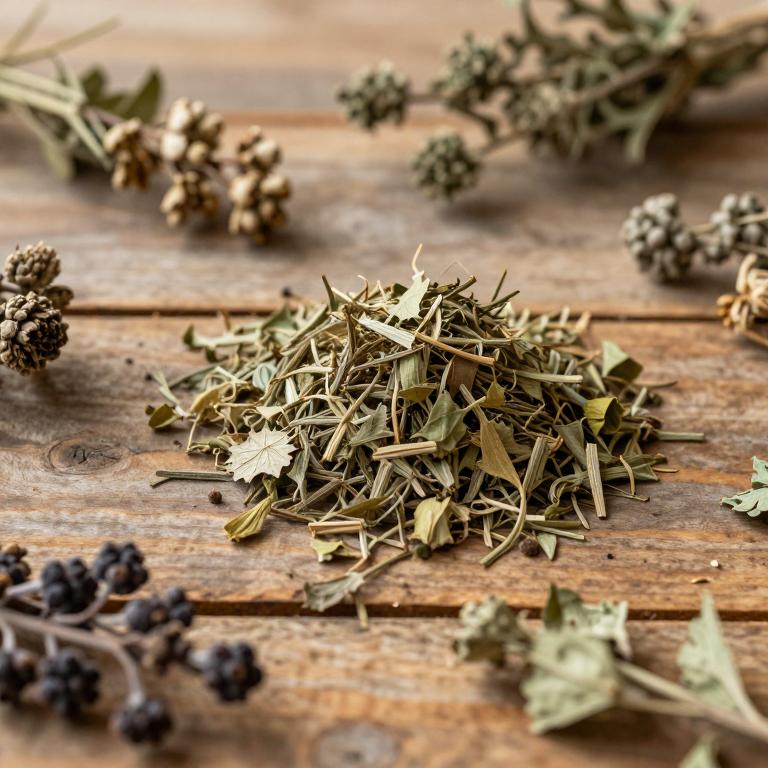
Names and Synonyms
Common Names
- shittimwood
- talh
- thirtythorn
- whistlingtree
- Thirsty Thorn
Scientific Names
Accepted name
Vachellia seyalSynonyms
- Acacia seyal
Sources: Wikidata, Catalogue of Life
Taxonomical Classification
This plant belongs to the kingdom Plantae and is classified under the phylum Streptophyta within the class Equisetopsida. As a member of the subclass Magnoliidae and the order Fabales, it is specifically situated in the family Fabaceae. Its taxonomic identity is further refined within the genus Vachellia.
| Rank | Classification |
|---|---|
| Kingdom | Plantae |
| Phylum | Streptophyta |
| Class | Equisetopsida |
| Subclass | Magnoliidae |
| Order | Fabales |
| Family | Fabaceae |
| Genus | Vachellia |
Sources: The World Checklist of Vascular Plants (WCVP)
Distribution
This plant exhibits a wide geographical range spanning across several distinct regions of the African continent. In Northern Africa, its presence is documented within the territories of Algeria and Egypt. Moving toward the western part of the continent, it is found throughout West Tropical Africa. Specifically, its distribution includes the nations of Benin and Burkina Faso. Additionally, the plant can be located within the borders of the Gambia.
| Region | Area |
|---|---|
| Northern Africa | Algeria |
| Northern Africa | Egypt |
| West Tropical Africa | Benin |
| West Tropical Africa | Burkina |
| West Tropical Africa | Gambia |
| West Tropical Africa | Guinea |
| West Tropical Africa | Ivory Coast |
| West Tropical Africa | Mali |
| West Tropical Africa | Mauritania |
| West Tropical Africa | Nigeria |
Sources: The World Checklist of Vascular Plants (WCVP)
Botanical Identification
Life history
The life history of Vachellia seyal is characterized by its status as a perennial plant, allowing it to persist through multiple growing seasons. As a phanerophyte, its reproductive buds are located on aerial shoots well above the ground, a structural adaptation that defines its primary life form. This species maintains an evergreen deciduousness, ensuring that it retains its foliage throughout much of its life cycle rather than shedding it seasonally.
- Deciduousness :
- evergreen
- Life form :
- phanerophyte
- Lifecycle :
- perennial
Morphology
The morphology of Vachellia seyal is characterized by its growth form as a woody tree, functioning as a self-supporting structure rather than a climber or vine. It is an independent organism, neither a parasite nor an epiphyte, and maintains a strictly terrestrial habitat. The plant exhibits significant vertical development, reaching a mean height of approximately 10 m, with maximum recorded heights extending up to 12.19214826 m.
- Aquatic :
- terrestrial
- Climber :
- self-supporting
- Epiphyte :
- terrestrial
- Growth form :
- tree
- Parasite :
- independent
- Plant height max:
- 12.19214826 m
- Plant height mean:
- 10 m
- Woodiness :
- woody
Physiology
The physiology of Vachellia seyal is characterized by a specific metabolic framework designed to optimize energy production and nutrient acquisition within its ecological niche. This species utilizes the C3 photosynthetic pathway, a process where carbon dioxide is fixed directly into a three-carbon compound during the Calvin cycle, which is typical for many woody perennial plants in temperate and subtropical environments. Furthermore, the plant demonstrates a specialized capacity for nutrient cycling as a nitrogen fixer, meaning it possesses the physiological mechanisms necessary to convert atmospheric nitrogen into bioavailable forms, thereby enhancing its growth and survival in nitrogen-limited soils.
- Nitrogen fixer :
- yes
- Photosynthetic pathway :
- C3
Reproduction
The reproduction of Vachellia seyal is characterized by a biotic pollination syndrome, relying on living organisms to facilitate the transfer of pollen. Specifically, the plant utilizes insect-mediated pollination, with bees playing a significant role in this biological process. Following successful fertilization, the plant produces seeds that exhibit notable variability in size. The seed mass ranges from a minimum of 0.02329 g to a maximum of 0.06553 g, with the average seed mass recorded at 0.039571 g.
- Pollination syndrome :
- insect
- Pollination syndrome :
- bee
- Pollination syndrome :
- biotic
- Seed mass max:
- 0.06553 g
- Seed mass mean:
- 0.039571 g
- Seed mass min:
- 0.02329 g
Sources: Global Inventory of Floras and Traits (GIFT)
Plant Parts
Vachellia seyal has 2 reported plant parts identified across 2 scientific publications and several other databases that are studied for medicinal purposes. The most consistently reported plant part include leaf, seed.
| Plant part | Supporting sources | Consensus |
|---|---|---|
| Leaf | 1 supporting sources | ★☆☆☆☆ |
| Seed | 1 supporting sources | ★☆☆☆☆ |
Leaf
- Fitoterapia
Seed
- Bioresources and bioprocessing
Chemicals
Vachellia seyal has 16 reported phytochemicals identified across 2 scientific publications and several other databases. The most consistently reported chemicals include CADMIUM, CAMPESTEROL, CATECHIN, Clionasterol, Epicatechin.
| Chemical | Supporting sources | Consensus |
|---|---|---|
| CADMIUM | 1 supporting sources | ★☆☆☆☆ |
| CAMPESTEROL | 1 supporting sources | ★☆☆☆☆ |
| CATECHIN | 1 supporting sources | ★☆☆☆☆ |
| Clionasterol | 1 supporting sources | ★☆☆☆☆ |
| Epicatechin | 1 supporting sources | ★☆☆☆☆ |
| Flavonoids | 1 supporting sources | ★☆☆☆☆ |
| Gallic acid | 1 supporting sources | ★☆☆☆☆ |
| Lupeol | 1 supporting sources | ★☆☆☆☆ |
| MANGANESE | 1 supporting sources | ★☆☆☆☆ |
| METHYL GALLATE | 1 supporting sources | ★☆☆☆☆ |
CADMIUM
- Biological trace element research
CAMPESTEROL
- Molecules (Basel, Switzerland)
CATECHIN
- Bioresources and bioprocessing
Clionasterol
- Molecules (Basel, Switzerland)
Epicatechin
- Molecules (Basel, Switzerland)
Flavonoids
- Fitoterapia
Gallic acid
- Bioresources and bioprocessing
Lupeol
- Molecules (Basel, Switzerland)
MANGANESE
- Biological trace element research
METHYL GALLATE
- Bioresources and bioprocessing
Activities
Vachellia seyal has 5 reported activities identified across 2 scientific publications and several other databases. The most consistently reported activities include Antibacterial, Anticancer, Antimicrobial, Antineoplastic, Antioxidant.
| Activity | Supporting sources | Consensus |
|---|---|---|
| Antibacterial | 1 supporting sources | ★☆☆☆☆ |
| Anticancer | 1 supporting sources | ★☆☆☆☆ |
| Antimicrobial | 1 supporting sources | ★☆☆☆☆ |
| Antineoplastic | 1 supporting sources | ★☆☆☆☆ |
| Antioxidant | 1 supporting sources | ★☆☆☆☆ |
Antibacterial
- Molecules (Basel, Switzerland)
Anticancer
- Bioresources and bioprocessing
Antimicrobial
- Bioresources and bioprocessing
Antineoplastic
- Bioresources and bioprocessing
Antioxidant
- Bioresources and bioprocessing
Preparations
Vachellia seyal has 7 reported preparations identified across 2 scientific publications and several other databases. The most consistently reported preparations include Water extract of Acacia seyal bark, honey, honeys, leaf methanolic extracts, methanol crude extract.
| Preparation | Supporting sources | Consensus |
|---|---|---|
| Water extract of acacia seyal bark | 1 supporting sources | ★☆☆☆☆ |
| Honey | 1 supporting sources | ★☆☆☆☆ |
| Honeys | 1 supporting sources | ★☆☆☆☆ |
| Leaf methanolic extracts | 1 supporting sources | ★☆☆☆☆ |
| Methanol crude extract | 1 supporting sources | ★☆☆☆☆ |
| Methanolic crude extract | 1 supporting sources | ★☆☆☆☆ |
| Water and methanolic extracts | 1 supporting sources | ★☆☆☆☆ |
Water extract of acacia seyal bark
- Molecules (Basel, Switzerland)
Honey
- Saudi journal of biological sciences
Honeys
- Saudi journal of biological sciences
Leaf methanolic extracts
- Fitoterapia
Methanol crude extract
- Molecules (Basel, Switzerland)
Methanolic crude extract
- Molecules (Basel, Switzerland)
Water and methanolic extracts
- Molecules (Basel, Switzerland)