gum arabic tree
Vachellia nilotica · Accepted scientific name
Scientific literature: Very Extensive (763 studies) · ★★★★★
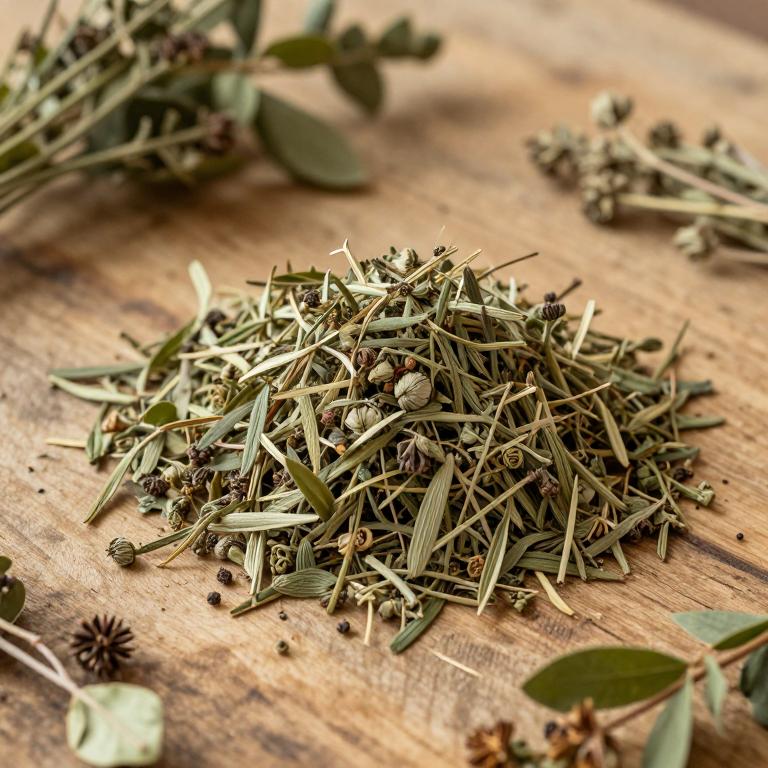
Gum arabic tree, scientifically known as Vachellia nilotica, is a versatile medicinal plant native to Africa and the Middle East. Renowned for its therapeutic properties, its resin, bark, and leaves are utilized in traditional medicine to treat inflammation, digestive issues, and skin ailments, offering significant pharmacological potential worldwide.
Names and Synonyms
Common Names
- Arabic Gumtree
- Gum Arabic Tree
- Egyptian acacia
- Indian gum-arabic-tree
- babul acacia
- black babul
- prickly acacia
- scentedthorn
- thorn-mimosa
- thorny acacia
- Babul
- scented-pod thorn
Scientific Names
Accepted name
Vachellia niloticaSynonyms
- Gumifera nilotica
- Acacia arabica var. nilotica
- Mimosa nilotica
- Acacia nilotica
- Acacia scorpioides var. nilotica
Regional and Traditional Names
Spanish:
- acacia gomifera
German:
- arabische Gummiakazie
- arabischer Gummibaum
- Arabische Gummi-Akazie
French:
- nèp nèp
- acacia à gomme
- gommier rouge
- Acacia d’Arabie
- Acacia égyptien
- Acacia épineux
Sources: Wikidata, Catalogue of Life
Taxonomical Classification
This plant belongs to the kingdom Plantae and the phylum Streptophyta, falling under the class Equisetopsida and subclass Magnoliidae. Within the order Fabales, it is classified under the family Fabaceae. Finally, it is identified by its specific genus, Vacchellia.
| Rank | Classification |
|---|---|
| Kingdom | Plantae |
| Phylum | Streptophyta |
| Class | Equisetopsida |
| Subclass | Magnoliidae |
| Order | Fabales |
| Family | Fabaceae |
| Genus | Vachellia |
Sources: The World Checklist of Vascular Plants (WCVP)
Distribution
This plant is widely distributed across various regions of Northern Africa. It can be found growing in the landscapes of Algeria and Egypt. Additionally, its presence extends to the territories of Libya and Morocco. The species also reaches the Macaronesian islands, specifically appearing in Cape Verde. Together, these locations define the primary geographical range of this medicinal species.
| Region | Area |
|---|---|
| Northern Africa | Algeria |
| Northern Africa | Egypt |
| Northern Africa | Libya |
| Northern Africa | Morocco |
| Macaronesia | Cape Verde |
| West Tropical Africa | Benin |
| West Tropical Africa | Burkina |
| West Tropical Africa | Gambia |
| West Tropical Africa | Ghana |
| West Tropical Africa | Guinea-Bissau |
Sources: The World Checklist of Vascular Plants (WCVP)
Botanical Identification
Ecology
The ecology of Vachellia nilotica is characterized by its adaptability to diverse African landscapes, thriving across a broad altitudinal gradient that spans from as low as 5 m AMSL to a maximum elevation of 1829 m AMSL. This species is predominantly found within varied vegetation structures, showing a particular affinity for wooded grasslands, woodlands, and Acacia grasslands. It is also frequently integrated into open bushland and clump bushland, where it often serves as a dominant component of the local flora.
- Elevational range max:
- 1829 m AMSL
- Elevational range min:
- 5 m AMSL
- Habitat :
- wooded grassland, woodland, Acacia grassland, open bushland and clump bushland (often dominant)
Life history
The life history of Vachellia nilotica is characterized by its status as a perennial species, allowing it to persist in its environment through multiple growing seasons. As a phanerophyte, the plant maintains its photosynthetic organs on elevated woody stems, a life form that can be further categorized into different phanerophyte growth strategies depending on the specific ecological niche it occupies. Throughout much of its existence, the species exhibits evergreen deciduousness, maintaining its foliage to facilitate continuous metabolic processes, though its overall physiological state remains robust over its extended lifespan.
- Deciduousness :
- evergreen
- Life form :
- phanerophyte
- Lifecycle :
- perennial
Morphology
The morphology of Vacchellia nilotica is characterized by a woody growth form that primarily manifests as a tree or a shrub. This terrestrial species is self-supporting rather than acting as a climber or a vine, and it functions as an independent organism without parasitic behavior. In terms of stature, the plant exhibits significant variability in height, with dimensions ranging from a minimum of 3 m to a maximum of approximately 15.24 m, maintaining an average height of about 8 m. As a non-epiphytic, terrestrial plant, its structural integrity is defined by its woody nature, supporting its development across different ecological niches within its habitat.
- Aquatic :
- terrestrial
- Climber :
- self-supporting
- Epiphyte :
- terrestrial
- Growth form :
- tree
- Growth form :
- shrub
- Parasite :
- independent
- Plant height max:
- 15.24018532 m
- Plant height mean:
- 8 m
- Plant height min:
- 3 m
- Woodiness :
- woody
Physiology
The physiology of Vachellia nilotica is characterized by its efficient metabolic processes adapted to its environmental niche. The plant utilizes a C3 photosynthetic pathway, a mechanism typical of many woody species where carbon dioxide fixation occurs directly through the Calvin cycle within the mesophyll cells. Furthermore, the plant possesses the physiological capability to act as a nitrogen fixer, facilitating a symbiotic relationship that allows it to convert atmospheric nitrogen into a bioavailable form, thereby enhancing its nutrient acquisition and supporting growth in nitrogen-limited soils.
- Nitrogen fixer :
- yes
- Photosynthetic pathway :
- C3
Reproduction
The reproduction of Vachellia nilotica is characterized by a specific seasonal flowering cycle and complex biotic interactions. The plant's flowering period typically begins in July and extends through November, though the timing can be variable. The reproductive process relies on biotic pollination syndromes, specifically utilizing insects, with bees identified as a primary pollinator. Following successful pollination, the plant produces seeds that exhibit distinct morphological traits; the seed mass varies significantly, ranging from a minimum of 0.016 g to a maximum of 0.204 g, with a mean mass of approximately 0.143 g. The seed volume is highly consistent, recorded at a constant 160 mm³. Once mature, the dispersal of these seeds is facilitated through a zoochorous syndrome, meaning they are dispersed by animals to facilitate the spread and establishment of new individuals.
- Dispersal syndrome :
- zoochorous
- Flowering time :
- Jul
- Flowering time :
- Nov
- Pollination syndrome :
- insect
- Pollination syndrome :
- bee
- Pollination syndrome :
- biotic
- Seed mass max:
- 0.204 g
- Seed mass mean:
- 0.143206095285714 g
- Seed mass min:
- 0.016 g
- Seed volume max:
- 160 mm³
Sources: Global Inventory of Floras and Traits (GIFT)
Plant Parts
Vachellia nilotica has 6 reported plant parts identified across 21 scientific publications and several other databases that are studied for medicinal purposes. The most consistently reported plant part include fruit, leaf, root, stem, flower.
| Plant part | Supporting sources | Consensus |
|---|---|---|
| Fruit | 5 supporting sources | ★★★☆☆ |
| Leaf | 5 supporting sources | ★★★☆☆ |
| Root | 5 supporting sources | ★★★☆☆ |
| Stem | 3 supporting sources | ★★☆☆☆ |
| Flower | 2 supporting sources | ★☆☆☆☆ |
| Seed | 1 supporting sources | ★☆☆☆☆ |
Fruit
- Plants (Basel, Switzerland)
- Journal of ethnopharmacology
- African journal of traditional, complementary, and alternative medicines : AJTCAM
- Molecules (Basel, Switzerland)
- Frontiers in nutrition
Leaf
- Molecules (Basel, Switzerland)
- Scientific reports
- SpringerPlus
- Heliyon
- Biotechnology and applied biochemistry
Root
- Ancient science of life
- Frontiers in chemistry
- Journal of intercultural ethnopharmacology
- Scientific reports
- African journal of traditional, complementary, and alternative medicines : AJTCAM
Stem
- SpringerPlus
- African journal of traditional, complementary, and alternative medicines : AJTCAM
- Journal of traditional and complementary medicine
Flower
- Molecular biology reports
- Scientific reports
Seed
- The Journal of tropical medicine and hygiene
Chemicals
Vachellia nilotica has 137 reported phytochemicals identified across 21 scientific publications and several other databases. The most consistently reported chemicals include Flavonoids, Tannins, Gallic acid, METHYL GALLATE, Saponins.
| Chemical | Supporting sources | Consensus |
|---|---|---|
| Flavonoids | 6 supporting sources | ★★★☆☆ |
| Tannins | 5 supporting sources | ★★★☆☆ |
| Gallic acid | 4 supporting sources | ★★☆☆☆ |
| METHYL GALLATE | 4 supporting sources | ★★☆☆☆ |
| Saponins | 4 supporting sources | ★★☆☆☆ |
| pyrogallol | 4 supporting sources | ★★☆☆☆ |
| Betulin | 2 supporting sources | ★☆☆☆☆ |
| CALCIUM | 2 supporting sources | ★☆☆☆☆ |
| CATECHIN | 2 supporting sources | ★☆☆☆☆ |
| CHLOROGENIC ACID | 2 supporting sources | ★☆☆☆☆ |
Flavonoids
- Dose-response : a publication of International Hormesis Society
- Veterinary research forum : an international quarterly journal
- Inflammopharmacology
- Natural product communications
- Archives of dermatological research
View 1 additional sources
- Bioinformation
Tannins
- Veterinary research forum : an international quarterly journal
- Inflammopharmacology
- Phytotherapy research : PTR
- Archives of dermatological research
- Planta medica
Gallic acid
- Dr. Duke
- BMC complementary medicine and therapies
- Fitoterapia
- Frontiers in chemistry
METHYL GALLATE
- Chemistry & biodiversity
- BMC complementary medicine and therapies
- Fitoterapia
- Biotechnology and applied biochemistry
Saponins
- Veterinary research forum : an international quarterly journal
- Inflammopharmacology
- Phytotherapy research : PTR
- Archives of dermatological research
pyrogallol
- Dr. Duke
- Dose-response : a publication of International Hormesis Society
- Molecules (Basel, Switzerland)
- Asian Pacific journal of cancer prevention : APJCP
Betulin
- Dr. Duke
- Heliyon
CALCIUM
- Dr. Duke
- Veterinary research forum : an international quarterly journal
CATECHIN
- Fitoterapia
- Journal of ethnopharmacology
CHLOROGENIC ACID
- Dr. Duke
- Molecular diversity
Activities
Vachellia nilotica has 501 reported activities identified across 21 scientific publications and several other databases. The most consistently reported activities include Antioxidant, Anticancer, Antimicrobial, Antimutagenic, Antibacterial.
| Activity | Supporting sources | Consensus |
|---|---|---|
| Antioxidant | 6 supporting sources | ★★★☆☆ |
| Anticancer | 4 supporting sources | ★★☆☆☆ |
| Antimicrobial | 3 supporting sources | ★★☆☆☆ |
| Antimutagenic | 3 supporting sources | ★★☆☆☆ |
| Antibacterial | 2 supporting sources | ★☆☆☆☆ |
| Antifungal | 2 supporting sources | ★☆☆☆☆ |
| Antispasmodic | 2 supporting sources | ★☆☆☆☆ |
| Antiviral | 2 supporting sources | ★☆☆☆☆ |
| Cytotoxic | 2 supporting sources | ★☆☆☆☆ |
| Hepatoprotective | 2 supporting sources | ★☆☆☆☆ |
Antioxidant
- Dr. Duke
- Frontiers in nutrition
- BMC complementary and alternative medicine
- Journal of traditional and complementary medicine
- Scientific reports
View 1 additional sources
- Food and chemical toxicology : an international journal published for the British Industrial Biological Research Association
Anticancer
- Dr. Duke
- Molecular biology reports
- Frontiers in nutrition
- Scientific reports
Antimicrobial
- Dose-response : a publication of International Hormesis Society
- Frontiers in nutrition
- Food and chemical toxicology : an international journal published for the British Industrial Biological Research Association
Antimutagenic
- Dr. Duke
- Journal of environmental pathology, toxicology and oncology : official organ of the International Society for Environmental Toxicology and Cancer
- Teratogenesis, carcinogenesis, and mutagenesis
Antibacterial
- Dr. Duke
- Frontiers in nutrition
Antifungal
- Frontiers in nutrition
- Archives of dermatological research
Antispasmodic
- Dr. Duke
- Molecules (Basel, Switzerland)
Antiviral
- Dr. Duke
- Virology journal
Cytotoxic
- Dr. Duke
- Molecular biology reports
Hepatoprotective
- Dr. Duke
- Dose-response : a publication of International Hormesis Society
Conditions
Vachellia nilotica has 4 reported investigations on conditions identified across 21 scientific publications and several other databases. The most consistently reported conditions include Candida albicans, leishmaniasis, osteoporosis, trypanosomiasis.
| Condition | Supporting sources | Consensus |
|---|---|---|
| Candida albicans | 1 supporting sources | ★☆☆☆☆ |
| Leishmaniasis | 1 supporting sources | ★☆☆☆☆ |
| Osteoporosis | 1 supporting sources | ★☆☆☆☆ |
| Trypanosomiasis | 1 supporting sources | ★☆☆☆☆ |
Candida albicans
- Chemistry & biodiversity
Leishmaniasis
- Chemistry & biodiversity
Osteoporosis
- Biotechnology and applied biochemistry
Trypanosomiasis
- Chemistry & biodiversity
Preparations
Vachellia nilotica has 50 reported preparations identified across 21 scientific publications and several other databases. The most consistently reported preparations include extracts, methanolic extract, water extracts, Methanolic extracts, acetone extract.
| Preparation | Supporting sources | Consensus |
|---|---|---|
| Extracts | 3 supporting sources | ★★☆☆☆ |
| Methanolic extract | 3 supporting sources | ★★☆☆☆ |
| Water extracts | 3 supporting sources | ★★☆☆☆ |
| Methanolic extracts | 2 supporting sources | ★☆☆☆☆ |
| Acetone extract | 2 supporting sources | ★☆☆☆☆ |
| Methanol extracts | 2 supporting sources | ★☆☆☆☆ |
| 70% ethanol extracts | 1 supporting sources | ★☆☆☆☆ |
| Bark methanolic extract | 1 supporting sources | ★☆☆☆☆ |
| Cme | 1 supporting sources | ★☆☆☆☆ |
| Hexane-methanolic plant extract | 1 supporting sources | ★☆☆☆☆ |
Extracts
- Inflammopharmacology
- Journal of environmental pathology, toxicology and oncology : official organ of the International Society for Environmental Toxicology and Cancer
- Frontiers in chemistry
Methanolic extract
- Virology journal
- Heliyon
- Molecules (Basel, Switzerland)
Water extracts
- The Journal of tropical medicine and hygiene
- BMC complementary and alternative medicine
- Journal of ethnopharmacology
Methanolic extracts
- Toxicology mechanisms and methods
- African journal of traditional, complementary, and alternative medicines : AJTCAM
Acetone extract
- Teratogenesis, carcinogenesis, and mutagenesis
- Asian Pacific journal of cancer prevention : APJCP
Methanol extracts
- Phytotherapy research : PTR
- Journal of ethnopharmacology
70% ethanol extracts
- BMC complementary and alternative medicine
Bark methanolic extract
- ACS omega
Cme
- Journal of ethnopharmacology
Hexane-methanolic plant extract
- PloS one