Babul
Vachellia nilotica subsp. indica · Accepted scientific name
Scientific literature: Very Sparse (9 studies) · ★☆☆☆☆
Babul, scientifically known as Vachellia nilotica subsp. indica, is a resilient, thorny acacia native to the Indian subcontinent. Renowned for its extensive therapeutic properties, this medicinal plant offers various parts—including bark, gum, and leaves—used traditionally to treat skin ailments, digestive issues, and inflammatory conditions within Ayurvedic medicine.
- Family
- Fabaceae
- Native range
- Africa
- Parts used
- Flower · Leaf
- Common names
- Babul · Egyptian Mimosa Thorn
- Scientific synonyms
- Acacia Nilotica Subsp. Indica · Acacia Arabica Var. Indica · 1 more
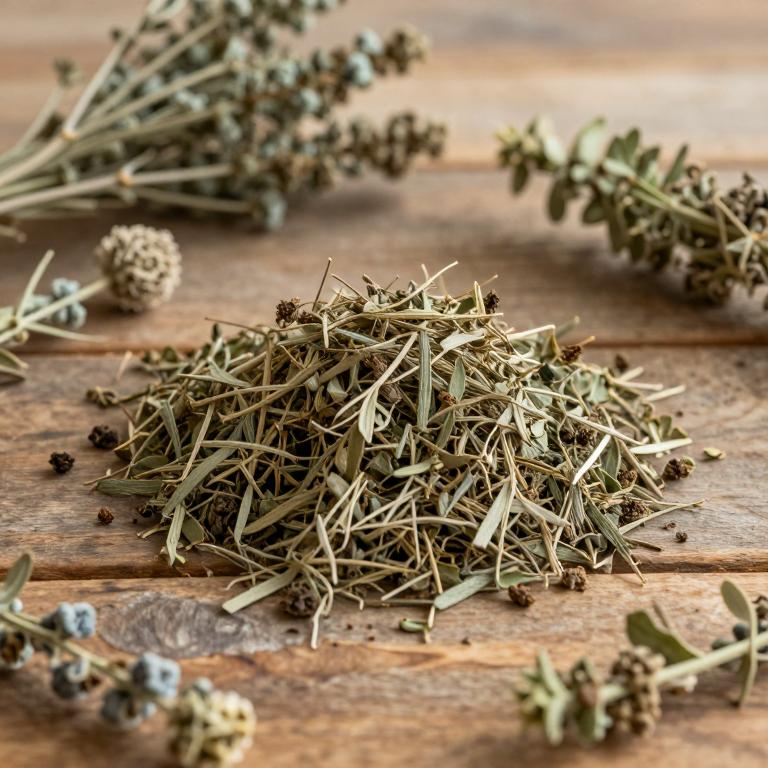
Names and Synonyms
Common Names
- Babul
- Egyptian mimosa thorn
Scientific Names
Accepted name
Vachellia nilotica subsp. indicaSynonyms
- Acacia nilotica subsp. indica
- Acacia arabica var. indica
- Acacia nilotica var. indica
Sources: Wikidata, Catalogue of Life
Taxonomical Classification
This plant belongs to the kingdom Plantae and is classified within the phylum Streptophyta and the class Equisetopsida. Following its placement in the subclass Magnoliidae, it falls under the order Fabales and the family Fabaceae. Ultimately, the medicinal species is categorized under the genus Vacchellia as the subspecies indica.
| Rank | Classification |
|---|---|
| Kingdom | Plantae |
| Phylum | Streptophyta |
| Class | Equisetopsida |
| Subclass | Magnoliidae |
| Order | Fabales |
| Family | Fabaceae |
| Genus | Vachellia |
Sources: The World Checklist of Vascular Plants (WCVP)
Distribution
This plant exhibits a wide geographical distribution spanning several distinct regions across the African continent and its surrounding islands. In Northern Africa, its presence is noted within the country of Egypt. Moving towards the Atlantic, it can be found in the Macaronesian archipelago of Cape Verde. The species also extends into West-Central Tropical Africa, specifically inhabiting the Gulf of Guinea Islands. Finally, its range reaches Northeast Tropical Africa, where it is documented in both Eritrea and Ethiopia.
| Region | Area |
|---|---|
| Northern Africa | Egypt |
| Macaronesia | Cape Verde |
| West-Central Tropical Africa | Gulf of Guinea Is. |
| Northeast Tropical Africa | Eritrea |
| Northeast Tropical Africa | Ethiopia |
| Northeast Tropical Africa | Somalia |
| Northeast Tropical Africa | Sudan-South Sudan |
| East Tropical Africa | Tanzania |
| South Tropical Africa | Angola |
| Western Asia | Iran |
Sources: The World Checklist of Vascular Plants (WCVP)
Plant Parts
Vachellia nilotica subsp. indica has 4 reported plant parts identified across 4 scientific publications and several other databases that are studied for medicinal purposes. The most consistently reported plant part include flower, leaf, root, stem.
| Plant part | Supporting sources | Consensus |
|---|---|---|
| Flower | 1 supporting sources | ★☆☆☆☆ |
| Leaf | 1 supporting sources | ★☆☆☆☆ |
| Root | 1 supporting sources | ★☆☆☆☆ |
| Stem | 1 supporting sources | ★☆☆☆☆ |
Flower
- Microbial pathogenesis
Leaf
- Microbial pathogenesis
Root
- Microbial pathogenesis
Stem
- Microbial pathogenesis
Chemicals
Vachellia nilotica subsp. indica has 4 reported phytochemicals identified across 4 scientific publications and several other databases. The most consistently reported chemicals include 1-Pentanol, Cyclopentanol, 1-methyl-, TRICHLOROETHANE, carbonic acid ethyl hexyl ester.
| Chemical | Supporting sources | Consensus |
|---|---|---|
| 1-Pentanol | 1 supporting sources | ★☆☆☆☆ |
| Cyclopentanol, 1-methyl- | 1 supporting sources | ★☆☆☆☆ |
| TRICHLOROETHANE | 1 supporting sources | ★☆☆☆☆ |
| carbonic acid ethyl hexyl ester | 1 supporting sources | ★☆☆☆☆ |
1-Pentanol
- Microbial pathogenesis
Cyclopentanol, 1-methyl-
- Microbial pathogenesis
TRICHLOROETHANE
- Microbial pathogenesis
carbonic acid ethyl hexyl ester
- Microbial pathogenesis
Preparations
Vachellia nilotica subsp. indica has 6 reported preparations identified across 4 scientific publications and several other databases. The most consistently reported preparations include chloroform fraction, flower extract, leaf extracts, methanolic extract of flower, n-hexane and chloroform fractions.
| Preparation | Supporting sources | Consensus |
|---|---|---|
| Chloroform fraction | 1 supporting sources | ★☆☆☆☆ |
| Flower extract | 1 supporting sources | ★☆☆☆☆ |
| Leaf extracts | 1 supporting sources | ★☆☆☆☆ |
| Methanolic extract of flower | 1 supporting sources | ★☆☆☆☆ |
| N-hexane and chloroform fractions | 1 supporting sources | ★☆☆☆☆ |
| Root-bark extracts | 1 supporting sources | ★☆☆☆☆ |
Chloroform fraction
- Microbial pathogenesis
Flower extract
- Microbial pathogenesis
Leaf extracts
- Microbial pathogenesis
Methanolic extract of flower
- Microbial pathogenesis
N-hexane and chloroform fractions
- Microbial pathogenesis
Root-bark extracts
- Microbial pathogenesis