Roman cassie
Vachellia caven · Accepted scientific name
Scientific literature: Very Sparse (5 studies) · ★☆☆☆☆
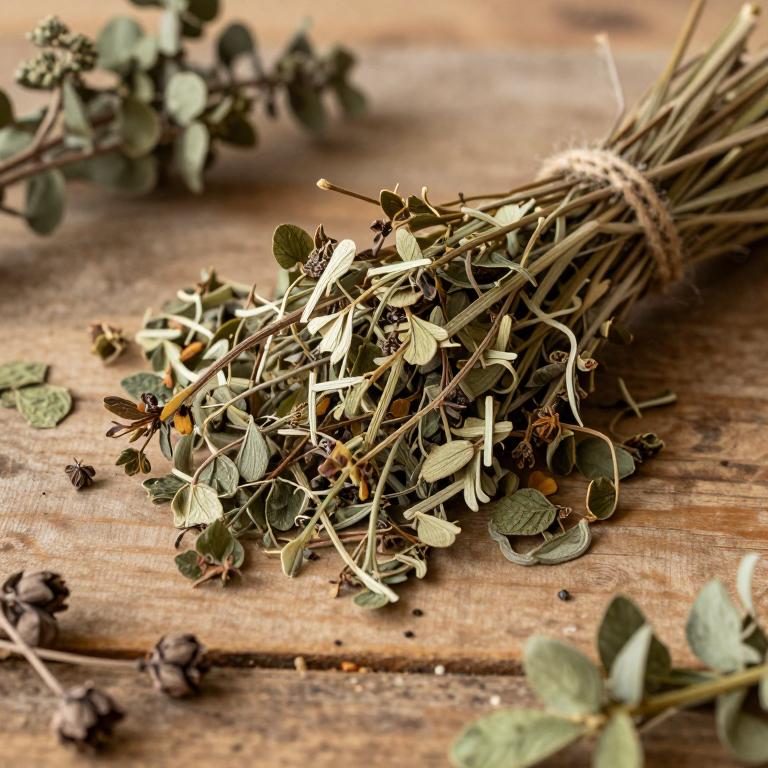
Roman cassie, scientifically known as Vachellia caven, is a resilient shrub native to various African landscapes. Renowned for its medicinal properties, this plant is traditionally utilized in folk medicine to treat diverse ailments. Its unique chemical composition makes it a subject of interest for botanical and pharmacological research studies.
Names and Synonyms
Common Names
- Roman cassie
- Caven Thorn
- Roman-cassie
Scientific Names
Accepted name
Vachellia cavenSynonyms
- Acacia farnesiana f. cavenia
- Acacia caven var. dehiscens
- Acacia farnesiana var. brachicarpa
- Acacia caven var. macrocarpa
- Vachellia farnesiana f. armata
- Acacia caven var. microcarpa
- Vachellia farnesiana f. brachypoda
- Acacia caven var. sphaerocarpa
- Vachellia farnesiana f. cavenia
- Acacia caven var. stenocarpa
- Vachellia farnesiana f. inermis
- Vachellia farnesiana f. micrantha
- Acacia cavenia
- Inga caven
- Acacia aromatica
- Acacia farnesiana var. heterocarpa
- Acacia farnesiana var. cavenia
- Acacia adenopa
- Vachellia farnesiana f. microcarpa
- Vachellia farnesiana f. stenocarpa
- Acacia caven
- Vachellia ibirocayensis
- Mimosa cavenia
- Acacia ibirocayensis
- Acacia adenocarpa
- Mimosa caven
Regional and Traditional Names
Spanish:
- espino caván
- Aromo
- Caven
- Churqui
- Espinillo
- Espino
French:
- cassie Romaine
Sources: Wikidata, Catalogue of Life
Taxonomical Classification
This plant belongs to the kingdom Plantae and is classified under the phylum Streptophyta and class Equisetopsida. Within the subclass Magnoliidae, it is ordered under Fabales and placed in the family Fabaceae. Finally, it is identified by the genus Vachellia.
| Rank | Classification |
|---|---|
| Kingdom | Plantae |
| Phylum | Streptophyta |
| Class | Equisetopsida |
| Subclass | Magnoliidae |
| Order | Fabales |
| Family | Fabaceae |
| Genus | Vachellia |
Sources: The World Checklist of Vascular Plants (WCVP)
Distribution
This plant exhibits a wide and diverse geographical distribution across multiple continents. In Southwestern Europe, its presence is specifically noted in Spain. Its range extends significantly into Western South America, where it can be found in Bolivia. Within the South American continent, it is also located in the West-Central and Southern regions of Brazil. Finally, the species reaches the Northeast portion of Argentina in Southern South America.
| Region | Area |
|---|---|
| Southwestern Europe | Spain |
| Western South America | Bolivia |
| Brazil | Brazil West-Central |
| Brazil | Brazil South |
| Southern South America | Argentina Northeast |
| Southern South America | Argentina Northwest |
| Southern South America | Chile Central |
| Southern South America | Chile North |
| Southern South America | Chile South |
| Southern South America | Paraguay |
Sources: The World Checklist of Vascular Plants (WCVP)
Botanical Identification
Ecology
The ecology of Vacchellia caveen is characterized by a broad altitudinal distribution, spanning from sea level (0 m AMSL) to a maximum elevation of 3200 m AMSL. This species demonstrates significant environmental plasticity, as it is found inhabiting both natural and human-altered landscapes, specifically within anthropogenic areas (Área Antrópica) and the Cerrado biome (latu sensu).
- Elevational range max:
- 3200 m AMSL
- Elevational range min:
- 0 m AMSL
- Habitat :
- Área Antrópica, Cerrado (lato sensu)
Life history
The life history of Vacchellia caveen is characterized by a long-term developmental strategy, as it functions as a perennial organism. In terms of its structural growth and ecological positioning, the plant exhibits a dual classification of life forms; it is identified as a phanerophyte, indicating that its buds are borne on aerial shoots well above the ground, while it also demonstrates traits consistent with a nanophanerophyte, suggesting that its woody parts remain relatively low in stature.
- Life form :
- nanophanerophyte
- Life form :
- phanerophyte
- Lifecycle :
- perennial
Morphology
The morphology of Vachellia caveen is characterized by a woody structure that functions as a self-supporting growth form. It primarily manifests as a tree or a subshrub, reaching a mean plant height of 6 m, with a maximum potential height of up to 7 m. The plant is strictly terrestrial in its habitat, lacking any aquatic or semiaquatic tendencies, and it does not exhibit epiphytic behavior, remaining independent rather than functioning as a holoepiphyte or hemiepiphyte. Furthermore, it is an independent organism that does not act as a parasite, maintaining a self-supporting stature without the need to climb as a liana or vine.
- Aquatic :
- terrestrial
- Climber :
- self-supporting
- Epiphyte :
- terrestrial
- Growth form :
- tree
- Growth form :
- subshrub
- Parasite :
- independent
- Plant height max:
- 7 m
- Plant height mean:
- 6 m
- Woodiness :
- woody
Physiology
The physiology of Vacchellia caveen is characterized by a C3 photosynthetic pathway, a mechanism where carbon dioxide is fixed directly through the Calvin cycle using the enzyme RuBisCO. This metabolic process dictates the plant's gas exchange patterns and water-use efficiency within its specific ecological niche. Furthermore, the species functions as a nitrogen fixer, possessing the biological capability to convert atmospheric nitrogen into a usable form, likely through symbiotic relationships with nitrogen-fixing bacteria within its root systems, thereby enhancing its nutrient acquisition and soil enrichment processes.
- Nitrogen fixer :
- yes
- Photosynthetic pathway :
- C3
Reproduction
The reproduction of Vacchellia cavea is characterized by the production of seeds that exhibit specific morphological variations in weight. The seed mass within the population shows a measurable range, with a recorded minimum mass of 0.0777 g and a maximum mass reaching 0.104 g. On average, the seed mass is 0.0939 g, reflecting a consistent pattern of seed development essential for the establishment of new individuals in its habitat.
- Seed mass max:
- 0.104 g
- Seed mass mean:
- 0.0939 g
- Seed mass min:
- 0.0777 g
Sources: Global Inventory of Floras and Traits (GIFT)
Plant Parts
Vachellia caven has 1 reported plant parts identified across 1 scientific publications and several other databases that are studied for medicinal purposes. The most consistently reported plant part include flower.
| Plant part | Supporting sources | Consensus |
|---|---|---|
| Flower | 1 supporting sources | ★☆☆☆☆ |
Flower
- Journal of ethnopharmacology
Activities
Vachellia caven has 4 reported activities identified across 1 scientific publications and several other databases. The most consistently reported activities include Antioxidant, Cicatrizant, Digestive, Diuretic.
| Activity | Supporting sources | Consensus |
|---|---|---|
| Antioxidant | 1 supporting sources | ★☆☆☆☆ |
| Cicatrizant | 1 supporting sources | ★☆☆☆☆ |
| Digestive | 1 supporting sources | ★☆☆☆☆ |
| Diuretic | 1 supporting sources | ★☆☆☆☆ |
Antioxidant
- Journal of ethnopharmacology
Cicatrizant
- Natural product communications
Digestive
- Natural product communications
Diuretic
- Natural product communications
Preparations
Vachellia caven has 2 reported preparations identified across 1 scientific publications and several other databases. The most consistently reported preparations include decoction, infusion.
| Preparation | Supporting sources | Consensus |
|---|---|---|
| Decoction | 1 supporting sources | ★☆☆☆☆ |
| Infusion | 1 supporting sources | ★☆☆☆☆ |
Decoction
- Journal of ethnopharmacology
Infusion
- Journal of ethnopharmacology