Madeira blueberry
Vaccinium padifolium · Accepted scientific name
Scientific literature: Very Sparse (29 studies) · ★☆☆☆☆
Madeira blueberry, scientifically known as Vaccinium padifolium, is an endemic shrub found exclusively in the lush, subtropical forests of Madeira. Renowned for its vibrant berries, this medicinal plant is traditionally valued for its antioxidant properties, offering significant health benefits and serving as a unique botanical treasure of the Atlantic.
- Family
- Ericaceae
- Native range
- Africa
- Parts used
- Fruit · Leaf
- Common names
- Madeiran Blueberry
- Scientific synonyms
- Not available
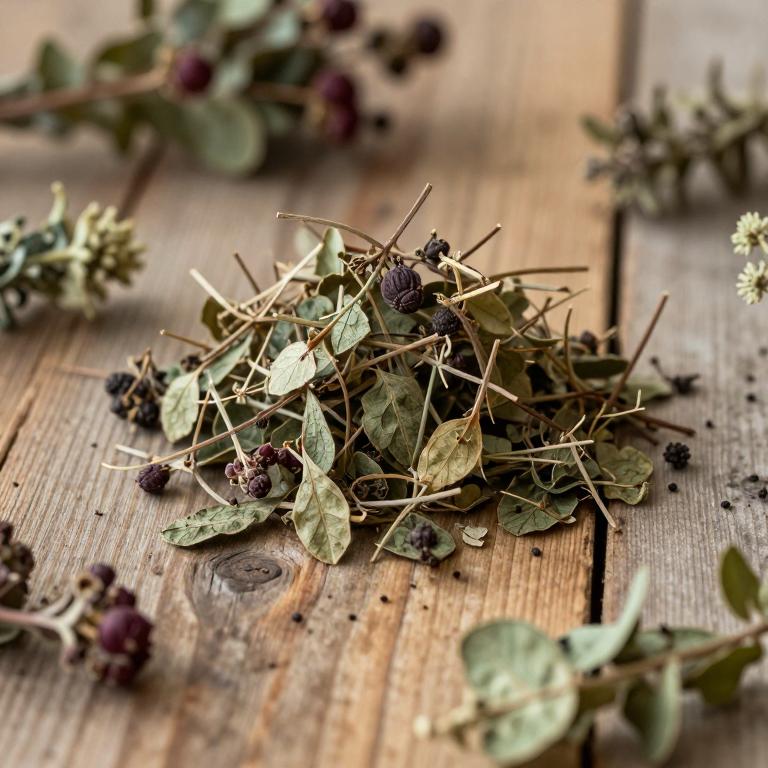
Names and Synonyms
Common Names
- Madeiran blueberry
Scientific Names
Accepted name
Vaccinium padifoliumSources: Wikidata, Catalogue of Life
Taxonomical Classification
This plant belongs to the kingdom Plantae and is classified under the phylum Streptophyta within the class Equisetopsida. As a member of the subclass Magnoliidae and the order Ericales, it is further categorized into the family Ericaceae. Finally, it is placed within the genus Vaccinium under the specific species name Vaccinium padifolium.
| Rank | Classification |
|---|---|
| Kingdom | Plantae |
| Phylum | Streptophyta |
| Class | Equisetopsida |
| Subclass | Magnoliidae |
| Order | Ericales |
| Family | Ericaceae |
| Genus | Vaccinium |
Sources: The World Checklist of Vascular Plants (WCVP)
Distribution
This plant is a specialized species found within a very restricted range. Its natural distribution is confined exclusively to the Macaronesian region. Specifically, it is endemic to the island of Madeira. Due to this localized presence, it plays a unique role in the island's specific ecosystem. Understanding its limited habitat is essential for the ongoing conservation of this rare flora.
| Region | Area |
|---|---|
| Macaronesia | Madeira |
Sources: The World Checklist of Vascular Plants (WCVP)
Botanical Identification
Morphology
The morphology of Vaccinium padifolium is characterized by its distinct growth habit and structural composition, most notably being a woody plant. As a woody species, it develops permanent, lignified stems that provide a robust framework for its vegetative structure. The plant typically exhibits a shrubby or subshrubby form, where the stems transition from flexible young shoots to more rigid, bark-covered branches over time. This woody nature supports the arrangement of its foliage and reproductive organs, contributing to its overall perennial architecture and ability to withstand various environmental conditions through its thickened, structural tissues.
- Woodiness :
- woody
Sources: Global Inventory of Floras and Traits (GIFT)
Plant Parts
Vaccinium padifolium has 2 reported plant parts identified across 7 scientific publications and several other databases that are studied for medicinal purposes. The most consistently reported plant part include fruit, leaf.
| Plant part | Supporting sources | Consensus |
|---|---|---|
| Fruit | 4 supporting sources | ★★☆☆☆ |
| Leaf | 3 supporting sources | ★★☆☆☆ |
Fruit
- Zeitschrift fur Naturforschung. C, Journal of biosciences
- Complementary therapies in medicine
- Food science & nutrition
- Evidence-based complementary and alternative medicine : eCAM
Leaf
- Food science & nutrition
- Avicenna journal of phytomedicine
- Iranian journal of pharmaceutical research : IJPR
Chemicals
Vaccinium padifolium has 6 reported phytochemicals identified across 7 scientific publications and several other databases. The most consistently reported chemicals include Anthocyanins, ANTHOCYANIN, Hydroxyl, Polysaccharide, SILVER NITRATE.
| Chemical | Supporting sources | Consensus |
|---|---|---|
| Anthocyanins | 2 supporting sources | ★☆☆☆☆ |
| ANTHOCYANIN | 1 supporting sources | ★☆☆☆☆ |
| Hydroxyl | 1 supporting sources | ★☆☆☆☆ |
| Polysaccharide | 1 supporting sources | ★☆☆☆☆ |
| SILVER NITRATE | 1 supporting sources | ★☆☆☆☆ |
| quercetin | 1 supporting sources | ★☆☆☆☆ |
Anthocyanins
- Evidence-based complementary and alternative medicine : eCAM
- Phytotherapy research : PTR
ANTHOCYANIN
- Zeitschrift fur Naturforschung. C, Journal of biosciences
Hydroxyl
- BioMed research international
Polysaccharide
- International journal of biological macromolecules
SILVER NITRATE
- BioMed research international
quercetin
- Iranian journal of pharmaceutical research : IJPR
Activities
Vaccinium padifolium has 7 reported activities identified across 7 scientific publications and several other databases. The most consistently reported activities include Antidiabetic, Antihypertensive, Antioxidant, Antibacterial, Antihyperlipidemic.
| Activity | Supporting sources | Consensus |
|---|---|---|
| Antidiabetic | 4 supporting sources | ★★☆☆☆ |
| Antihypertensive | 4 supporting sources | ★★☆☆☆ |
| Antioxidant | 2 supporting sources | ★☆☆☆☆ |
| Antibacterial | 1 supporting sources | ★☆☆☆☆ |
| Antihyperlipidemic | 1 supporting sources | ★☆☆☆☆ |
| Antimicrobial | 1 supporting sources | ★☆☆☆☆ |
| Antiplatelet | 1 supporting sources | ★☆☆☆☆ |
Antidiabetic
- Zeitschrift fur Naturforschung. C, Journal of biosciences
- Die Pharmazie
- Iranian journal of pharmaceutical research : IJPR
- Iranian biomedical journal
Antihypertensive
- Complementary therapies in medicine
- Die Pharmazie
- Food science & nutrition
- Avicenna journal of phytomedicine
Antioxidant
- International journal of biological macromolecules
- Food science & nutrition
Antibacterial
- Food science & nutrition
Antihyperlipidemic
- Food science & nutrition
Antimicrobial
- International journal of biological macromolecules
Antiplatelet
- Food science & nutrition
Preparations
Vaccinium padifolium has 7 reported preparations identified across 7 scientific publications and several other databases. The most consistently reported preparations include Fruit extract, aqueous extract, berry hydro-alcoholic extract, extract capsule, fruit hydroalcoholic extract.
| Preparation | Supporting sources | Consensus |
|---|---|---|
| Fruit extract | 1 supporting sources | ★☆☆☆☆ |
| Aqueous extract | 1 supporting sources | ★☆☆☆☆ |
| Berry hydro-alcoholic extract | 1 supporting sources | ★☆☆☆☆ |
| Extract capsule | 1 supporting sources | ★☆☆☆☆ |
| Fruit hydroalcoholic extract | 1 supporting sources | ★☆☆☆☆ |
| Herbal combination | 1 supporting sources | ★☆☆☆☆ |
| Polyherbal mixture | 1 supporting sources | ★☆☆☆☆ |
Fruit extract
- Evidence-based complementary and alternative medicine : eCAM
Aqueous extract
- BioMed research international
Berry hydro-alcoholic extract
- Complementary therapies in medicine
Extract capsule
- Complementary therapies in medicine
Fruit hydroalcoholic extract
- Phytotherapy research : PTR
Herbal combination
- Journal of dietary supplements
Polyherbal mixture
- Journal of lipids