Vaccinium duclouxii
Vaccinium duclouxii · Accepted scientific name
Scientific literature: Very Sparse (4 studies) · ★☆☆☆☆
, scientifically known as Vaccinium duclouxii, is a rare medicinal shrub valued for its unique bioactive properties. Found in specific ecological niches, this plant offers significant therapeutic potential in traditional healing. Its antioxidant-rich components are being studied for their ability to support cellular health and combat oxidative stress effectively.
- Family
- Ericaceae
- Native range
- Asia-Temperate
- Parts used
- Not available
- Common names
- Not available
- Scientific synonyms
- Pieris Duclouxii
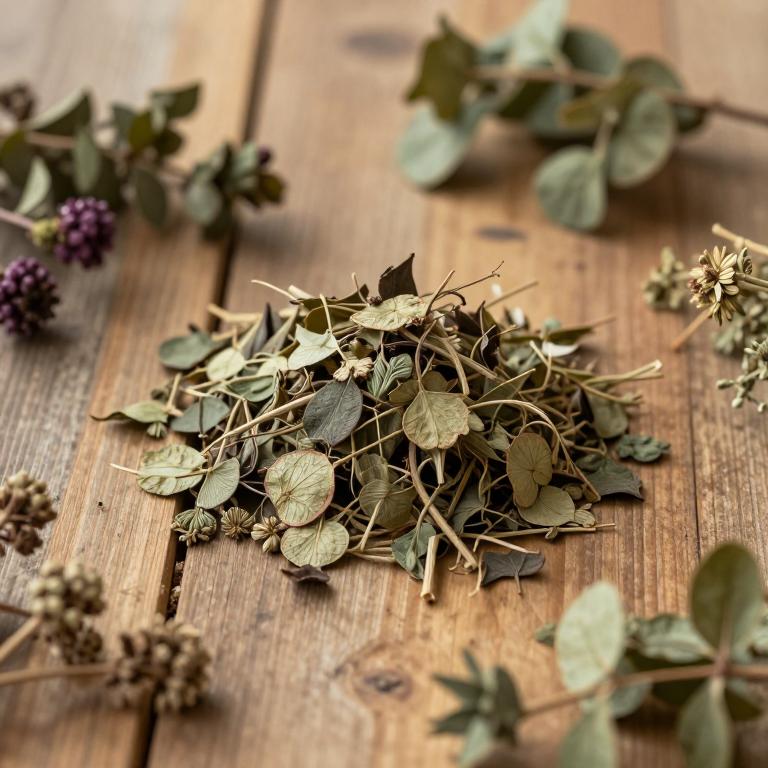
Names and Synonyms
Scientific Names
Accepted name
Vaccinium duclouxiiSynonyms
- Pieris duclouxii
Sources: Wikidata, Catalogue of Life
Taxonomical Classification
This plant belongs to the kingdom Plantae and the phylum Streptophyta. It is classified under the class Equisetopsida and the subclass Magnoliidae within the order Ericales. Finally, it is a member of the family Ericaceae and falls under the genus Vaccinium.
| Rank | Classification |
|---|---|
| Kingdom | Plantae |
| Phylum | Streptophyta |
| Class | Equisetopsida |
| Subclass | Magnoliidae |
| Order | Ericales |
| Family | Ericaceae |
| Genus | Vaccinium |
Sources: The World Checklist of Vascular Plants (WCVP)
Distribution
This plant is found within specific regions of East Asia. Its natural habitat includes the South-Central areas of China. Additionally, its range extends into the high-altitude terrain of Tibet. These locations represent the primary geographical distribution for the species. Therefore, its presence is concentrated in these particular Chinese territories.
| Region | Area |
|---|---|
| China | China South-Central |
| China | Tibet |
Sources: The World Checklist of Vascular Plants (WCVP)
Botanical Identification
Ecology
The ecology of Vaccinium duclouxii is defined by its specific altitudinal distribution within montane and subalpine ecosystems. This species thrives across a significant vertical gradient, occupying a broad elevational range that begins at a minimum altitude of 1550 m AMSL. It extends upward through various ecological zones, reaching a maximum elevation of 3200 m AMSL, where it likely encounters more extreme climatic conditions. The core of its ecological niche is centered around a mean elevation of 2075 m AMSL, suggesting that the plant is most frequently found within these mid-to-high altitude environments.
- Elevational range max:
- 3200 m AMSL
- Elevational range mean:
- 2075 m AMSL
- Elevational range min:
- 1550 m AMSL
Life history
The life history of Vaccinium duclouxii is characterized by its status as a perennial species, allowing it to persist through multiple growing seasons and establish a stable presence within its habitat. Throughout its life cycle, the plant maintains an evergreen habit, retaining its foliage year-round rather than shedding it seasonally. This combination of a long-lived perennial lifecycle and evergreen foliage enables the plant to maintain photosynthetic activity and structural integrity across varying environmental conditions.
- Deciduousness :
- evergreen
- Lifecycle :
- perennial
Morphology
The morphology of Vaccinium duclouxii is characterized by a woody growth form, primarily manifesting as a tree. This plant exhibits a self-supporting climbing habit and varies in stature, with height measurements ranging from a minimum of 1 meter to a maximum of 5 meters, reaching an average height of approximately 3 meters.
- Climber :
- self-supporting
- Growth form :
- tree
- Plant height max:
- 5 m
- Plant height mean:
- 3 m
- Plant height min:
- 1 m
- Woodiness :
- woody
Physiology
The physiology of Vaccinium duclouxii is characterized by a C3 photosynthetic pathway, which dictates its metabolic processes and carbon fixation strategies. Its leaf morphology plays a significant role in its resource management, featuring an elliptic leaf form with finely toothed margins and a complete absence of leaf thorns or spines. The dimensions of the foliage vary, with leaf lengths ranging from a minimum of 3 cm to a mean of 5 cm, reaching a maximum of 7 cm, while leaf widths span from 1.7 cm to a maximum of 3.5 cm. Furthermore, the plant's leaf economics are reflected in its Specific Leaf Area (SLA), which demonstrates a minimum value of 69.11364387 cm²/g, a mean of 81.069545265 cm²/g, and a maximum of 93.02544666 cm²/g, indicating a specific range of leaf thickness and investment in photosynthetic tissue.
- Leaf form :
- elliptic
- Leaf length max:
- 7 cm
- Leaf length mean:
- 5 cm
- Leaf length min:
- 3 cm
- Leaf margin :
- finely toothed
- Leaf spines :
- no
- Leaf thorns :
- no
- Leaf width max:
- 3.5 cm
- Leaf width min:
- 1.7 cm
- Photosynthetic pathway :
- C3
- Specific Leaf Area (SLA) max:
- 93.02544666 cm²/g
- Specific Leaf Area (SLA) mean:
- 81.069545265 cm²/g
- Specific Leaf Area (SLA) min:
- 69.11364387 cm²/g
Reproduction
The reproduction of Vaccinium duclouxii culminates in the development of fleshy fruits that exhibit specific morphological dimensions essential for its dispersal. The resulting berries are characterized by a relatively uniform, globose shape, with the fruit length and fruit width maintaining very similar proportions. On average, the fruits measure approximately 0.65 cm in both length and width. The morphological variability is minimal, as the dimensions range from a minimum of 0.6 cm for both length and width to a maximum of 0.7 cm for both length and width. This consistency in fruit size ensures a standardized vessel for seed protection and subsequent propagation.
- Fruit length max:
- 0.7 cm
- Fruit length mean:
- 0.65 cm
- Fruit length min:
- 0.6 cm
- Fruit width max:
- 0.7 cm
- Fruit width mean:
- 0.65 cm
- Fruit width min:
- 0.6 cm
Sources: Global Inventory of Floras and Traits (GIFT)
Chemicals
Vaccinium duclouxii has 3 reported phytochemicals identified across 0 scientific publications and several other databases. The most consistently reported chemicals include ACID, ANTHOCYANIN, sugar.
| Chemical | Supporting sources | Consensus |
|---|---|---|
| ACID | 1 supporting sources | ★☆☆☆☆ |
| ANTHOCYANIN | 1 supporting sources | ★☆☆☆☆ |
| sugar | 1 supporting sources | ★☆☆☆☆ |
ACID
- Horticulture research
ANTHOCYANIN
- Horticulture research
sugar
- Horticulture research