South-Indian Uvaria
Uvaria narum · Accepted scientific name
Scientific literature: Very Sparse (16 studies) · ★☆☆☆☆
South-Indian Uvaria, scientifically known as Uvaria narum, is a climbing shrub prized in traditional Ayurvedic medicine. Native to tropical regions, this plant features delicate flowers and nutritious fruits. It is widely utilized for its potent bioactive compounds, offering therapeutic benefits for digestive health, inflammation, and various skin conditions.
- Family
- Annonaceae
- Native range
- Asia-Tropical
- Parts used
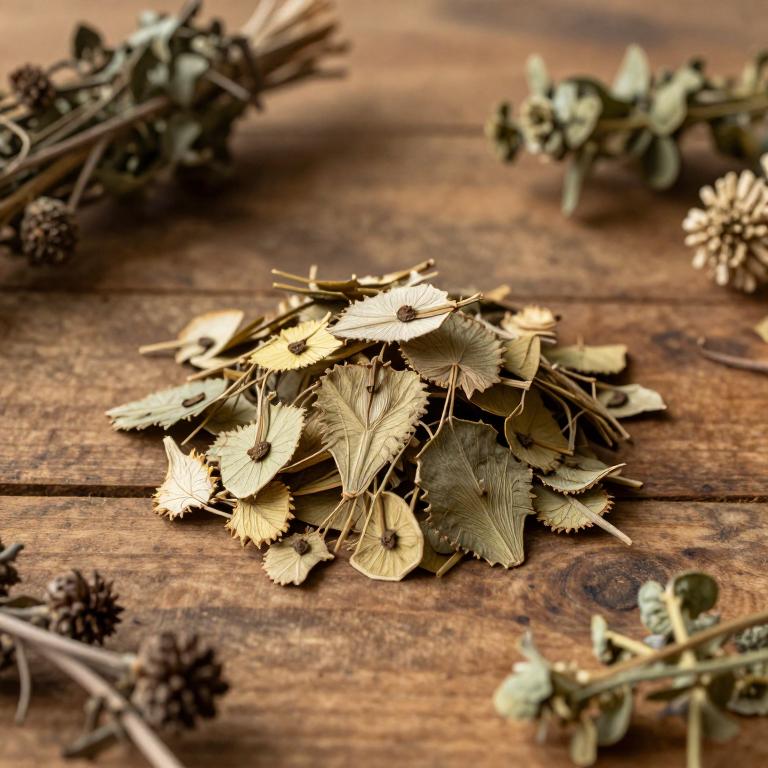
- Leaf
- Common names
- South-Indian Uvaria
- Scientific synonyms
- Uva Narum · Uvaria Lurida · 3 more
Names and Synonyms
Common Names
- South-Indian Uvaria
Scientific Names
Accepted name
Uvaria narumSynonyms
- Uva narum
- Uvaria lurida
- Uvaria malabarica
- Hexalobus jussiaeanus
- Unona narum
Sources: Wikidata, Catalogue of Life
Taxonomical Classification
This plant, Uvaria narum, belongs to the kingdom Plantae and is classified under the phylum Streptophyta and class Equisetopsida. Within the subclass Magnoliidae and order Magnoliales, it is further categorized into the family Annonaceae. Finally, its taxonomic placement is completed within the genus Uvaria.
| Rank | Classification |
|---|---|
| Kingdom | Plantae |
| Phylum | Streptophyta |
| Class | Equisetopsida |
| Subclass | Magnoliidae |
| Order | Magnoliales |
| Family | Annonaceae |
| Genus | Uvaria |
Sources: The World Checklist of Vascular Plants (WCVP)
Distribution
This plant is primarily found within the tropical regions of the Indian Subcontinent. Specifically, its natural habitat includes various parts of India where it thrives in local ecosystems. In addition to its presence in India, the species is also distributed across Sri Lanka. These two countries represent the core geographical range for this medicinal species. Consequently, its distribution is closely tied to the specific climatic conditions found in these South Asian nations.
| Region | Area |
|---|---|
| Indian Subcontinent | India |
| Indian Subcontinent | Sri Lanka |
Sources: The World Checklist of Vascular Plants (WCVP)
Botanical Identification
Morphology
The morphology of Uvaria narum is characterized by its growth habit as a woody liana, functioning as a climbing vine that relies on external structures for support. It is classified as an obligatory climber, meaning it requires a physical substrate to ascend rather than being self-supporting. The plant exhibits a distinctly woody stem structure, which provides the necessary strength and durability for its life as a climbing perennial.
- Climber :
- liana
- Climber :
- obligatory
- Woodiness :
- woody
Physiology
The physiology of Uvaria narum is characterized by its complex metabolic processes and specialized structural adaptations typical of woody climbers within the Annonaceae family. Its physiological framework is centered on efficient photosynthetic pathways that support the development of dense foliage and reproductive structures. Regarding its nutrient acquisition and symbiotic relationships, the plant does not possess the specialized root nodules required for atmospheric nitrogen conversion; therefore, it is not a nitrogen fixer (trait_1: no). Instead, its nutritional physiology relies heavily on the uptake of dissolved nitrates and ammonium ions from the soil through an extensive root system. The plant's metabolic activity is also marked by the biosynthesis of various secondary metabolites, including alkaloids and terpenoids, which are produced as part of its physiological defense mechanisms against herbivory and environmental stressors. Furthermore, its transpiration rates and water-use efficiency are regulated by stomatal movements that balance carbon dioxide intake for photosynthesis with the prevention of excessive water loss during periods of high thermal stress.
- Nitrogen fixer :
- no
Reproduction
The reproduction of Uvaria narum is characterized by the development of fleshy fruits that serve as the primary vessel for seed dispersal. These fruits possess a distinct fleshy texture, which plays a crucial role in attracting dispersal agents. Within these fruits, the seeds exhibit specific morphological dimensions related to their capacity; the seed volume typically ranges from a minimum of 800 mm³ to a maximum of 890 mm³. Based on these parameters, the seeds maintain an average seed volume of approximately 846.67 mm³, ensuring a consistent size profile necessary for successful germination and the continuation of the species' life cycle.
- Fruit dryness :
- fleshy
- Seed volume max:
- 890 mm³
- Seed volume mean:
- 846.666666666667 mm³
- Seed volume min:
- 800 mm³
Sources: Global Inventory of Floras and Traits (GIFT)
Plant Parts
Uvaria narum has 1 reported plant parts identified across 1 scientific publications and several other databases that are studied for medicinal purposes. The most consistently reported plant part include leaf.
| Plant part | Supporting sources | Consensus |
|---|---|---|
| Leaf | 1 supporting sources | ★☆☆☆☆ |
Leaf
- Antibiotics (Basel, Switzerland)
Chemicals
Uvaria narum has 8 reported phytochemicals identified across 1 scientific publications and several other databases. The most consistently reported chemicals include BETA-SITOSTEROL, Glutinone, Isodesacetyluvaricin, Panalicin, Squamocin.
| Chemical | Supporting sources | Consensus |
|---|---|---|
| BETA-SITOSTEROL | 1 supporting sources | ★☆☆☆☆ |
| Glutinone | 1 supporting sources | ★☆☆☆☆ |
| Isodesacetyluvaricin | 1 supporting sources | ★☆☆☆☆ |
| Panalicin | 1 supporting sources | ★☆☆☆☆ |
| Squamocin | 1 supporting sources | ★☆☆☆☆ |
| Squamocin-28-one | 1 supporting sources | ★☆☆☆☆ |
| Taraxerol | 1 supporting sources | ★☆☆☆☆ |
| glutinol | 1 supporting sources | ★☆☆☆☆ |
BETA-SITOSTEROL
- Journal of ethnopharmacology
Glutinone
- Journal of ethnopharmacology
Isodesacetyluvaricin
- Journal of ethnopharmacology
Panalicin
- Journal of ethnopharmacology
Squamocin
- Journal of ethnopharmacology
Squamocin-28-one
- Journal of ethnopharmacology
Taraxerol
- Journal of ethnopharmacology
glutinol
- Journal of ethnopharmacology
Activities
Uvaria narum has 6 reported activities identified across 1 scientific publications and several other databases. The most consistently reported activities include Antibacterial, Anthelmintic, Antiangiogenic, Anticancer, Antifungal.
| Activity | Supporting sources | Consensus |
|---|---|---|
| Antibacterial | 2 supporting sources | ★☆☆☆☆ |
| Anthelmintic | 1 supporting sources | ★☆☆☆☆ |
| Antiangiogenic | 1 supporting sources | ★☆☆☆☆ |
| Anticancer | 1 supporting sources | ★☆☆☆☆ |
| Antifungal | 1 supporting sources | ★☆☆☆☆ |
| Antimicrobial | 1 supporting sources | ★☆☆☆☆ |
Antibacterial
- Antibiotics (Basel, Switzerland)
- Journal of ethnopharmacology
Anthelmintic
- Journal of ethnopharmacology
Antiangiogenic
- Antibiotics (Basel, Switzerland)
Anticancer
- Antibiotics (Basel, Switzerland)
Antifungal
- Journal of ethnopharmacology
Antimicrobial
- Journal of ethnopharmacology
Preparations
Uvaria narum has 1 reported preparations identified across 1 scientific publications and several other databases. The most consistently reported preparations include leaf extract.
| Preparation | Supporting sources | Consensus |
|---|---|---|
| Leaf extract | 1 supporting sources | ★☆☆☆☆ |
Leaf extract
- Antibiotics (Basel, Switzerland)