Uvaria grandiflora
Uvaria hamiltonii · Accepted scientific name
Scientific literature: Very Sparse (24 studies) · ★☆☆☆☆
Uvaria grandiflora, scientifically known as Uvaria hamiltonii, is a climbing shrub native to tropical regions. Renowned in traditional medicine, this plant contains bioactive compounds with significant antioxidant and anti-inflammatory properties. It is frequently utilized in herbal remedies to treat various ailments, showcasing its immense potential in pharmacological research.
- Family
- Annonaceae
- Native range
- Asia-Tropical
- Parts used
- Leaf · Stem
- Common names
- Uvaria Grandiflora
- Scientific synonyms
- Uva Hamiltonii
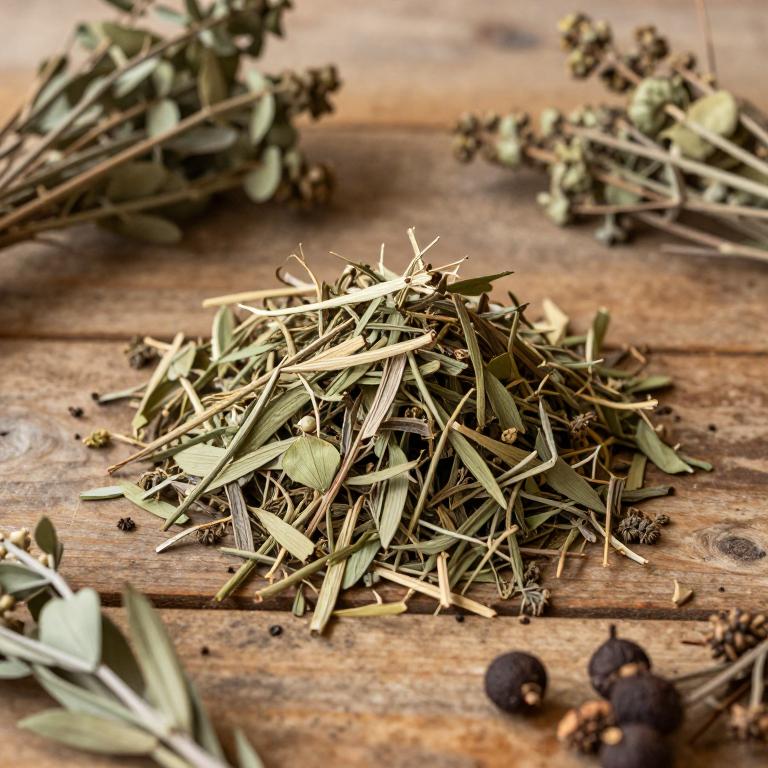
Names and Synonyms
Common Names
- Uvaria grandiflora
Scientific Names
Accepted name
Uvaria hamiltoniiSynonyms
- Uva hamiltonii
Regional and Traditional Names
Spanish:
- Uvaria grandiflora
German:
- Uvaria grandiflora
French:
- Uvaria grandiflora
Sources: Wikidata
Taxonomical Classification
This plant belongs to the kingdom Plantae and is classified under the phylum Streptophyta within the class Equisetopsida. Following the subclass Magnoliidae, it is organized under the order Magnoliales and the family Annonaceae. Ultimately, its specific taxonomic placement is within the genus Uvaria.
| Rank | Classification |
|---|---|
| Kingdom | Plantae |
| Phylum | Streptophyta |
| Class | Equisetopsida |
| Subclass | Magnoliidae |
| Order | Magnoliales |
| Family | Annonaceae |
| Genus | Uvaria |
Sources: The World Checklist of Vascular Plants (WCVP)
Distribution
This plant is widely distributed across various regions of the Indian Subcontinent. It can be found growing within the diverse landscapes of India and its neighboring country, Bangladesh. The species is also documented in the hilly terrains of Nepal and the specific region of Assam. Furthermore, its presence extends into the unique ecological zones of the East Himalaya. Together, these locations highlight the significant geographical range of Uvaria hamiltonii.
| Region | Area |
|---|---|
| Indian Subcontinent | Assam |
| Indian Subcontinent | Bangladesh |
| Indian Subcontinent | East Himalaya |
| Indian Subcontinent | India |
| Indian Subcontinent | Nepal |
| Indian Subcontinent | Sri Lanka |
| Indian Subcontinent | West Himalaya |
| Indo-China | Andaman Is. |
| Indo-China | Cambodia |
| Indo-China | Laos |
Sources: The World Checklist of Vascular Plants (WCVP)
Botanical Identification
Life history
The life history of Uvaria hamiltonii is characterized by its status as a perennial organism, ensuring its long-term presence within its natural ecosystem. As a perennial species, it does not complete its life cycle within a single growing season or a few years, but instead maintains its physiological functions and structural integrity over multiple years. This long-lived lifecycle allows the plant to establish a robust presence, contributing to the stability of its habitat through sustained vegetative growth and repeated reproductive cycles across successive seasons.
- Lifecycle :
- perennial
Morphology
The morphology of Uvaria hamiltonii is characterized by its woody structure and a growth form typically described as a shrub. It functions as an obligatory climber, often taking the form of a liana or vine to ascend. The plant is a terrestrial species, existing as an independent organism rather than a parasite, and it typically reaches a mean height of approximately 6.5 meters.
- Aquatic :
- terrestrial
- Climber :
- liana
- Climber :
- obligatory
- Epiphyte :
- terrestrial
- Growth form :
- shrub
- Parasite :
- independent
- Plant height mean:
- 6.5 m
- Woodiness :
- woody
Physiology
The physiological characteristics of Uvaria hamiltonii are notably reflected in its foliar morphology and metabolic processes. The plant exhibits significant variability in leaf dimensions, with leaf lengths ranging from a minimum of 7 cm to a maximum of 30 cm, maintaining an average leaf length of approximately 18.5 cm. In terms of lateral expansion, the leaf width fluctuates between a minimum of 3.5 cm and a maximum of 12.5 cm. Regarding its nutritional and symbiotic capabilities, the plant does not function as a nitrogen fixer, indicating that it relies on external soil nitrogen sources rather than symbiotic nitrogen-fixing bacteria to support its growth and metabolic requirements.
- Leaf length max:
- 30 cm
- Leaf length mean:
- 18.5 cm
- Leaf length min:
- 7 cm
- Leaf width max:
- 12.5 cm
- Leaf width min:
- 3.5 cm
- Nitrogen fixer :
- no
Reproduction
The reproduction of Uvaria hamiltonii is characterized by the development of fleshy fruits that serve as the primary vessel for seed protection and distribution. These fruits exhibit significant morphological variation, typically maintaining a mean length of 5 cm (ranging from a minimum of 4 cm to a maximum of 6 cm) and a mean width of 1.75 cm (ranging from 1.5 cm to a maximum of 2 cm). Due to their fleshy consistency, the plant employs a zoochorous dispersal syndrome, relying on animals to consume the fruit and subsequently disperse the seeds. The seeds contained within are uniform in size, with a consistent volume measured at 210 mm³, representing the minimum, mean, and maximum values recorded for the species.
- Dispersal syndrome :
- zoochorous
- Fruit dryness :
- fleshy
- Fruit length max:
- 6 cm
- Fruit length mean:
- 5 cm
- Fruit length min:
- 4 cm
- Fruit width max:
- 2 cm
- Fruit width mean:
- 1.75 cm
- Fruit width min:
- 1.5 cm
- Seed volume max:
- 210 mm³
Sources: Global Inventory of Floras and Traits (GIFT)
Plant Parts
Uvaria hamiltonii has 2 reported plant parts identified across 2 scientific publications and several other databases that are studied for medicinal purposes. The most consistently reported plant part include leaf, stem.
| Plant part | Supporting sources | Consensus |
|---|---|---|
| Leaf | 1 supporting sources | ★☆☆☆☆ |
| Stem | 1 supporting sources | ★☆☆☆☆ |
Leaf
- Journal of natural products
Stem
- Journal of natural products
Chemicals
Uvaria hamiltonii has 12 reported phytochemicals identified across 2 scientific publications and several other databases. The most consistently reported chemicals include ZEYLENONE, (+)-Grandifloracin, Grandiuvarone A, Hamilcone, Hamiltrone.
| Chemical | Supporting sources | Consensus |
|---|---|---|
| ZEYLENONE | 3 supporting sources | ★★☆☆☆ |
| (+)-Grandifloracin | 1 supporting sources | ★☆☆☆☆ |
| Grandiuvarone A | 1 supporting sources | ★☆☆☆☆ |
| Hamilcone | 1 supporting sources | ★☆☆☆☆ |
| Hamiltrone | 1 supporting sources | ★☆☆☆☆ |
| Hamilxanthene | 1 supporting sources | ★☆☆☆☆ |
| Lupeol | 1 supporting sources | ★☆☆☆☆ |
| Suberosol | 1 supporting sources | ★☆☆☆☆ |
| Uvarigranol B | 1 supporting sources | ★☆☆☆☆ |
| Uvarigranol E | 1 supporting sources | ★☆☆☆☆ |
ZEYLENONE
- Frontiers in pharmacology
- Journal of proteomics
- Bioorganic chemistry
(+)-Grandifloracin
- Heliyon
Grandiuvarone A
- Journal of natural products
Hamilcone
- Journal of natural products
Hamiltrone
- Journal of natural products
Hamilxanthene
- Journal of natural products
Lupeol
- Zhongguo Zhong yao za zhi = Zhongguo zhongyao zazhi = China journal of Chinese materia medica
Suberosol
- Zhongguo Zhong yao za zhi = Zhongguo zhongyao zazhi = China journal of Chinese materia medica
Uvarigranol B
- Yao xue xue bao = Acta pharmaceutica Sinica
Uvarigranol E
- Yao xue xue bao = Acta pharmaceutica Sinica
Activities
Uvaria hamiltonii has 2 reported activities identified across 2 scientific publications and several other databases. The most consistently reported activities include Cytotoxic, Antiplasmodial.
| Activity | Supporting sources | Consensus |
|---|---|---|
| Cytotoxic | 2 supporting sources | ★☆☆☆☆ |
| Antiplasmodial | 1 supporting sources | ★☆☆☆☆ |
Cytotoxic
- Yao xue xue bao = Acta pharmaceutica Sinica
- Heliyon
Antiplasmodial
- Experimental parasitology
Preparations
Uvaria hamiltonii has 3 reported preparations identified across 2 scientific publications and several other databases. The most consistently reported preparations include Chloroform extracts, Uvaria hamiltonii extracts, bark.
| Preparation | Supporting sources | Consensus |
|---|---|---|
| Chloroform extracts | 1 supporting sources | ★☆☆☆☆ |
| Uvaria hamiltonii extracts | 1 supporting sources | ★☆☆☆☆ |
| Bark | 1 supporting sources | ★☆☆☆☆ |
Chloroform extracts
- Experimental parasitology
Uvaria hamiltonii extracts
- Journal of natural products
Bark
- Journal of natural products