finger-root
Uvaria chamae · Accepted scientific name
Scientific literature: Very Sparse (47 studies) · ★☆☆☆☆
Finger-root, scientifically known as Uvaria chamae, is a versatile medicinal plant native to tropical regions. Widely utilized in traditional medicine, it possesses significant bioactive properties, including antioxidant and anti-inflammatory effects. This shrub offers promising therapeutic potential for treating various ailments, making it a subject of growing pharmacological interest.
- Family
- Annonaceae
- Native range
- Africa
- Parts used
- Root · Leaf
- Common names
- Finger-Root
- Scientific synonyms
- Uvaria Macrocarpa · Uva Cristata · 6 more
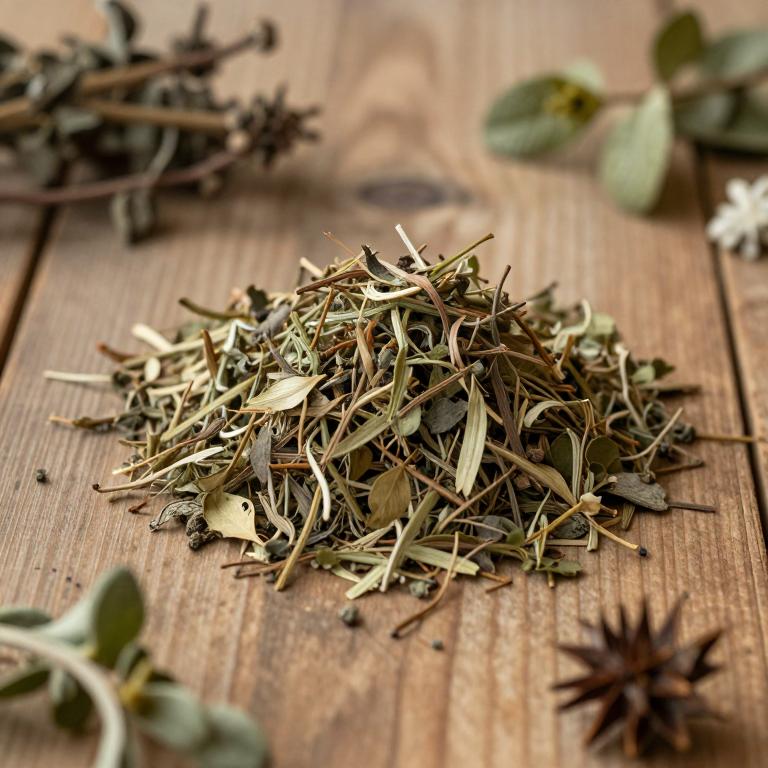
Names and Synonyms
Common Names
- finger-root
Scientific Names
Accepted name
Uvaria chamaeSynonyms
- Uvaria macrocarpa
- Uva cristata
- Uva chamae
- Uva cylindrica
- Uvaria cristata
- Xylopiastrum macrocarpum
- Uvaria cylindrica
- Uvaria nigrescens
Sources: Wikidata, Catalogue of Life
Taxonomical Classification
This plant, Uvaria chamae, belongs to the kingdom Plantae and the phylum Streptophyta. Within the class Equisetopsida and subclass Magnoliidae, it is classified under the order Magnoliales. It is further categorized into the family Annonaceae and the genus Uvaria.
| Rank | Classification |
|---|---|
| Kingdom | Plantae |
| Phylum | Streptophyta |
| Class | Equisetopsida |
| Subclass | Magnoliidae |
| Order | Magnoliales |
| Family | Annonaceae |
| Genus | Uvaria |
Sources: The World Checklist of Vascular Plants (WCVP)
Distribution
This plant is widely distributed across several nations within the West Tropical Africa region. It can be found growing in the natural landscapes of Benin and Burkina. Additionally, its presence extends to the coastal and inland areas of Gambia. The species is also documented throughout the territory of Ghana. Finally, its geographical range includes the country of Guinea-Bissau.
| Region | Area |
|---|---|
| West Tropical Africa | Benin |
| West Tropical Africa | Burkina |
| West Tropical Africa | Gambia |
| West Tropical Africa | Ghana |
| West Tropical Africa | Guinea-Bissau |
| West Tropical Africa | Guinea |
| West Tropical Africa | Ivory Coast |
| West Tropical Africa | Liberia |
| West Tropical Africa | Mali |
| West Tropical Africa | Nigeria |
Sources: The World Checklist of Vascular Plants (WCVP)
Botanical Identification
Life history
The life history of Uvaria chamae is characterized by its status as a perennial organism, allowing it to persist through multiple growing seasons. In terms of its structural growth strategy, the species is classified as a phanerophyte, specifically exhibiting characteristics consistent with both phanerophyte and nanophanerophyte life forms, which indicates that its perennating buds are located well above the ground level.
- Life form :
- phanerophyte
- Lifecycle :
- perennial
Morphology
The morphology of Uvaria chamae is characterized by its growth form as a woody shrub that exhibits self-supporting climbing habits. This plant typically reaches a mean height of 3 meters, with a maximum recorded height of approximately 3.048 meters. Functionally, it acts as a self-supporting climber rather than an obligatory vine or liana, maintaining its structure independently. As a terrestrial species, it does not exhibit aquatic or epiphytic tendencies, growing instead as an independent organism without parasitic requirements.
- Aquatic :
- terrestrial
- Climber :
- self-supporting
- Epiphyte :
- terrestrial
- Growth form :
- shrub
- Parasite :
- independent
- Plant height max:
- 3.048037064 m
- Plant height mean:
- 3 m
- Woodiness :
- woody
Physiology
The physiology of Uvaria chamae is characterized by its metabolic processes and nutrient acquisition strategies typical of woody climbing shrubs in tropical ecosystems. As a member of the Annonaceae family, its physiological profile is centered on efficient photosynthetic carbon assimilation and the synthesis of diverse secondary metabolites, including acetogenins and alkaloids, which serve as chemical defense mechanisms. Regarding its interaction with soil nutrients, the plant does not exhibit the physiological capacity for symbiotic nitrogen fixation; it is not a nitrogen fixer, meaning it relies on the uptake of nitrates and ammonium from the soil via its root system rather than hosting diazotrophic bacteria in specialized nodules. Its physiological regulation of water and mineral transport is optimized for high-humidity environments, facilitating the transpiration rates necessary to support its climbing habit and the development of its fleshy fruits.
- Nitrogen fixer :
- no
Reproduction
The reproduction of Uvaria chamae is characterized by the development of fleshy fruits that serve as the primary vehicle for seed dispersal. These fleshy fruits contain seeds that exhibit highly consistent morphological dimensions, with a recorded seed volume that remains constant at a maximum and minimum of 270 mm³, resulting in a mean seed volume of 270 mm³. The seeds are relatively lightweight, maintaining a uniform mass throughout their development; the seed mass is recorded at a constant value of 0.09639 g, which serves as both the minimum, maximum, and mean mass for the species. This uniformity in seed size and mass, combined with the fleshy nature of the fruit, suggests a specialized reproductive strategy aimed at efficient nutrient packaging and dispersal.
- Fruit dryness :
- fleshy
- Seed mass mean:
- 0.09639 g
- Seed volume max:
- 270 mm³
Sources: Global Inventory of Floras and Traits (GIFT)
Plant Parts
Uvaria chamae has 2 reported plant parts identified across 5 scientific publications and several other databases that are studied for medicinal purposes. The most consistently reported plant part include root, leaf.
| Plant part | Supporting sources | Consensus |
|---|---|---|
| Root | 3 supporting sources | ★★☆☆☆ |
| Leaf | 2 supporting sources | ★☆☆☆☆ |
Root
- Journal of natural products
- IARC scientific publications
- BMC complementary medicine and therapies
Leaf
- BMC veterinary research
- Die Pharmazie
Chemicals
Uvaria chamae has 20 reported phytochemicals identified across 5 scientific publications and several other databases. The most consistently reported chemicals include Chamanetin, Chamuvaritin, Dichamanetin, Uvarinol, (+)-Armepavine.
| Chemical | Supporting sources | Consensus |
|---|---|---|
| Chamanetin | 2 supporting sources | ★☆☆☆☆ |
| Chamuvaritin | 2 supporting sources | ★☆☆☆☆ |
| Dichamanetin | 2 supporting sources | ★☆☆☆☆ |
| Uvarinol | 2 supporting sources | ★☆☆☆☆ |
| (+)-Armepavine | 1 supporting sources | ★☆☆☆☆ |
| ALUMINUM | 1 supporting sources | ★☆☆☆☆ |
| CADMIUM | 1 supporting sources | ★☆☆☆☆ |
| CHROMIUM | 1 supporting sources | ★☆☆☆☆ |
| Corydine | 1 supporting sources | ★☆☆☆☆ |
| Desacetyluvaricin | 1 supporting sources | ★☆☆☆☆ |
Chamanetin
- Naunyn-Schmiedeberg's archives of pharmacology
- BMC complementary medicine and therapies
Chamuvaritin
- Cancer letters
- IARC scientific publications
Dichamanetin
- Naunyn-Schmiedeberg's archives of pharmacology
- Pharmaceuticals (Basel, Switzerland)
Uvarinol
- Naunyn-Schmiedeberg's archives of pharmacology
- Pharmaceuticals (Basel, Switzerland)
(+)-Armepavine
- Die Pharmazie
ALUMINUM
- Journal of toxicology
CADMIUM
- Journal of toxicology
CHROMIUM
- Journal of toxicology
Corydine
- Die Pharmazie
Desacetyluvaricin
- Journal of natural products
Activities
Uvaria chamae has 6 reported activities identified across 5 scientific publications and several other databases. The most consistently reported activities include Antibacterial, Anticancer, Antimalarial, Antimicrobial, Antioxidant.
| Activity | Supporting sources | Consensus |
|---|---|---|
| Antibacterial | 1 supporting sources | ★☆☆☆☆ |
| Anticancer | 1 supporting sources | ★☆☆☆☆ |
| Antimalarial | 1 supporting sources | ★☆☆☆☆ |
| Antimicrobial | 1 supporting sources | ★☆☆☆☆ |
| Antioxidant | 1 supporting sources | ★☆☆☆☆ |
| Mutagenic | 1 supporting sources | ★☆☆☆☆ |
Antibacterial
- Journal of toxicology
Anticancer
- Naunyn-Schmiedeberg's archives of pharmacology
Antimalarial
- Drug and chemical toxicology
Antimicrobial
- Naunyn-Schmiedeberg's archives of pharmacology
Antioxidant
- BMC complementary medicine and therapies
Mutagenic
- Cancer letters
Conditions
Uvaria chamae has 11 reported investigations on conditions identified across 5 scientific publications and several other databases. The most consistently reported conditions include cancer, Methicillin Resistant Staphylococcus aureus, antimalarial, dental caries, dysmenorrhea.
| Condition | Supporting sources | Consensus |
|---|---|---|
| Cancer | 2 supporting sources | ★☆☆☆☆ |
| Methicillin resistant staphylococcus aureus | 1 supporting sources | ★☆☆☆☆ |
| Antimalarial | 1 supporting sources | ★☆☆☆☆ |
| Dental caries | 1 supporting sources | ★☆☆☆☆ |
| Dysmenorrhea | 1 supporting sources | ★☆☆☆☆ |
| Fever | 1 supporting sources | ★☆☆☆☆ |
| Inflammation | 1 supporting sources | ★☆☆☆☆ |
| Parasitemia | 1 supporting sources | ★☆☆☆☆ |
| Salmonellosis | 1 supporting sources | ★☆☆☆☆ |
| Trypanosoma brucei brucei | 1 supporting sources | ★☆☆☆☆ |
Cancer
- Naunyn-Schmiedeberg's archives of pharmacology
- BMC complementary medicine and therapies
Methicillin resistant staphylococcus aureus
- Pharmaceuticals (Basel, Switzerland)
Antimalarial
- Drug and chemical toxicology
Dental caries
- Journal of ethnopharmacology
Dysmenorrhea
- Naunyn-Schmiedeberg's archives of pharmacology
Fever
- Naunyn-Schmiedeberg's archives of pharmacology
Inflammation
- African journal of traditional, complementary, and alternative medicines : AJTCAM
Parasitemia
- African journal of traditional, complementary, and alternative medicines : AJTCAM
Salmonellosis
- Journal of toxicology
Trypanosoma brucei brucei
- African journal of traditional, complementary, and alternative medicines : AJTCAM
Preparations
Uvaria chamae has 6 reported preparations identified across 5 scientific publications and several other databases. The most consistently reported preparations include aqueous and ethanolic extracts, Extracts, U. chamae root extract, aqueous extract of Uvaria chamae, aqueous extract of Uvaria chamae (leaves).
| Preparation | Supporting sources | Consensus |
|---|---|---|
| Aqueous and ethanolic extracts | 2 supporting sources | ★☆☆☆☆ |
| Extracts | 1 supporting sources | ★☆☆☆☆ |
| U. chamae root extract | 1 supporting sources | ★☆☆☆☆ |
| Aqueous extract of uvaria chamae | 1 supporting sources | ★☆☆☆☆ |
| Aqueous extract of uvaria chamae (leaves) | 1 supporting sources | ★☆☆☆☆ |
| Plant extract | 1 supporting sources | ★☆☆☆☆ |
Aqueous and ethanolic extracts
- Journal of toxicology
- BMC veterinary research
Extracts
- Journal of ethnopharmacology
U. chamae root extract
- BMC complementary medicine and therapies
Aqueous extract of uvaria chamae
- BMC veterinary research
Aqueous extract of uvaria chamae (leaves)
- BMC veterinary research
Plant extract
- Journal of ethnopharmacology