Small Nettle
Urtica urens · Accepted scientific name
Scientific literature: Very Sparse (12 studies) · ★☆☆☆☆
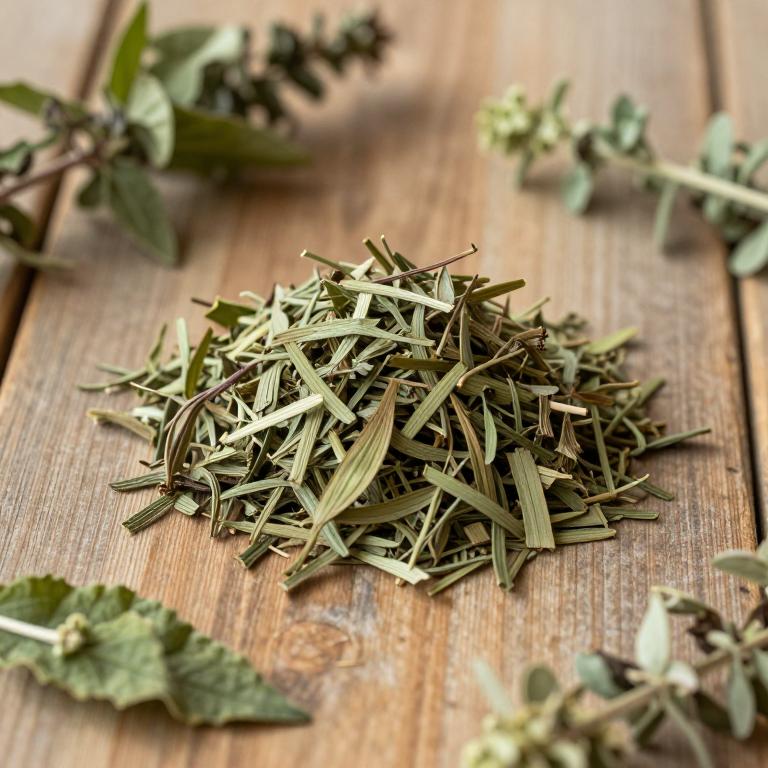
Small Nettle, scientifically known as Urtica urens, is a stinging herbaceous plant native to Europe and Asia. Characterized by its intense prickles, it contains bioactive compounds used in traditional medicine. Often utilized for its anti-inflammatory and diuretic properties, this potent species plays a significant role in herbal pharmacology.
Names and Synonyms
Common Names
- burning nettle
- dog nettle
- dwarf nettle
- small nettle
- English stinging nettle
- lesser nettle
- lesser stinging nettle
Scientific Names
Accepted name
Urtica urensSynonyms
- Urtica urens var. lanceolata
- Urtica trianae
- Urtica minor
- Urtica atlantica
- Urtica parvula
- Urtica quadristipulata
- Urtica cubensis
Regional and Traditional Names
Spanish:
- Forniquilla
- Picamoscas
- Urtica iners
- Ortiga menor
- Yerba del ciego
- Ronchona
- Picasarna
- Pica manos
- Urtica quadristipulata
- Ortiga moheña
- Urtica verticillata
- Urtica intermedia
- Urtica ovalifolia
- Urtica parvula
- Urtica minor
- Ortiga
- ortiga
German:
- Kleine Brennnessel
- Kleine Brennessel
- Eiternessel
- Kleine Brennessel
- Kleine Brennnessel
French:
- Ortie brûlante
- Petite Ortie
- petite ortie, ortie brûlante
- ortie brûlante
- petite ortie
- ortie
- Ortie brulante
Sources: Wikidata, Catalogue of Life
Taxonomical Classification
This plant belongs to the kingdom Plantae and the phylum Streptophyta within the class Equisetopsida. It is further classified under the subclass Magnoliidae and the order Rosales, falling into the family Urticaceae. Ultimately, its taxonomic identity is defined by the genus Urtica.
| Rank | Classification |
|---|---|
| Kingdom | Plantae |
| Phylum | Streptophyta |
| Class | Equisetopsida |
| Subclass | Magnoliidae |
| Order | Rosales |
| Family | Urticaceae |
| Genus | Urtica |
Sources: The World Checklist of Vascular Plants (WCVP)
Distribution
This plant exhibits a specific distribution across various regions of Northern Europe. Its presence is documented in the coastal areas of Denmark and throughout the landscape of Finland. It can also be found growing within the Faroe Islands and across much of Great Britain. Furthermore, its geographical range extends to the unique environment of Iceland. These locations highlight the plant's affinity for the northernmost territories of the continent.
| Region | Area |
|---|---|
| Northern Europe | Denmark |
| Northern Europe | Finland |
| Northern Europe | Føroyar |
| Northern Europe | Great Britain |
| Northern Europe | Iceland |
| Northern Europe | Ireland |
| Northern Europe | Norway |
| Northern Europe | Sweden |
| Middle Europe | Austria |
| Middle Europe | Belgium |
Sources: The World Checklist of Vascular Plants (WCVP)
Botanical Identification
Ecology
The ecology of Urtica urens is characterized by its remarkable adaptability to diverse environments and a wide vertical distribution across various landscapes. This species thrives in disturbed anthropogenic habitats, frequently colonizing crop fields, inhabited places, old fields, and roadsides. Its altitudinal tolerance is extensive, spanning from sea level (0 m AMSL) to significant mountain heights, with a mean elevation of approximately 2350 m AMSL and a maximum recorded range of up to 2900 m AMSL. To survive in these competitive ecological niches, the plant employs active biological defense mechanisms, utilizing specialized structures to deter herbivory.
- Defense :
- yes
- Elevational range max:
- 2900 m AMSL
- Elevational range mean:
- 2350 m AMSL
- Elevational range min:
- 0 m AMSL
- Habitat :
- crop fields, inhabited places, old fields, roadsides
Life history
The life history of Urtica urens is characterized by an annual lifecycle, meaning it completes its entire developmental process from germination to seed production within a single growing season. As a therophyte, the plant survives unfavorable environmental conditions by existing primarily in the form of seeds, which remain dormant until optimal conditions trigger growth. This growth pattern is further defined by its deciduous nature, as the plant sheds its foliage in response to seasonal changes or the conclusion of its reproductive cycle. This combination of an annual temporal strategy and a therophytic life form allows the species to rapidly colonize disturbed habitats and exploit seasonal resources before returning to a seed state.
- Deciduousness :
- deciduous
- Life form :
- therophyte
- Lifecycle :
- annual
Morphology
The morphology of Urtica urens is characterized by its growth form as a non-woody herb, specifically classified as a forb. This terrestrial species is an independent plant, not functioning as a parasite or an epiphyte, and it maintains a self-supporting structure rather than acting as a climber, liana, or vine. In terms of physical dimensions, the plant typically reaches a mean height of 0.2875 m, though individual specimens can vary significantly, with heights ranging from a minimum of 0.1 m to a maximum of 0.9 m.
- Aquatic :
- terrestrial
- Climber :
- self-supporting
- Epiphyte :
- terrestrial
- Growth form :
- herb
- Growth form :
- forb
- Parasite :
- independent
- Plant height max:
- 0.9 m
- Plant height mean:
- 0.2875 m
- Plant height min:
- 0.1 m
- Woodiness :
- non-woody
Physiology
The physiology of Urtica urens is characterized by a C3 photosynthetic pathway, indicating its reliance on the standard Calvin cycle for carbon fixation. The plant is non-carnivorous and does not function as a nitrogen fixer, relying instead on soil nutrient availability. Its leaf morphology plays a significant role in its physiological efficiency, featuring an elliptic leaf form with a mean leaf size of 4.56 cm². The leaf dimensions show considerable variability, with a minimum leaf length of 1.2 cm and a maximum of 8.3 cm, while the mean leaf length is recorded at 3.6 cm. In terms of width, the leaves range from a minimum of 1 cm to a maximum of 4 cm. Furthermore, the plant exhibits a mean Specific Leaf Area (SLA) of 210 cm²/g, reflecting its leaf mass per area and its strategy for light interception and resource management.
- Carnivory :
- non-carnivorous
- Leaf form :
- elliptic
- Leaf length max:
- 8.3 cm
- Leaf length mean:
- 3.6 cm
- Leaf length min:
- 1.2 cm
- Leaf size mean:
- 4.56 cm²
- Leaf width max:
- 4 cm
- Leaf width min:
- 1 cm
- Nitrogen fixer :
- no
- Photosynthetic pathway :
- C3
- Specific Leaf Area (SLA) mean:
- 210 cm²/g
Reproduction
The reproduction of Urtica urens is characterized by a monoecious sexual reproduction strategy, with asexual reproduction being absent. The flowering period typically begins in May and extends through October. The plant relies on abiotic pollination, specifically utilizing a wind-based pollination syndrome to facilitate fertilization, as self-fertilization is noted to be absent. Following pollination, the plant develops dry, green fruits classified as achenes. These fruits are indehiscent and exhibit dimensions with a mean length of 0.14 cm (ranging from 0.08 to 0.175 cm) and a maximum width of 0.1 cm. Each fruit is highly prolific, containing more than 1,000 seeds. The seeds themselves are minute, with a consistent length of 2.1 mm and a volume of 0.45 mm³. The seed mass is extremely low, averaging 0.0005175 g, with a range between 0.00048 g and 0.00055 g. For dispersal, the plant employs an anemochorous syndrome, utilizing the wind to spread its abundant seeds.
- Dehiscence :
- indehiscent
- Dispersal syndrome :
- anemochorous
- Flower length max:
- 0.05 cm
- Flowering time :
- May
- Flowering time :
- Oct
- Fruit colour :
- green
- Fruit dryness :
- dry
- Fruit length max:
- 0.175 cm
- Fruit length mean:
- 0.14 cm
- Fruit length min:
- 0.08 cm
- Fruit type :
- achene
- Fruit width max:
- 0.1 cm
- Pollination syndrome :
- wind
- Pollination syndrome :
- abiotic
- Reproduction asexual :
- absent
- Reproduction sexual :
- monoecious
- Seed length mean:
- 2.1 mm
- Seed mass max:
- 0.00055 g
- Seed mass mean:
- 0.0005175 g
- Seed mass min:
- 0.00048 g
- Seed volume max:
- 0.45 mm³
- Seeds_per_fruit :
- >1000
- Self fertilization :
- absent
Sources: Global Inventory of Floras and Traits (GIFT)
Plant Parts
Urtica urens has 1 reported plant parts identified across 2 scientific publications and several other databases that are studied for medicinal purposes. The most consistently reported plant part include leaf.
| Plant part | Supporting sources | Consensus |
|---|---|---|
| Leaf | 2 supporting sources | ★☆☆☆☆ |
Leaf
- Pharmaceutical biology
- Revista de biologia tropical
Chemicals
Urtica urens has 4 reported phytochemicals identified across 2 scientific publications and several other databases. The most consistently reported chemicals include Flavonoid, Polyphenol, Tannin, polyphenols.
| Chemical | Supporting sources | Consensus |
|---|---|---|
| Flavonoid | 1 supporting sources | ★☆☆☆☆ |
| Polyphenol | 1 supporting sources | ★☆☆☆☆ |
| Tannin | 1 supporting sources | ★☆☆☆☆ |
| polyphenols | 1 supporting sources | ★☆☆☆☆ |
Flavonoid
- Pharmaceutical biology
Polyphenol
- Pharmaceutical biology
Tannin
- Pharmaceutical biology
polyphenols
- Revista de biologia tropical
Activities
Urtica urens has 3 reported activities identified across 2 scientific publications and several other databases. The most consistently reported activities include Antibacterial, Antioxidant, Antimicrobial.
| Activity | Supporting sources | Consensus |
|---|---|---|
| Antibacterial | 2 supporting sources | ★☆☆☆☆ |
| Antioxidant | 2 supporting sources | ★☆☆☆☆ |
| Antimicrobial | 1 supporting sources | ★☆☆☆☆ |
Antibacterial
- Drug design, development and therapy
- Revista de biologia tropical
Antioxidant
- Pharmaceutical biology
- Revista de biologia tropical
Antimicrobial
- Pharmaceutical biology
Conditions
Urtica urens has 1 reported investigations on conditions identified across 2 scientific publications and several other databases. The most consistently reported conditions include anxiolytic.
| Condition | Supporting sources | Consensus |
|---|---|---|
| Anxiolytic | 1 supporting sources | ★☆☆☆☆ |
Anxiolytic
- Behavioral and brain functions : BBF
Preparations
Urtica urens has 6 reported preparations identified across 2 scientific publications and several other databases. The most consistently reported preparations include EtOH (70%) and WA extracts, EtOH and WA extracts, ethanol (EtOH) and water (WA) solvents, hydro-alcoholic extracts, methanolic extract.
| Preparation | Supporting sources | Consensus |
|---|---|---|
| Etoh (70%) and wa extracts | 1 supporting sources | ★☆☆☆☆ |
| Etoh and wa extracts | 1 supporting sources | ★☆☆☆☆ |
| Ethanol (etoh) and water (wa) solvents | 1 supporting sources | ★☆☆☆☆ |
| Hydro-alcoholic extracts | 1 supporting sources | ★☆☆☆☆ |
| Methanolic extract | 1 supporting sources | ★☆☆☆☆ |
| Methanolic extracts | 1 supporting sources | ★☆☆☆☆ |
Etoh (70%) and wa extracts
- Pharmaceutical biology
Etoh and wa extracts
- Pharmaceutical biology
Ethanol (etoh) and water (wa) solvents
- Pharmaceutical biology
Hydro-alcoholic extracts
- Drug design, development and therapy
Methanolic extract
- Behavioral and brain functions : BBF
Methanolic extracts
- Behavioral and brain functions : BBF