Urtica spatulata
Urtica spatulata · Accepted scientific name
Scientific literature: Very Extensive (1325 studies) · ★★★★★
Urtica spatulata, scientifically known as Urtica spatulata, is a distinctive member of the nettle family valued for its unique therapeutic properties. Renowned in traditional herbal medicine, this plant offers significant bioactive compounds. Understanding its medicinal applications and ecological importance provides vital insights into its potential for modern pharmacological development.
- Family
- Urticaceae
- Native range
- Southern America
- Parts used
- Leaf · Root
- Common names
- Not available
- Scientific synonyms
- Urtica Scalpe · Urtica Urentissima · 1 more
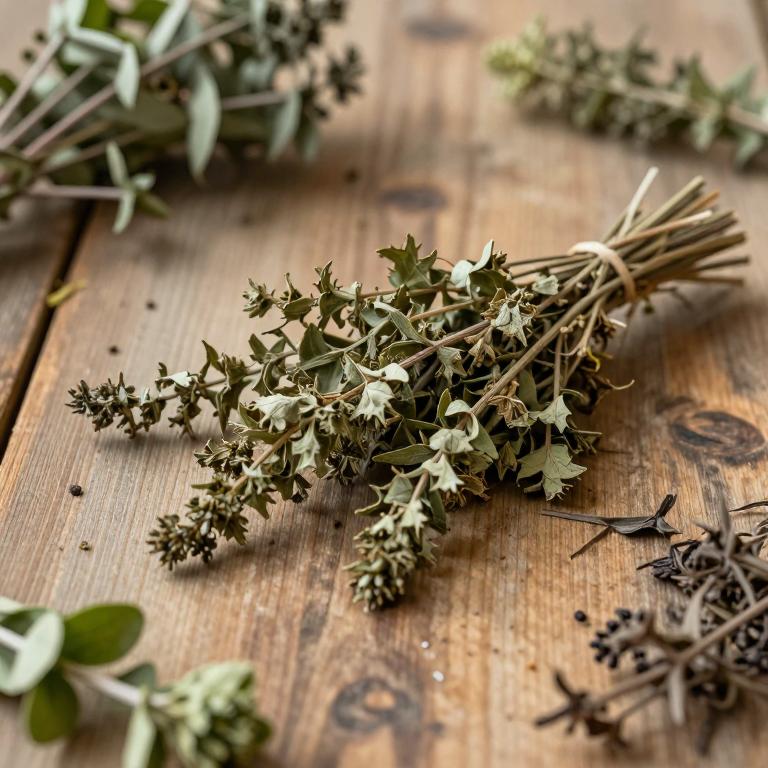
Names and Synonyms
Scientific Names
Accepted name
Urtica spatulataSynonyms
- Urtica scalpe
- Urtica urentissima
- Urtica bonariensis
Sources: Wikidata
Taxonomical Classification
This plant belongs to the kingdom Plantae and the phylum Streptophyta, falling under the class Equisetopsida and subclass Magnoliidae. Within the order Rosales, it is classified under the family Urticaceae. Finally, its specific taxonomic placement is within the genus Urったica.
| Rank | Classification |
|---|---|
| Kingdom | Plantae |
| Phylum | Streptophyta |
| Class | Equisetopsida |
| Subclass | Magnoliidae |
| Order | Rosales |
| Family | Urticaceae |
| Genus | Urtica |
Sources: The World Checklist of Vascular Plants (WCVP)
Distribution
This plant exhibits a widespread distribution across several key regions of the Southern Hemisphere. In Brazil, its presence is specifically noted throughout the southern portion of the country. Moving into Southern South America, the species can be found in the northeast, south, and northwest regions of Argentina. Additionally, the plant extends its range into the neighboring territory of Paraguay. Together, these locations define the primary geographical footprint of Urtica spatulata.
| Region | Area |
|---|---|
| Brazil | Brazil South |
| Southern South America | Argentina Northeast |
| Southern South America | Argentina South |
| Southern South America | Argentina Northwest |
| Southern South America | Paraguay |
| Southern South America | Uruguay |
Sources: The World Checklist of Vascular Plants (WCVP)
Botanical Identification
Ecology
The ecology of Urtica spatulaata is characterized by its presence in highly humid and moisture-rich environments, specifically thriving within the Floresta Ombrófila (Rainforest) and the Floresta Ombrófila Mista. This species occupies a lowland to mid-altitude ecological niche, with an elevational range extending from 0 m AMSL up to a maximum of 500 m AMSL. Its distribution is closely tied to these dense, high-precipitation forest ecosystems, where the consistent humidity and specific forest structures provide the necessary environmental conditions for its development.
- Elevational range max:
- 500 m AMSL
- Elevational range min:
- 0 m AMSL
- Habitat :
- Floresta Ombrófila (= Floresta Pluvial), Floresta Ombrófila Mista
Life history
The life history of Urtica spatulaata is characterized by an annual lifecycle, meaning the plant completes its entire developmental progression from seed germination to seed production within a single growing season. During its active phase, the plant focuses on rapid vegetative growth, establishing its structure and accumulating necessary nutrients to support its reproductive cycle. As the season progresses, it transitions from the vegetative stage to a reproductive stage, culminating in the flowering and subsequent production of seeds. Once the seeds are dispersed, the individual plant dies, ensuring the continuation of the species through the next generation of seedlings in the following year.
- Lifecycle :
- annual
Morphology
The morphology of Urtica spatulaata is characterized by its growth form as a non-woody herb, existing primarily as a terrestrial plant. It functions as an independent organism, lacking any parasitic tendencies, and maintains a self-supporting structure without the need for climbing mechanisms. As a terrestrial species, it does not exhibit epiphytic behavior, such as being a holoepiphyte or hemiepiphyte, but rather grows directly in its substrate. The plant's physical structure is defined by its herbaceous nature, lacking any woody tissues, which categorizes its biological habit as a non-woody herb.
- Aquatic :
- terrestrial
- Climber :
- self-supporting
- Epiphyte :
- terrestrial
- Growth form :
- herb
- Parasite :
- independent
- Woodiness :
- non-woody
Sources: Global Inventory of Floras and Traits (GIFT)
Plant Parts
Urtica spatulata has 4 reported plant parts identified across 22 scientific publications and several other databases that are studied for medicinal purposes. The most consistently reported plant part include leaf, root, stem, flower.
| Plant part | Supporting sources | Consensus |
|---|---|---|
| Leaf | 13 supporting sources | ★★★★★ |
| Root | 6 supporting sources | ★★★☆☆ |
| Stem | 2 supporting sources | ★☆☆☆☆ |
| Flower | 1 supporting sources | ★☆☆☆☆ |
Leaf
- Cureus
- Molecules (Basel, Switzerland)
- African journal of traditional, complementary, and alternative medicines : AJTCAM
- Progress in biophysics and molecular biology
- Orvosi hetilap
View 8 additional sources
- Journal of ethnopharmacology
- Plants (Basel, Switzerland)
- Pakistan journal of pharmaceutical sciences
- Biological trace element research
- Nutrients
- Natural product research
- Recent advances in food, nutrition & agriculture
- Iranian journal of basic medical sciences
Root
- Planta medica
- African journal of traditional, complementary, and alternative medicines : AJTCAM
- Progress in biophysics and molecular biology
- Pakistan journal of pharmaceutical sciences
- Heliyon
View 1 additional sources
- Zeitschrift fur Naturforschung. C, Journal of biosciences
Stem
- African journal of traditional, complementary, and alternative medicines : AJTCAM
- Progress in biophysics and molecular biology
Flower
- Journal of ethnobiology and ethnomedicine
Chemicals
Urtica spatulata has 246 reported phytochemicals identified across 22 scientific publications and several other databases. The most consistently reported chemicals include Flavonoids, Carotenoids, CU, IRON, MN.
| Chemical | Supporting sources | Consensus |
|---|---|---|
| Flavonoids | 7 supporting sources | ★★★★☆ |
| Carotenoids | 5 supporting sources | ★★★☆☆ |
| CU | 4 supporting sources | ★★☆☆☆ |
| IRON | 4 supporting sources | ★★☆☆☆ |
| MN | 4 supporting sources | ★★☆☆☆ |
| ascorbic acid | 4 supporting sources | ★★☆☆☆ |
| polyphenols | 4 supporting sources | ★★☆☆☆ |
| Ash | 3 supporting sources | ★★☆☆☆ |
| CALCIUM | 3 supporting sources | ★★☆☆☆ |
| CHLOROGENIC ACID | 3 supporting sources | ★★☆☆☆ |
Flavonoids
- Dr. Duke
- Pharmaceutical biology
- Natural products and bioprospecting
- Plants (Basel, Switzerland)
- Evidence-based complementary and alternative medicine : eCAM
View 2 additional sources
- Parasites & vectors
- Nutrients
Carotenoids
- Dr. Duke
- Molecules (Basel, Switzerland)
- Natural products and bioprospecting
- Heliyon
- Frontiers in nutrition
CU
- Arhiv za higijenu rada i toksikologiju
- Plants (Basel, Switzerland)
- Ceska a Slovenska farmacie : casopis Ceske farmaceuticke spolecnosti a Slovenske farmaceuticke spolecnosti
- Acta poloniae pharmaceutica
IRON
- Dr. Duke
- International journal of environmental health research
- Biological trace element research
- Frontiers in plant science
MN
- Arhiv za higijenu rada i toksikologiju
- Marine pollution bulletin
- Ceska a Slovenska farmacie : casopis Ceske farmaceuticke spolecnosti a Slovenske farmaceuticke spolecnosti
- Acta poloniae pharmaceutica
ascorbic acid
- Dr. Duke
- Molecules (Basel, Switzerland)
- Frontiers in plant science
- Frontiers in nutrition
polyphenols
- Molecules (Basel, Switzerland)
- Foods (Basel, Switzerland)
- Heliyon
- Frontiers in nutrition
Ash
- Dr. Duke
- Plants (Basel, Switzerland)
- Journal of environmental science and health. Part. B, Pesticides, food contaminants, and agricultural wastes
CALCIUM
- Dr. Duke
- Biological trace element research
- Frontiers in plant science
CHLOROGENIC ACID
- Dr. Duke
- Foods (Basel, Switzerland)
- Molecules (Basel, Switzerland)
Activities
Urtica spatulata has 822 reported activities identified across 22 scientific publications and several other databases. The most consistently reported activities include Antioxidant, Antibacterial, Antidiabetic, Anticancer, Antifungal.
| Activity | Supporting sources | Consensus |
|---|---|---|
| Antioxidant | 17 supporting sources | ★★★★★ |
| Antibacterial | 9 supporting sources | ★★★★☆ |
| Antidiabetic | 9 supporting sources | ★★★★☆ |
| Anticancer | 6 supporting sources | ★★★☆☆ |
| Antifungal | 4 supporting sources | ★★☆☆☆ |
| Antimicrobial | 4 supporting sources | ★★☆☆☆ |
| Antiproliferative | 4 supporting sources | ★★☆☆☆ |
| Antihypertensive | 3 supporting sources | ★★☆☆☆ |
| Antiinflammatory | 3 supporting sources | ★★☆☆☆ |
| Analgesic | 2 supporting sources | ★☆☆☆☆ |
Antioxidant
- Dr. Duke
- BMC complementary medicine and therapies
- Antibiotics (Basel, Switzerland)
- Molecules (Basel, Switzerland)
- International journal of environmental health research
View 12 additional sources
- Pakistan journal of pharmaceutical sciences
- Heliyon
- International journal of biological macromolecules
- Evidence-based complementary and alternative medicine : eCAM
- Veterinary medicine and science
- Pharmaceutical biology
- Journal of chromatography. A
- Cellular and molecular biology (Noisy-le-Grand, France)
- Ultrastructural pathology
- Nutrients
- Archivio italiano di urologia, andrologia : organo ufficiale [di] Societa italiana di ecografia urologica e nefrologica
- International journal of molecular sciences
Antibacterial
- Dr. Duke
- Antibiotics (Basel, Switzerland)
- International journal of environmental health research
- Pharmaceutical biology
- International journal of biological macromolecules
View 4 additional sources
- Jundishapur journal of natural pharmaceutical products
- Roumanian archives of microbiology and immunology
- Cellular and molecular biology (Noisy-le-Grand, France)
- Revista de biologia tropical
Antidiabetic
- Dr. Duke
- Molecules (Basel, Switzerland)
- Antioxidants (Basel, Switzerland)
- Pharmaceutical biology
- Plants (Basel, Switzerland)
View 4 additional sources
- Evidence-based complementary and alternative medicine : eCAM
- Human & experimental toxicology
- International journal of molecular sciences
- Iranian biomedical journal
Anticancer
- Dr. Duke
- Antioxidants (Basel, Switzerland)
- International journal of biological macromolecules
- Evidence-based complementary and alternative medicine : eCAM
- Cellular and molecular biology (Noisy-le-Grand, France)
View 1 additional sources
- Nutrients
Antifungal
- International journal of biological macromolecules
- Roumanian archives of microbiology and immunology
- Folia medica
- Revista de biologia tropical
Antimicrobial
- BMC complementary medicine and therapies
- Pakistan journal of pharmaceutical sciences
- Evidence-based complementary and alternative medicine : eCAM
- Folia medica
Antiproliferative
- Dr. Duke
- BMC complementary medicine and therapies
- Heliyon
- Archivio italiano di urologia, andrologia : organo ufficiale [di] Societa italiana di ecografia urologica e nefrologica
Antihypertensive
- Dr. Duke
- Biomolecules
- Journal of ethnopharmacology
Antiinflammatory
- Dr. Duke
- Recent patents on inflammation & allergy drug discovery
- Pharmaceutical biology
Analgesic
- Dr. Duke
- Heliyon
Preparations
Urtica spatulata has 43 reported preparations identified across 22 scientific publications and several other databases. The most consistently reported preparations include extracts, UD extract, extract, hydro-alcoholic extract, leaves.
| Preparation | Supporting sources | Consensus |
|---|---|---|
| Extracts | 5 supporting sources | ★★★☆☆ |
| Ud extract | 3 supporting sources | ★★☆☆☆ |
| Extract | 2 supporting sources | ★☆☆☆☆ |
| Hydro-alcoholic extract | 2 supporting sources | ★☆☆☆☆ |
| Leaves | 2 supporting sources | ★☆☆☆☆ |
| Plant extract | 2 supporting sources | ★☆☆☆☆ |
| Ankafeerd blood stopper | 1 supporting sources | ★☆☆☆☆ |
| Ankaferd blood stopper | 1 supporting sources | ★☆☆☆☆ |
| Crude methanolic extract | 1 supporting sources | ★☆☆☆☆ |
| H3 | 1 supporting sources | ★☆☆☆☆ |
Extracts
- Journal of ethnopharmacology
- Antioxidants (Basel, Switzerland)
- Plants (Basel, Switzerland)
- BioMedicine
- Urological research
Ud extract
- Pharmaceutical biology
- Journal of ethnopharmacology
- BMC complementary and alternative medicine
Extract
- Journal of ethnopharmacology
- Antonie van Leeuwenhoek
Hydro-alcoholic extract
- Folia medica
- Journal of ethnopharmacology
Leaves
- Progress in biophysics and molecular biology
- Biological trace element research
Plant extract
- Biomolecules
- Drug and chemical toxicology
Ankafeerd blood stopper
- Blood coagulation & fibrinolysis : an international journal in haemostasis and thrombosis
Ankaferd blood stopper
- Clinical and applied thrombosis/hemostasis : official journal of the International Academy of Clinical and Applied Thrombosis/Hemostasis
Crude methanolic extract
- Journal of translational medicine
H3
- Parasites & vectors