Unxia camphorata
Unxia camphorata · Accepted scientific name
Scientific literature: Very Sparse (1 studies) · ★☆☆☆☆
Unxia camphorata, scientifically known as Unxia camphorata, is a traditional medicinal herb widely utilized in East Asian medicine. Renowned for its potent anti-inflammatory and analgesic properties, it is primarily employed to alleviate pain caused by arthritis, rheumatism, and muscle aches, offering a natural approach to managing musculoskeletal discomfort.
- Family
- Not available
- Native range
- Southern America
- Parts used
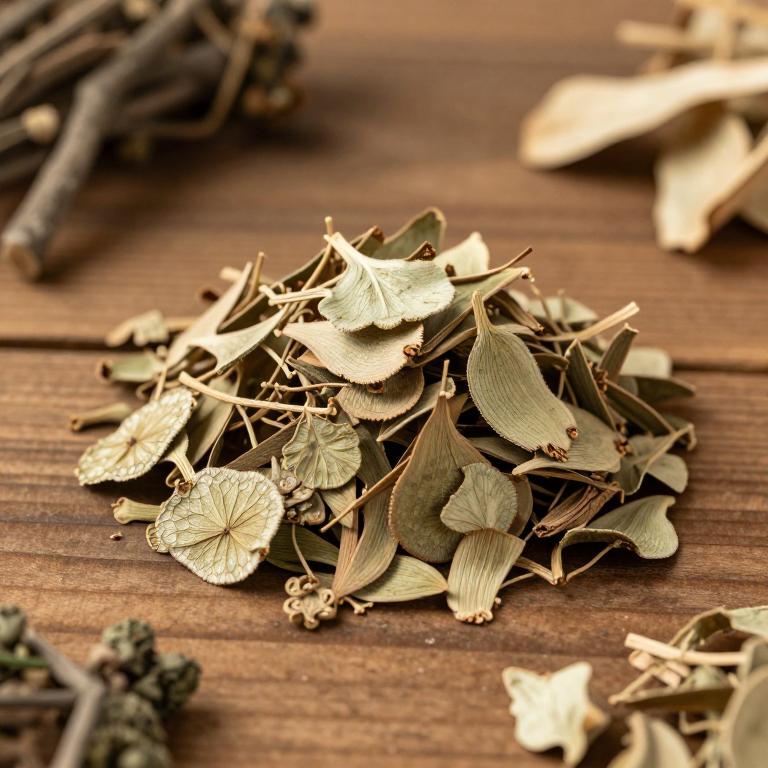
- Leaf
- Common names
- Not available
- Scientific synonyms
- Not available
Names and Synonyms
Scientific Names
Accepted name
Unxia camphorataDistribution
This plant exhibits a specific geographical range primarily concentrated within the tropical regions of the Americas. In Central America, its presence is noted in the country of Panamá. Moving into Northern South America, the species can be found across several distinct territories. It is distributed throughout French Guiana, Guyana, and Suriname. Finally, its habitat extends into the nation of Venezuela.
| Region | Area |
|---|---|
| Central America | Panamá |
| Northern South America | French Guiana |
| Northern South America | Guyana |
| Northern South America | Suriname |
| Northern South America | Venezuela |
| Western South America | Bolivia |
| Western South America | Colombia |
| Western South America | Peru |
| Brazil | Brazil North |
Sources: The World Checklist of Vascular Plants (WCVP)
Botanical Identification
Ecology
The ecology of Unxia camphorata is characterized by its preference for the Floresta de Terra Firme, where it thrives within these stable, non-flooded forest ecosystems. It occupies a diverse altitudinal gradient, ranging from sea level up to an elevation of 1170 m AMSL. This broad elevational range, spanning from 0 to 1170 m AMSL, allows the species to inhabit various subtropical and tropical forest niches within its environmental constraints.
- Elevational range max:
- 1170 m AMSL
- Elevational range min:
- 0 m AMSL
- Habitat :
- Floresta de Terra Firme
Morphology
The morphology of Unxia camphorata is characterized by its growth form as a non-woody herb, specifically manifesting as a herbaceous plant. It is a self-supporting organism, lacking the climbing tendencies of a liana or vine, and does not function as an obligatory or facultative climber. In terms of its ecological positioning, the plant is terrestrial rather than aquatic or semiaquatic, and it does not exhibit epiphytic behavior, remaining firmly rooted in the ground as a terrestrial species. Furthermore, it is an independent organism that does not exhibit parasitic traits, maintaining an independent life cycle without relying on host plants for nutrients.
- Aquatic :
- terrestrial
- Climber :
- self-supporting
- Epiphyte :
- terrestrial
- Growth form :
- herb
- Parasite :
- independent
- Woodiness :
- non-woody
Sources: Global Inventory of Floras and Traits (GIFT)
Plant Parts
Unxia camphorata has 1 reported plant parts identified across 1 scientific publications and several other databases that are studied for medicinal purposes. The most consistently reported plant part include leaf.
| Plant part | Supporting sources | Consensus |
|---|---|---|
| Leaf | 1 supporting sources | ★☆☆☆☆ |
Leaf
- Journal of natural products
Preparations
Unxia camphorata has 1 reported preparations identified across 1 scientific publications and several other databases. The most consistently reported preparations include EtOAc extract of the leaves.
| Preparation | Supporting sources | Consensus |
|---|---|---|
| Etoac extract of the leaves | 1 supporting sources | ★☆☆☆☆ |
Etoac extract of the leaves
- Journal of natural products