Gambier
Uncaria gambir · Accepted scientific name
Scientific literature: Very Sparse (36 studies) · ★☆☆☆☆
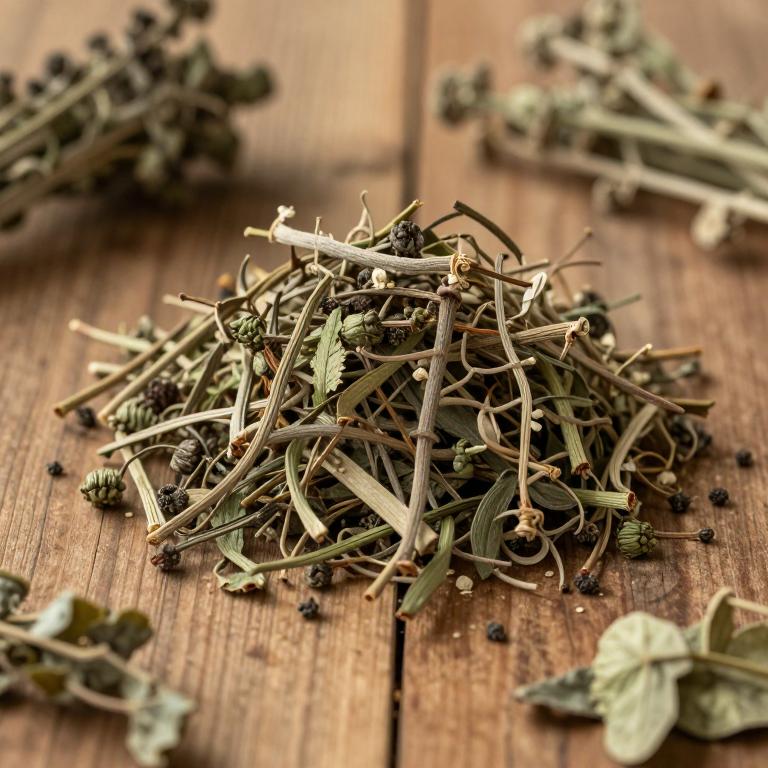
Gambier, scientifically known as Uncaria gambir, is a tropical shrub native to Southeast Asia. Traditionally prized for its tannins, it is widely used in herbal medicine for its astringent and antioxidant properties. Often utilized in wound healing and digestive health, this versatile plant remains a cornerstone of traditional pharmacology.
Names and Synonyms
Common Names
- Gambier
- gambier
- gambir
- pale catechu
Scientific Names
Accepted name
Uncaria gambirSynonyms
- Ourouparia gambir
- Uncaria yunnanensis
- Nauclea gambir
- Cinchona kattukambar
- Uncaria gambir var. angulata
- Uruparia gambir
- Uncaria gambir var. latifolia
Regional and Traditional Names
Spanish:
- Ourouparia gambir
- Nauclea gambir
- Uncaria gambir var. latifolia
- Uruparia gambir
German:
- Gambir
Sources: Wikidata, Catalogue of Life
Taxonomical Classification
This plant belongs to the kingdom Plantae and the phylum Streptophyta, falling under the class Equisetopsida and subclass Magnoliidae. Within the order Gentianaales, it is classified under the family Rubiaceae. Ultimately, its scientific designation is placed within the genus Uncaria.
| Rank | Classification |
|---|---|
| Kingdom | Plantae |
| Phylum | Streptophyta |
| Class | Equisetopsida |
| Subclass | Magnoliidae |
| Order | Gentianales |
| Family | Rubiaceae |
| Genus | Uncaria |
Sources: The World Checklist of Vascular Plants (WCVP)
Distribution
This plant exhibits a wide-ranging geographical distribution across several distinct tropical regions. In West-Central Tropical Africa, it can be found specifically within the Democratic Republic of the Congo. Its presence extends to the Indian Subcontinent, where it is documented in Bangladesh. Within the Malesia region, the species is distributed across Borneo and Jawa. Finally, it is also native to the Malay Peninsula, known as Malaya.
| Region | Area |
|---|---|
| West-Central Tropical Africa | DR Congo |
| Indian Subcontinent | Bangladesh |
| Malesia | Borneo |
| Malesia | Jawa |
| Malesia | Malaya |
| Malesia | Sumatera |
Sources: The World Checklist of Vascular Plants (WCVP)
Botanical Identification
Life history
The life history of Uncaria gambir is characterized by its classification as a phanerophyte, specifically exhibiting traits associated with both phanerophyte and nanophanerophyte life forms. As a woody climber, its life cycle is centered around the development of extensive climbing structures that allow it to navigate the vertical architecture of its tropical forest habitat. The plant begins its life through seed germination, eventually establishing a robust perennial growth pattern where its regenerative buds are located well above the ground, protected by its climbing habit. This phanerophytic strategy enables the plant to reach higher light intensities in the canopy, facilitating continuous vegetative growth and periodic reproductive cycles. Throughout its life, it maintains a persistent woody structure that supports the seasonal production of flowers and the subsequent development of fruits, ensuring its long-term survival and dominance within its ecological niche.
- Life form :
- phanerophyte
Morphology
The morphology of Uncaria gambir is characterized by its growth form as a woody shrub that functions as an obligatory climber, utilizing specialized structures to ascend. As a terrestrial plant, it grows in the soil rather than as an epiphyte, maintaining an independent life cycle without acting as a parasite on other organisms. Its structural development is defined by its woody nature, providing the necessary rigidity and support for its climbing habit.
- Climber :
- obligatory
- Epiphyte :
- terrestrial
- Growth form :
- shrub
- Parasite :
- independent
- Woodiness :
- woody
Physiology
The physiology of Uncaria gambir is characterized by its specialized metabolic processes geared toward the synthesis of secondary metabolites, most notably polyphenolic compounds such as catechins and tannins, which serve as chemical defense mechanisms. As a woody climber, its physiological structure is adapted to optimize light interception through climbing growth habits, allowing it to reach higher strata of the forest canopy for efficient photosynthesis. Its nutrient acquisition processes are primarily reliant on the uptake of mineral ions from the soil through its root system, and unlike certain legumes, it does not engage in symbiotic relationships with diazotrophic bacteria for atmospheric nitrogen conversion; therefore, it is not a nitrogen fixer (trait_1: no). The plant's metabolic regulation involves complex enzymatic pathways that manage the production of bioactive alkaloids and phenolic compounds in response to environmental stressors, contributing to its unique chemical profile and physiological resilience.
- Nitrogen fixer :
- no
Sources: Global Inventory of Floras and Traits (GIFT)
Chemicals
Uncaria gambir has 12 reported phytochemicals identified across 0 scientific publications and several other databases. The most consistently reported chemicals include CATECHIN, Flavonoids, (+)-Epicatechin, (+)-catechin, Epicatechin.
| Chemical | Supporting sources | Consensus |
|---|---|---|
| CATECHIN | 5 supporting sources | ★★★☆☆ |
| Flavonoids | 3 supporting sources | ★★☆☆☆ |
| (+)-Epicatechin | 1 supporting sources | ★☆☆☆☆ |
| (+)-catechin | 1 supporting sources | ★☆☆☆☆ |
| Epicatechin | 1 supporting sources | ★☆☆☆☆ |
| Gambiriin C | 1 supporting sources | ★☆☆☆☆ |
| Procyanidin B1 | 1 supporting sources | ★☆☆☆☆ |
| Procyanidin B3 | 1 supporting sources | ★☆☆☆☆ |
| Tannin | 1 supporting sources | ★☆☆☆☆ |
| Tannins | 1 supporting sources | ★☆☆☆☆ |
CATECHIN
- Journal of complementary & integrative medicine
- Yakugaku zasshi : Journal of the Pharmaceutical Society of Japan
- Yakushigaku zasshi
- Molecules (Basel, Switzerland)
- International journal of nanomedicine
Flavonoids
- Yakushigaku zasshi
- Molecules (Basel, Switzerland)
- Phytomedicine : international journal of phytotherapy and phytopharmacology
(+)-Epicatechin
- Chemical & pharmaceutical bulletin
(+)-catechin
- Chemical & pharmaceutical bulletin
Epicatechin
- Yakugaku zasshi : Journal of the Pharmaceutical Society of Japan
Gambiriin C
- Chemical & pharmaceutical bulletin
Procyanidin B1
- Chemical & pharmaceutical bulletin
Procyanidin B3
- Chemical & pharmaceutical bulletin
Tannin
- Yakushigaku zasshi
Tannins
- Phytomedicine : international journal of phytotherapy and phytopharmacology
Activities
Uncaria gambir has 6 reported activities identified across 0 scientific publications and several other databases. The most consistently reported activities include Antioxidant, Antibacterial, Anticancer, Antifungal, Antihyperlipidemic.
| Activity | Supporting sources | Consensus |
|---|---|---|
| Antioxidant | 2 supporting sources | ★☆☆☆☆ |
| Antibacterial | 1 supporting sources | ★☆☆☆☆ |
| Anticancer | 1 supporting sources | ★☆☆☆☆ |
| Antifungal | 1 supporting sources | ★☆☆☆☆ |
| Antihyperlipidemic | 1 supporting sources | ★☆☆☆☆ |
| Astringent | 1 supporting sources | ★☆☆☆☆ |
Antioxidant
- Brazilian journal of biology = Revista brasleira de biologia
- Molecules (Basel, Switzerland)
Antibacterial
- Molecules (Basel, Switzerland)
Anticancer
- Molecules (Basel, Switzerland)
Antifungal
- Molecules (Basel, Switzerland)
Antihyperlipidemic
- Molecules (Basel, Switzerland)
Astringent
- Chemical & pharmaceutical bulletin
Conditions
Uncaria gambir has 8 reported investigations on conditions identified across 0 scientific publications and several other databases. The most consistently reported conditions include Methicillin-Resistant Staphylococcus aureus, Breast Cancer, astringent, blood glucose, blood pressure.
| Condition | Supporting sources | Consensus |
|---|---|---|
| Methicillin-resistant staphylococcus aureus | 2 supporting sources | ★☆☆☆☆ |
| Breast cancer | 1 supporting sources | ★☆☆☆☆ |
| Astringent | 1 supporting sources | ★☆☆☆☆ |
| Blood glucose | 1 supporting sources | ★☆☆☆☆ |
| Blood pressure | 1 supporting sources | ★☆☆☆☆ |
| Diarrhea | 1 supporting sources | ★☆☆☆☆ |
| Dysentery | 1 supporting sources | ★☆☆☆☆ |
| Sore throat | 1 supporting sources | ★☆☆☆☆ |
Methicillin-resistant staphylococcus aureus
- Molecules (Basel, Switzerland)
- Pharmaceuticals (Basel, Switzerland)
Breast cancer
- International journal of nanomedicine
Astringent
- Chemical & pharmaceutical bulletin
Blood glucose
- Journal of complementary & integrative medicine
Blood pressure
- Journal of complementary & integrative medicine
Diarrhea
- Yakugaku zasshi : Journal of the Pharmaceutical Society of Japan
Dysentery
- Yakugaku zasshi : Journal of the Pharmaceutical Society of Japan
Sore throat
- Yakugaku zasshi : Journal of the Pharmaceutical Society of Japan
Preparations
Uncaria gambir has 3 reported preparations identified across 0 scientific publications and several other databases. The most consistently reported preparations include U. gambir extract, aqueous extract, bethel chewing.
| Preparation | Supporting sources | Consensus |
|---|---|---|
| U. gambir extract | 1 supporting sources | ★☆☆☆☆ |
| Aqueous extract | 1 supporting sources | ★☆☆☆☆ |
| Bethel chewing | 1 supporting sources | ★☆☆☆☆ |
U. gambir extract
- International journal of nanomedicine
Aqueous extract
- Chemical & pharmaceutical bulletin
Bethel chewing
- Yakushigaku zasshi