navelwort
Umbilicus rupestris · Accepted scientific name
Scientific literature: Very Sparse (2 studies) · ★☆☆☆☆
Navelwort, scientifically known as Umbilicus rupestris, is a charming perennial succulent often found clinging to rocky cliffs. Characterized by its distinctive rosette of fleshy, kidney-shaped leaves, this plant is valued in traditional herbalism for its soothing properties, particularly in treating skin irritations and supporting digestive health naturally.
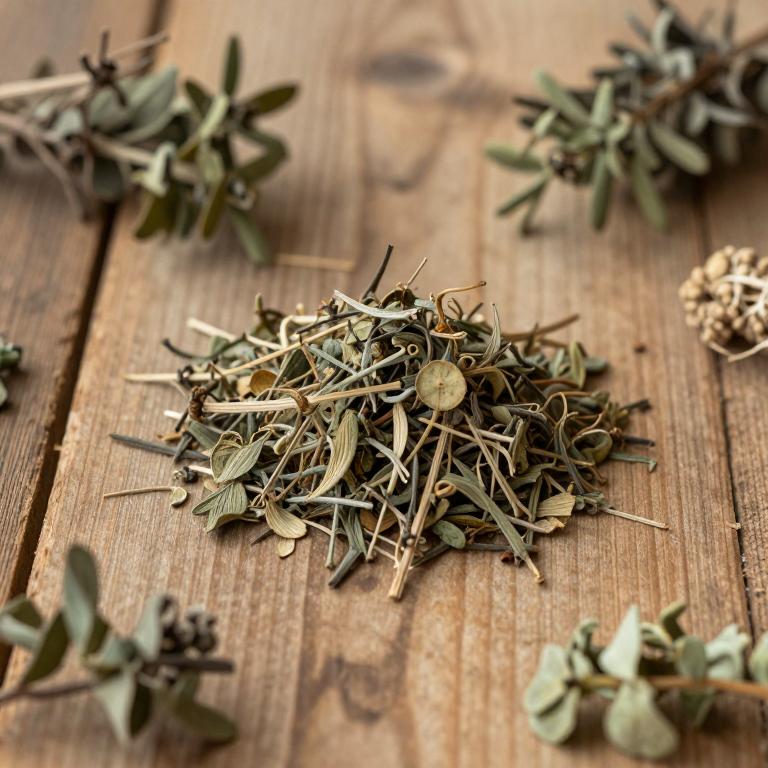
Names and Synonyms
Common Names
- Navelwort
- Wall Pennywort
- pennywort
- pennypies
Scientific Names
Accepted name
Umbilicus rupestrisSynonyms
- Umbilicus neglectus
- Umbilicus deflexus
- Umbilicus umbilicatus
- Umbilicus simplex
- Cotyledon umbilicus-veneris subsp. pendulina
- Umbilicus rupestris var. truncatus
- Cotyledon neglecta
- Cotyledon umbilicus-veneris var. patula
- Umbilicus rupestris var. velenovskyi
- Umbilicus aetneus
- Cotyledon rupestris
- Cotyledon umbilicus-veneris var. deflexa
- Umbilicus pendulinus var. punctatus
- Umbilicus patulus
- Cotyliphyllum erectum
- Cotyliphyllum umbilicus
- Umbilicus pendulinus
- Cotyledon tuberosa
- Cotyledon umbilicata
- Cotyledon umbilicifolia
- Cotyledon umbilicus-veneris var. tuberosa
- Umbilicus vulgaris subsp. pendulinus
- Umbilicus pendulinus var. truncatus
- Cotyledon umbilicus-veneris var. gredense
- Cotyledon umbilicus-veneris var. marianica
- Cotyledon umbilicus-veneris var. pendulina
- Cotyledon umbilicus-veneris subsp. pendulina
- Cotyledon gredense
- Umbilicus pendulinus var. velenovskyi
Regional and Traditional Names
Spanish:
- Ombligo de Venus
- Ombligo de Venus
German:
- Echter Venusnabel
- Haengendes Nabelkraut
- Venusnabel
- Echter Venusnabel
- Felsen-Nabelkraut
French:
- Nombril de Vénus
- Ombilic des rochers
- Nombril-de-Vénus commun
- Nombril de Venus
- Nombril de Vénus
- Nombril-de-Vénus commun
- Ombilic des rochers
- Oreille-d'abbé
Sources: Wikidata, Catalogue of Life
Taxonomical Classification
This plant, known scientifically as Umbilicus rupestris, belongs to the kingdom Plantae and the phylum Streptophyta. Within the class Equisetopsida and subclass Magnoliidae, it is classified under the order Saxifrages and the family Crassulaceae. Ultimately, it is identified by its specific genus, Umbilicus.
| Rank | Classification |
|---|---|
| Kingdom | Plantae |
| Phylum | Streptophyta |
| Class | Equisetopsida |
| Subclass | Magnoliidae |
| Order | Saxifragales |
| Family | Crassulaceae |
| Genus | Umbilicus |
Sources: The World Checklist of Vascular Plants (WCVP)
Distribution
This plant exhibits a broad geographical distribution across several different regions of the European continent. In Northern Europe, it can be found growing within the territories of Great Britain and Ireland. Its presence extends into Middle Europe, specifically documented in Germany. Moving toward the Mediterranean, the species is also located in Southwestern Europe. Within this southern region, it inhabits the Baleares and Corse.
| Region | Area |
|---|---|
| Northern Europe | Great Britain |
| Northern Europe | Ireland |
| Middle Europe | Germany |
| Southwestern Europe | Baleares |
| Southwestern Europe | Corse |
| Southwestern Europe | France |
| Southwestern Europe | Portugal |
| Southwestern Europe | Sardegna |
| Southwestern Europe | Spain |
| Southeastern Europe | Albania |
Sources: The World Checklist of Vascular Plants (WCVP)
Botanical Identification
Life history
The life history of Umbilicus rupestris is characterized by its status as a perennial plant, allowing it to persist through multiple growing seasons. In terms of its structural growth habit and survival strategy, the species functions as a hemicryptophyte, maintaining its perenn Perennial buds at or just below the soil surface to endure environmental fluctuations. Additionally, it exhibits the characteristics of a geophyte, utilizing underground storage organs to sustain its life cycle and facilitate regrowth.
- Life form :
- geophyte
- Life form :
- hemicryptophyte
- Lifecycle :
- perennial
Morphology
The morphology of Umbilicus rupestris is characterized by its growth form as a non-woody herb. It is a self-supporting plant that does not function as a climber, liana, or vine, nor does it exhibit parasitic or epiphytic behavior, maintaining a strictly terrestrial existence. In terms of stature, the plant reaches a mean height of approximately 0.175 m, with a maximum potential height of up to 0.5 m. As an independent organism, it lacks woodiness, reinforcing its classification as a herbaceous species.
- Aquatic :
- terrestrial
- Climber :
- self-supporting
- Epiphyte :
- terrestrial
- Growth form :
- herb
- Parasite :
- independent
- Plant height max:
- 0.5 m
- Plant height mean:
- 0.175 m
- Woodiness :
- non-woody
Physiology
The physiology of Umbilicus rupestris is characterized by a specialized photosynthetic pathway utilizing CAM (Crassulacean Acid Metabolism), allowing the plant to optimize water-use efficiency by fixing carbon dioxide at night. This metabolic adaptation is supported by its morphological leaf traits, with a mean leaf size of 17.44 cm². Furthermore, the plant exhibits a mean Specific Leaf Area (SLA) of 327.67 cm²/g, reflecting a structural balance between leaf thickness and surface area that facilitates its physiological functions within its natural habitat.
- Leaf size mean:
- 17.44 cm²
- Photosynthetic pathway :
- CAM
- Specific Leaf Area (SLA) mean:
- 327.67 cm²/g
Reproduction
Reproduction in Umbilicus rupestris is characterized by a sexual process involving bisexual flowers, ensuring that both male and female reproductive organs are present within the same plant. The pollination mechanism is primarily biotic, specifically relying on an insect pollination syndrome to facilitate the transfer of pollen. To maintain genetic diversity, self-fertilization is absent in this species. Following successful fertilization, the plant produces a high volume of progeny, with each fruit containing more than 1,000 seeds. These seeds are notably minute, with a minimum mass of 1e-05 g, a mean mass of 1.01e-05 g, and a maximum mass of 2e-05 g. Once mature, the seeds utilize an anemochorous dispersal syndrome, meaning they are dispersed by the wind to colonize new habitats.
- Dispersal syndrome :
- anemochorous
- Pollination syndrome :
- insect
- Pollination syndrome :
- biotic
- Reproduction sexual :
- bisexual
- Seed mass max:
- 2e-05 g
- Seed mass mean:
- 1.01e-05 g
- Seed mass min:
- 1e-05 g
- Seeds_per_fruit :
- >1000
- Self fertilization :
- absent
Sources: Global Inventory of Floras and Traits (GIFT)
Plant Parts
Umbilicus rupestris has 1 reported plant parts identified across 1 scientific publications and several other databases that are studied for medicinal purposes. The most consistently reported plant part include leaf.
| Plant part | Supporting sources | Consensus |
|---|---|---|
| Leaf | 1 supporting sources | ★☆☆☆☆ |
Leaf
- Chemical & pharmaceutical bulletin
Chemicals
Umbilicus rupestris has 1 reported phytochemicals identified across 1 scientific publications and several other databases. The most consistently reported chemicals include Isoquercitrin.
| Chemical | Supporting sources | Consensus |
|---|---|---|
| Isoquercitrin | 1 supporting sources | ★☆☆☆☆ |
Isoquercitrin
- Chemical & pharmaceutical bulletin
Preparations
Umbilicus rupestris has 1 reported preparations identified across 1 scientific publications and several other databases. The most consistently reported preparations include hydroethanolic extracts.
| Preparation | Supporting sources | Consensus |
|---|---|---|
| Hydroethanolic extracts | 1 supporting sources | ★☆☆☆☆ |
Hydroethanolic extracts
- Molecules (Basel, Switzerland)