Californian Bay
Umbellularia californica · Accepted scientific name
Scientific literature: Very Extensive (286 studies) · ★★★★★
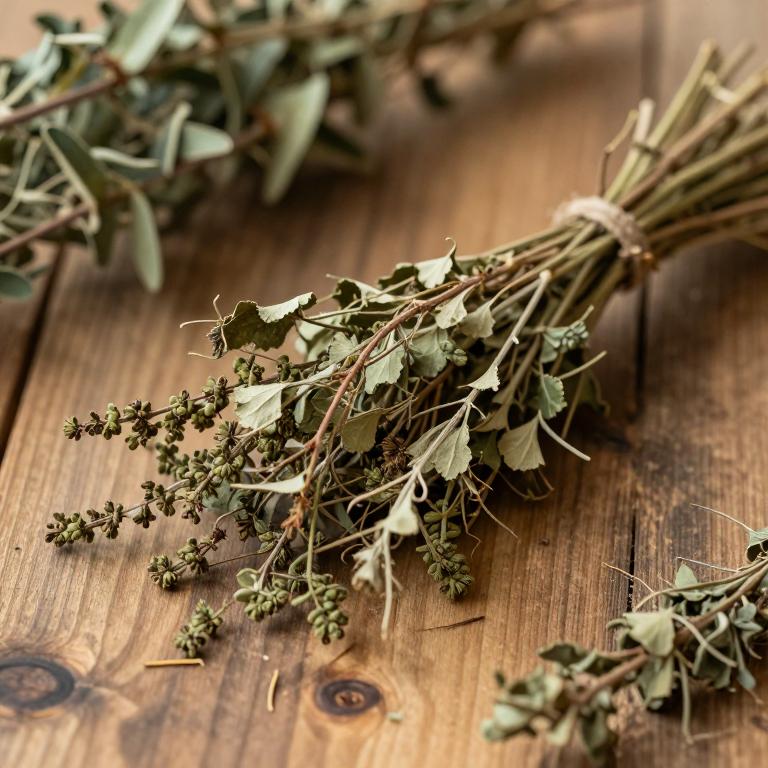
Californian Bay, scientifically known as Umbellularia californica, is an aromatic evergreen tree native to the coastal regions of California. Renowned for its pungent, spicy leaves, it is widely used in culinary seasoning and traditional medicine. Its essential oils offer potent antimicrobial and analgesic properties, making it a valuable botanical resource.
Names and Synonyms
Common Names
- Californian Bay
- Californian Laurel
- Balm of Heaven
- Bay Laurel
- California Bay
- Myrtle-wood
- Oregon-myrtle
- California-laurel
- California-nutmeg
- California-olive
- headachetree
- myrtlewood
- pepperwood
- California bay laurel
- Oregon myrtle
Scientific Names
Accepted name
Umbellularia californicaSynonyms
- Tetranthera causticans
- Litsea californica
- Drimophyllum pauciflorum
- Persea causticans
- Tetranthera californica
- Oreodaphne regalis
- Oreodaphne californica
- Umbellularia californica f. pendula
- Umbellularia californica var. fresnensis
Regional and Traditional Names
Spanish:
- Umbellularia
- Sciadiodaphne
- Tetranthera californica
- Laurel de California
- Laurel de California
German:
- Kalifornischer Lorbeer
- Berglorbeer
- Kalifornischer Berglorbeer
- Berglorbeer
- Kalifornischer Lorbeer
French:
- Laurier de Californie
- Myrte de l’Orégon
- Laurier de californie
- Laurier De Californie
- Myrte de l'Oregon
- Laurier de Californie
- Myrte de l’Oregon
Sources: Wikidata, Catalogue of Life
Taxonomical Classification
This plant belongs to the kingdom Plantae and the phylum Streptophyta, specifically classified within the class Equisetopsida and subclass Magnoliidae. It is further categorized under the order Laurales and the family Lauraceae. Finally, its taxonomic placement is completed within the genus Umbellularia.
| Rank | Classification |
|---|---|
| Kingdom | Plantae |
| Phylum | Streptophyta |
| Class | Equisetopsida |
| Subclass | Magnoliidae |
| Order | Laurales |
| Family | Lauraceae |
| Genus | Umbellularia |
Sources: The World Checklist of Vascular Plants (WCVP)
Distribution
This plant exhibits a specific distribution pattern stretching along the western coast of North America. In the Northwestern United States, its range extends into the state of Oregon. Moving southward, it is widely found throughout the Southwestern United States, specifically within California. The species also reaches into Mexico, where it is located in the northwestern region of the country. Consequently, its habitat follows a continuous coastal trend from Oregon down to Northwest Mexico.
| Region | Area |
|---|---|
| Northwestern U.S.A. | Oregon |
| Southwestern U.S.A. | California |
| Mexico | Mexico Northwest |
Sources: The World Checklist of Vascular Plants (WCVP)
Botanical Identification
Life history
The life history of Umbellularia californica is characterized by a perennial lifecycle, allowing the individual to persist in its environment for many years. As a long-lived woody species, it does not follow the rapid turnover of annual or biennial plants, but rather invests in structural longevity and sustained reproductive capacity. Throughout its existence, the plant undergoes various stages of development, moving from seedling establishment in shaded, moist understories to becoming a dominant component of the forest canopy. Its perennial nature enables it to withstand seasonal fluctuations and establish a robust root system that supports continuous growth and periodic flowering and fruiting cycles over decades or even centuries.
- Lifecycle :
- perennial
Morphology
The morphology of Umbellularia californica is characterized by its growth form as a woody tree, though it can occasionally manifest in a shrub-like habit. As a self-supporting species, it does not function as a climber, liana, or vine, and it maintains an independent existence rather than acting as a parasite or an epiphyte. It is a terrestrial plant, lacking aquatic or semiaquatic tendencies. In terms of stature, the species reaches a significant height with a mean plant height of approximately 24.495 meters, supported by a robust, woody structure.
- Aquatic :
- terrestrial
- Climber :
- self-supporting
- Epiphyte :
- terrestrial
- Growth form :
- tree
- Growth form :
- shrub
- Parasite :
- independent
- Plant height mean:
- 24.495 m
- Woodiness :
- woody
Physiology
The physiology of Umbellularia californica is characterized by its reliance on the C3 photosynthetic pathway, a mechanism common among temperate woody perennials that involves the direct fixation of atmospheric carbon dioxide by the enzyme RuBisCO within the mesophyll cells. This metabolic process facilitates the production of three-carbon sugar molecules, supporting the plant's structural growth and the synthesis of its complex secondary metabolites. The plant's physiological efficiency is closely tied to its ability to manage transpiration and gas exchange within its Mediterranean-style climate, balancing water loss through stomatal conductance with the carbon assimilation required for energy production. Furthermore, its metabolic activity is heavily geared toward the biosynthesis of volatile organic compounds, such as terpenoids, which are integrated into its physiological defense mechanisms to deter herbivory and mitigate environmental stressors.
- Photosynthetic pathway :
- C3
Reproduction
Reproduction in Umbellularia californica is characterized by a diverse range of dispersal syndromes, including anemochorous, zoochorous, autochorous, hydrochorous, and unspecialized methods, with zoochorous dispersal serving as a primary mechanism. The plant produces seeds that exhibit notable variability in weight, with a recorded minimum seed mass of 1.5119 g and a maximum seed mass of 2.2402 g. On average, the seed mass for this species is approximately 1.7047646 g, reflecting the specific energetic investment required for its reproductive cycle.
- Dispersal syndrome :
- zoochorous
- Seed mass max:
- 2.2402 g
- Seed mass mean:
- 1.7047646 g
- Seed mass min:
- 1.5119 g
Sources: Global Inventory of Floras and Traits (GIFT)
Plant Parts
Umbellularia californica has 1 reported plant parts identified across 1 scientific publications and several other databases that are studied for medicinal purposes. The most consistently reported plant part include leaf.
| Plant part | Supporting sources | Consensus |
|---|---|---|
| Leaf | 1 supporting sources | ★☆☆☆☆ |
Leaf
- Annals of clinical microbiology and antimicrobials
Chemicals
Umbellularia californica has 42 reported phytochemicals identified across 1 scientific publications and several other databases. The most consistently reported chemicals include 1,8-Cineole, ALPHA-PHELLANDRENE, ALPHA-PINENE, ALPHA-SELINENE, ALPHA-TERPINYL ACETATE.
| Chemical | Supporting sources | Consensus |
|---|---|---|
| 1,8-Cineole | 1 supporting sources | ★☆☆☆☆ |
| ALPHA-PHELLANDRENE | 1 supporting sources | ★☆☆☆☆ |
| ALPHA-PINENE | 1 supporting sources | ★☆☆☆☆ |
| ALPHA-SELINENE | 1 supporting sources | ★☆☆☆☆ |
| ALPHA-TERPINYL ACETATE | 1 supporting sources | ★☆☆☆☆ |
| Alpha terpinene | 1 supporting sources | ★☆☆☆☆ |
| BETA-ELEMENE | 1 supporting sources | ★☆☆☆☆ |
| BETA-PHELLANDRENE | 1 supporting sources | ★☆☆☆☆ |
| BETA-PINENE | 1 supporting sources | ★☆☆☆☆ |
| Cardenolides | 1 supporting sources | ★☆☆☆☆ |
1,8-Cineole
- Dr. Duke
ALPHA-PHELLANDRENE
- Dr. Duke
ALPHA-PINENE
- Dr. Duke
ALPHA-SELINENE
- Dr. Duke
ALPHA-TERPINYL ACETATE
- Dr. Duke
Alpha terpinene
- Dr. Duke
BETA-ELEMENE
- Dr. Duke
BETA-PHELLANDRENE
- Dr. Duke
BETA-PINENE
- Dr. Duke
Cardenolides
- Annals of clinical microbiology and antimicrobials
Activities
Umbellularia californica has 234 reported activities identified across 1 scientific publications and several other databases. The most consistently reported activities include (-)-Chronotropic, (-)-Inotropic, ACE-Inhibitor, AChE-Inhibitor, Abortifacient.
| Activity | Supporting sources | Consensus |
|---|---|---|
| (-)-Chronotropic | 1 supporting sources | ★☆☆☆☆ |
| (-)-Inotropic | 1 supporting sources | ★☆☆☆☆ |
| ACE-Inhibitor | 1 supporting sources | ★☆☆☆☆ |
| AChE-Inhibitor | 1 supporting sources | ★☆☆☆☆ |
| Abortifacient | 1 supporting sources | ★☆☆☆☆ |
| Acaricide | 1 supporting sources | ★☆☆☆☆ |
| Aldose-Reductase-Inhibitor | 1 supporting sources | ★☆☆☆☆ |
| Allelochemic | 1 supporting sources | ★☆☆☆☆ |
| Allelopathic | 1 supporting sources | ★☆☆☆☆ |
| Allergenic | 1 supporting sources | ★☆☆☆☆ |
(-)-Chronotropic
- Dr. Duke
(-)-Inotropic
- Dr. Duke
ACE-Inhibitor
- Dr. Duke
AChE-Inhibitor
- Dr. Duke
Abortifacient
- Dr. Duke
Acaricide
- Dr. Duke
Aldose-Reductase-Inhibitor
- Dr. Duke
Allelochemic
- Dr. Duke
Allelopathic
- Dr. Duke
Allergenic
- Dr. Duke
Conditions
Umbellularia californica has 3 reported investigations on conditions identified across 1 scientific publications and several other databases. The most consistently reported conditions include MRSA, methicillin-resistant Staphylococcus aureus, respiratory infections.
| Condition | Supporting sources | Consensus |
|---|---|---|
| Mrsa | 1 supporting sources | ★☆☆☆☆ |
| Methicillin-resistant staphylococcus aureus | 1 supporting sources | ★☆☆☆☆ |
| Respiratory infections | 1 supporting sources | ★☆☆☆☆ |
Mrsa
- Annals of clinical microbiology and antimicrobials
Methicillin-resistant staphylococcus aureus
- Annals of clinical microbiology and antimicrobials
Respiratory infections
- Annals of clinical microbiology and antimicrobials
Preparations
Umbellularia californica has 1 reported preparations identified across 1 scientific publications and several other databases. The most consistently reported preparations include methanolic extracts of leaves and bark.
| Preparation | Supporting sources | Consensus |
|---|---|---|
| Methanolic extracts of leaves and bark | 1 supporting sources | ★☆☆☆☆ |
Methanolic extracts of leaves and bark
- Annals of clinical microbiology and antimicrobials