Western Gorse
Ulex gallii · Accepted scientific name
Scientific literature: Very Sparse (9 studies) · ★☆☆☆☆
Western Gorse, scientifically known as Ulex gallii, is a hardy, evergreen shrub native to the Mediterranean and Atlantic coasts. Characterized by its dense, thorny structure and vibrant yellow flowers, it thrives in acidic, sandy soils. Historically utilized in traditional remedies, this resilient plant plays a vital ecological role.
- Family
- Fabaceae
- Native range
- Europe
- Parts used
- Not available
- Common names
- Western Gorse
- Scientific synonyms
- Ulex Europaeus Subsp. Gallii · Ulex Europaeus Proles Gallii · 1 more
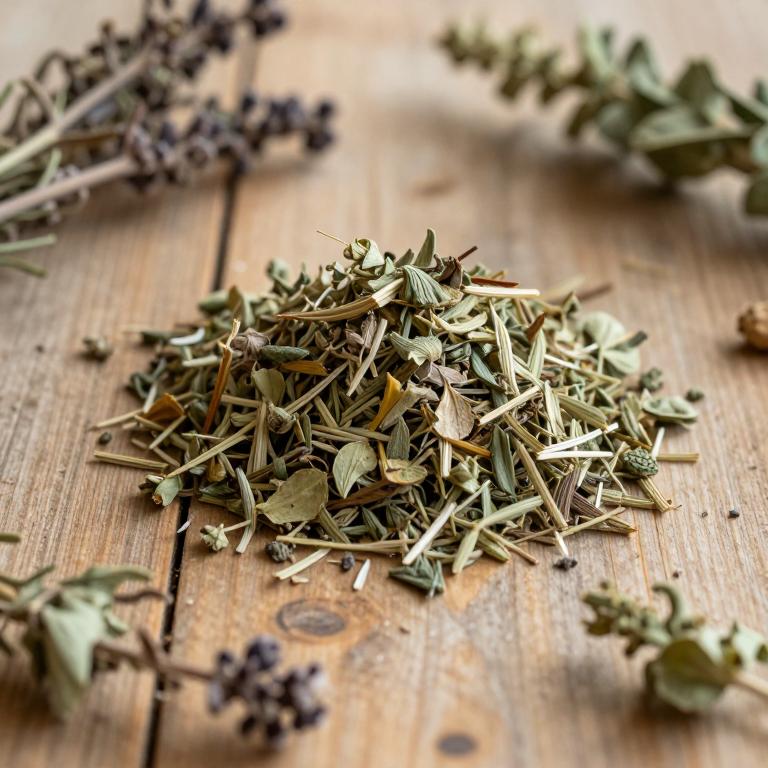
Names and Synonyms
Common Names
- Western Gorse
Scientific Names
Accepted name
Ulex galliiSynonyms
- Ulex europaeus subsp. gallii
- Ulex europaeus proles gallii
- Ulex minor subsp. gallii
Regional and Traditional Names
French:
- Ajonc de Le Gall
- Ajonc de Le Gall
Sources: Wikidata, Catalogue of Life
Taxonomical Classification
This plant belongs to the kingdom Plantae within the phylum Streptophyta and the class Equisetopsida. Classified under the subclass Magnoliidae and the order Fabales, it is a member of the Fabaceae family. It is specifically identified by its genus, Ulex.
| Rank | Classification |
|---|---|
| Kingdom | Plantae |
| Phylum | Streptophyta |
| Class | Equisetopsida |
| Subclass | Magnoliidae |
| Order | Fabales |
| Family | Fabaceae |
| Genus | Ulex |
Sources: The World Checklist of Vascular Plants (WCVP)
Distribution
This plant exhibits a distinct distribution across several regions of Europe. In Northern Europe, it can be found growing throughout Great Britain. Its presence also extends to the island of Ireland within the same northern territory. Moving toward Southwestern Europe, the species is commonly located in France. Finally, the geographical range reaches as far south as Spain.
| Region | Area |
|---|---|
| Northern Europe | Great Britain |
| Northern Europe | Ireland |
| Southwestern Europe | France |
| Southwestern Europe | Spain |
Sources: The World Checklist of Vascular Plants (WCVP)
Botanical Identification
Life history
The life history of Ulex gallii is characterized by its status as a perennial species, though its developmental patterns can exhibit variable growth strategies depending on environmental conditions. As a long-lived woody shrub, it establishes itself through a robust lifecycle that allows it to persist in heathlands and coastal habitats over multiple years. While the plant primarily functions as a perennial, its life history may involve stages that resemble annual or biennial cycles in response to extreme stress or specific ecological niches, providing it with the flexibility to survive in fluctuating climates. Throughout its existence, the plant focuses on building significant woody biomass, which supports its reproductive longevity and ability to withstand seasonal shifts.
- Lifecycle :
- perennial
Morphology
The morphology of Ulex gallii is characterized by a woody growth form, functioning primarily as a shrub. It exhibits a physical stature with a mean plant height of approximately 0.575 m, contributing to its structural presence in its natural habitat.
- Growth form :
- shrub
- Plant height mean:
- 0.575 m
- Woodiness :
- woody
Physiology
The physiology of Ulex gallii is characterized by its reliance on the C3 photosynthetic pathway, which dictates its metabolic processes and carbon fixation strategies under varying environmental conditions. This plant exhibits a specific leaf area (SLA) with a mean value of 66 cm²/g, a metric that reflects its structural leaf economy and its capacity for light interception and gas exchange relative to its biomass. This combination of C3 metabolism and a relatively moderate SLA influences the plant's water-use efficiency and its ability to adapt to the Mediterranean-type ecosystems it typically inhabits.
- Photosynthetic pathway :
- C3
- Specific Leaf Area (SLA) mean:
- 66 cm²/g
Reproduction
The reproduction of Ulex gallii is characterized by a specific seed morphology and a versatile dispersal strategy. The seeds produced by this species exhibit a relatively consistent mass, with a recorded mean weight of approximately 0.0062480555 g. Individual seed measurements vary slightly, ranging from a minimum mass of 0.00588 g to a maximum mass of 0.00741 g. Regarding the movement of its progeny, the plant primarily utilizes an autochorous dispersal syndrome, meaning the seeds are released through mechanisms inherent to the plant itself. However, its dispersal capabilities are broader and more unspecialized, involving a complex suite of syndromes including anemochory, zoochory, and hydrochory, which allow the seeds to be spread by wind, animals, and water.
- Dispersal syndrome :
- autochorous
- Seed mass max:
- 0.00741 g
- Seed mass mean:
- 0.0062480555 g
- Seed mass min:
- 0.00588 g
Sources: Global Inventory of Floras and Traits (GIFT)
Chemicals
Ulex gallii has 2 reported phytochemicals identified across 0 scientific publications and several other databases. The most consistently reported chemicals include Isoprunetin, genistein.
| Chemical | Supporting sources | Consensus |
|---|---|---|
| Isoprunetin | 1 supporting sources | ★☆☆☆☆ |
| genistein | 1 supporting sources | ★☆☆☆☆ |
Isoprunetin
- Molecules (Basel, Switzerland)
genistein
- Molecules (Basel, Switzerland)
Activities
Ulex gallii has 2 reported activities identified across 0 scientific publications and several other databases. The most consistently reported activities include Diuretic, Hypotensive.
| Activity | Supporting sources | Consensus |
|---|---|---|
| Diuretic | 1 supporting sources | ★☆☆☆☆ |
| Hypotensive | 1 supporting sources | ★☆☆☆☆ |
Diuretic
- Molecules (Basel, Switzerland)
Hypotensive
- Molecules (Basel, Switzerland)
Conditions
Ulex gallii has 5 reported investigations on conditions identified across 0 scientific publications and several other databases. The most consistently reported conditions include diuretic, glioblastoma, lung cancer, neuroblastoma, stomach cancer.
| Condition | Supporting sources | Consensus |
|---|---|---|
| Diuretic | 1 supporting sources | ★☆☆☆☆ |
| Glioblastoma | 1 supporting sources | ★☆☆☆☆ |
| Lung cancer | 1 supporting sources | ★☆☆☆☆ |
| Neuroblastoma | 1 supporting sources | ★☆☆☆☆ |
| Stomach cancer | 1 supporting sources | ★☆☆☆☆ |
Diuretic
- Molecules (Basel, Switzerland)
Glioblastoma
- Molecules (Basel, Switzerland)
Lung cancer
- Molecules (Basel, Switzerland)
Neuroblastoma
- Molecules (Basel, Switzerland)
Stomach cancer
- Molecules (Basel, Switzerland)