Chilean Guava
Ugni molinae · Accepted scientific name
Scientific literature: Very Sparse (7 studies) · ★☆☆☆☆
Chilean Guava, scientifically known as Ugni molinae, is a versatile evergreen shrub native to South America. Renowned for its aromatic, edible fruits, it offers significant antioxidant properties. Beyond its culinary appeal, this plant is valued in traditional medicine for its potential anti-inflammatory and antimicrobial benefits in holistic wellness practices.
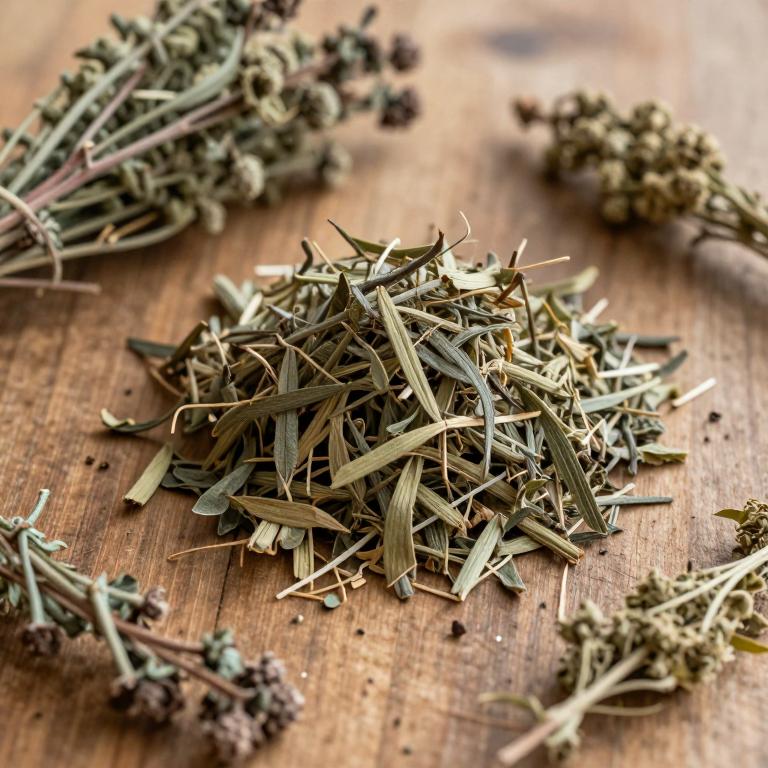
Names and Synonyms
Common Names
- Chilean Guava
- Chilean-guava
- strawberry myrtle
Scientific Names
Accepted name
Ugni molinaeSynonyms
- Eugenia ugni
- Myrtus molinae
- Myrtus ugni var. angustifolia
- Ugni bridgesii
- Myrtus ugni
- Myrtus ugni var. latifolia
- Ugni lanceolata
- Ugni philippii
- Ugni poeppigii
Regional and Traditional Names
Spanish:
- Murtilla
- Myrtus ugni
- Eugenia ugni
- Ugni poeppigii
- Ugni philippi
- Ugni ugni
- Ugni myrtus
- ugni
- uñi
German:
- Chilenische Guave
- Ugni poeppigii
- Ugni myrtus
- Ugni philippii
- Ugni lanceolata
- chilenische Guave
French:
- Goyavier du Chili
- Goyavier du chili
- Goyavier Du Chili
- Murtilla
- goyavier du Chili
Sources: Wikidata, Catalogue of Life
Taxonomical Classification
This plant, known scientifically as Ugni molinae, belongs to the kingdom Plantae and the phylum Streptophyta. Within the class Equisetopsida and subclass Magnoliidae, it is classified under the order Myrtales and the family Myrtaceae. Ultimately, it is categorized under the genus Ugni.
| Rank | Classification |
|---|---|
| Kingdom | Plantae |
| Phylum | Streptophyta |
| Class | Equisetopsida |
| Subclass | Magnoliidae |
| Order | Myrtales |
| Family | Myrtaceae |
| Genus | Ugni |
Sources: The World Checklist of Vascular Plants (WCVP)
Distribution
This plant exhibits a diverse geographical distribution spanning multiple continents and regions. In the Southern Hemisphere, it is widely found throughout New Zealand North. Its presence is also heavily concentrated in Southern South America, specifically across Chile Central and Chile South. Additionally, the species can be located in the southern reaches of Argentina. Finally, its range extends as far north as Great Britain in Northern Europe.
| Region | Area |
|---|---|
| Northern Europe | Great Britain |
| New Zealand | New Zealand North |
| Southern South America | Argentina South |
| Southern South America | Chile Central |
| Southern South America | Chile South |
| Southern South America | Juan Fernández Is. |
Sources: The World Checklist of Vascular Plants (WCVP)
Botanical Identification
Ecology
The ecology of Ugni molinae is characterized by its preference for lowland environments, where it occupies specific niche spaces within its native range. It thrives within a defined altitudinal gradient, typically establishing itself at elevations starting from 700 m AMSL and extending up to a maximum of 1500 m AMSL. This elevational range dictates the climatic conditions, such as temperature and moisture availability, to which the species must adapt for optimal growth and medicinal potency.
- Elevational range max:
- 1500 m AMSL
- Elevational range min:
- 700 m AMSL
- Habitat :
- Lowland
Life history
The life history of Ugni molinae is characterized by a long-lived perennial lifecycle, allowing the plant to persist in its native habitats through multiple growing seasons. In terms of its structural growth and ecological positioning, it exhibits diverse life forms depending on environmental conditions and developmental stages, manifesting as both a phanerophyte, where its reproductive shoots are held well above the ground, and a chamaephyte, where the buds are situated close to or just above the soil surface. This adaptability in life form contributes to its resilience and ability to maintain stable populations within its ecosystem over time.
- Life form :
- chamaephyte
- Life form :
- phanerophyte
- Lifecycle :
- perennial
Morphology
The morphology of Ugni molinae is characterized by its growth form as a woody shrub, which functions as a self-supporting, independent organism. It is a terrestrial species, neither aquatic nor epiphytic, and does not exhibit parasitic behavior. In terms of stature, the plant typically reaches a height ranging from a minimum of 1 meter to a maximum of 2 meters.
- Aquatic :
- terrestrial
- Climber :
- self-supporting
- Epiphyte :
- terrestrial
- Growth form :
- shrub
- Parasite :
- independent
- Plant height max:
- 2 m
- Plant height min:
- 1 m
- Woodiness :
- woody
Physiology
The physiology of Ugni molinae is characterized by a C3 photosynthetic pathway, which dictates its metabolic processes and carbon fixation strategies. The plant's vegetative structure includes leaves that exhibit consistent morphological dimensions, with a mean, minimum, and maximum leaf width all measured at 1.7 cm. In terms of longitudinal growth, the foliage reaches a maximum leaf length of 2 cm, supporting the plant's energy production and overall physiological development.
- Leaf length max:
- 2 cm
- Leaf width mean:
- 1.7 cm
- Photosynthetic pathway :
- C3
Reproduction
Reproduction in Ugni molinae occurs through both sexual and asexual mechanisms. The species exhibits asexual reproduction, which is present and allows for vegetative propagation. For sexual reproduction, the plant produces fleshy fruits that serve as a primary means of seed dispersal; these fruits possess a mean width of 1.1 cm.
- Fruit width mean:
- 1.1 cm
- Reproduction asexual :
- present
Sources: Global Inventory of Floras and Traits (GIFT)
Plant Parts
Ugni molinae has 1 reported plant parts identified across 2 scientific publications and several other databases that are studied for medicinal purposes. The most consistently reported plant part include fruit.
| Plant part | Supporting sources | Consensus |
|---|---|---|
| Fruit | 2 supporting sources | ★☆☆☆☆ |
Fruit
- The Journal of membrane biology
- BioMed research international
Chemicals
Ugni molinae has 2 reported phytochemicals identified across 2 scientific publications and several other databases. The most consistently reported chemicals include Quercitin, polyphenols.
| Chemical | Supporting sources | Consensus |
|---|---|---|
| Quercitin | 1 supporting sources | ★☆☆☆☆ |
| polyphenols | 1 supporting sources | ★☆☆☆☆ |
Quercitin
- The Journal of membrane biology
polyphenols
- BioMed research international
Activities
Ugni molinae has 1 reported activities identified across 2 scientific publications and several other databases. The most consistently reported activities include Antibacterial.
| Activity | Supporting sources | Consensus |
|---|---|---|
| Antibacterial | 1 supporting sources | ★☆☆☆☆ |
Antibacterial
- BioMed research international
Conditions
Ugni molinae has 1 reported investigations on conditions identified across 2 scientific publications and several other databases. The most consistently reported conditions include cancer.
| Condition | Supporting sources | Consensus |
|---|---|---|
| Cancer | 1 supporting sources | ★☆☆☆☆ |
Cancer
- Cancers
Preparations
Ugni molinae has 1 reported preparations identified across 2 scientific publications and several other databases. The most consistently reported preparations include fruit extract.
| Preparation | Supporting sources | Consensus |
|---|---|---|
| Fruit extract | 1 supporting sources | ★☆☆☆☆ |
Fruit extract
- The Journal of membrane biology