Tzvelevopyrethrum walteri
Tzvelevopyrethrum walteri · Accepted scientific name
Scientific literature: Very Sparse (5 studies) · ★☆☆☆☆
, scientifically known as Tzvelevopyrethrum walteri, is a specialized medicinal plant valued for its unique therapeutic properties. Often found in specific ecological niches, this species is studied for its bioactive compounds. Its traditional uses provide a foundation for modern pharmacological research aimed at discovering new natural healing agents.
- Family
- Asteraceae
- Native range
- Asia-Temperate
- Parts used
- Flower
- Common names
- Not available
- Scientific synonyms
- Chrysanthemum Walteri · Tanacetum Walteri · 1 more
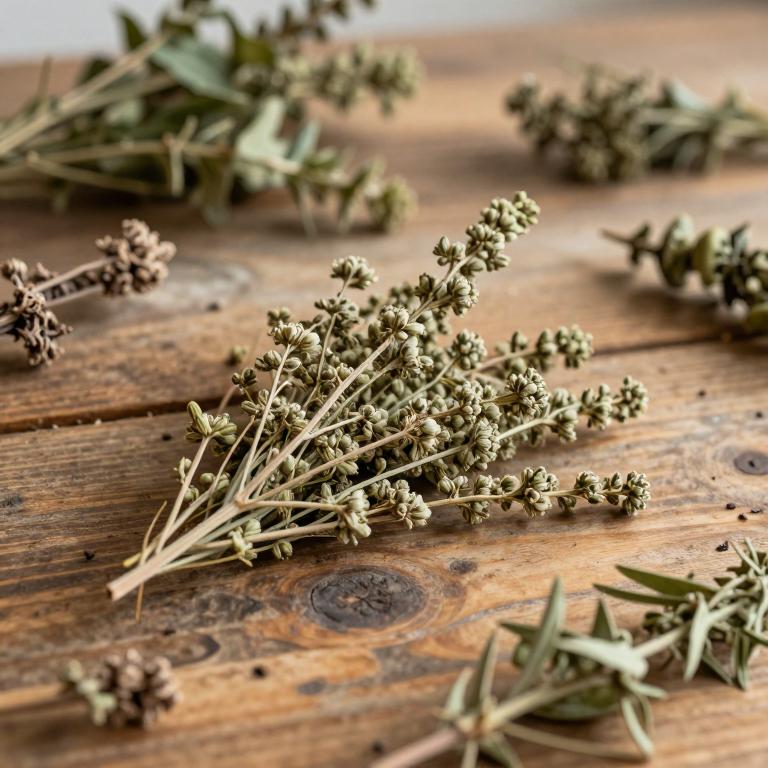
Names and Synonyms
Scientific Names
Accepted name
Tzvelevopyrethrum walteriSynonyms
- Chrysanthemum walteri
- Tanacetum walteri
- Pyrethrum walteri
Sources: Wikidata
Taxonomical Classification
This plant belongs to the kingdom Plantae and the phylum Streptophyta within the class Equisetopsida. It is further classified under the subclass Magnoliidae and the order Asterales. Finally, it is a member of the family Asteraceae and is specifically categorized under the genus Tzvelevopyrethrum.
| Rank | Classification |
|---|---|
| Kingdom | Plantae |
| Phylum | Streptophyta |
| Class | Equisetopsida |
| Subclass | Magnoliidae |
| Order | Asterales |
| Family | Asteraceae |
| Genus | Tzvelevopyrethrum |
Sources: The World Checklist of Vascular Plants (WCVP)
Distribution
This plant exhibits a specific geographical range concentrated within two distinct regions of Asia. In Central Asia, its presence is documented within the borders of Turkmenistan. Moving westward, the species also extends into the territory of Iran. This distribution pattern highlights its adaptation to the environmental conditions found across these specific areas. Consequently, the plant is primarily localized to these two neighboring nations.
| Region | Area |
|---|---|
| Central Asia | Turkmenistan |
| Western Asia | Iran |
Sources: The World Checklist of Vascular Plants (WCVP)
Botanical Identification
Ecology
The ecology of Tzvelevopyrtheum walteri is characterized by its preference for high-altitude environments, specifically thriving within an elevational range that extends from 1,800 m to a maximum of 3,000 m AMSL. This species is typically found in montane ecosystems, where it colonizes specialized niches such as mountains and stony places. Its ability to inhabit these rocky, high-elevation terrains suggests an adaptation to well-drained, potentially nutrient-poor substrates and the climatic rigors associated with alpine or sub-alpine zones.
- Elevational range max:
- 3000 m AMSL
- Elevational range min:
- 1800 m AMSL
- Habitat :
- mountains, stony places
Life history
The life history of Tzvelevopyrthethrum walteri is characterized by a perennial lifecycle, allowing the plant to persist through multiple growing seasons. As a perennial species, it avoids the complete senescence seen in annuals, instead establishing a stable presence in its habitat by maintaining its biological functions over several years. This longevity enables the plant to invest in robust root systems and reproductive structures that can withstand seasonal fluctuations, providing a consistent foundation for its continued development and survival within its ecological niche.
- Lifecycle :
- perennial
Morphology
The morphology of Tzvelevopyrtheum walteri is characterized by its growth form as a herb, exhibiting a non-woody structure throughout its development. This plant is relatively diminutive in stature, with a plant height that typically ranges from a minimum of 0.05 m to a maximum of 0.2 m.
- Growth form :
- herb
- Plant height max:
- 0.2 m
- Plant height min:
- 0.05 m
- Woodiness :
- non-woody
Reproduction
The reproduction of Tzvelevopyrtheum walteri is characterized by a specific seasonal flowering cycle that facilitates its pollination and seed production. The flowering period typically begins in June and continues through July, though the exact timing can be subject to environmental variability. This relatively concentrated blooming window ensures that the plant's reproductive efforts are synchronized with optimal seasonal conditions, supporting the development of flowers necessary for the continuation of the species.
- Flowering time :
- Jun
- Flowering time :
- Jul
Sources: Global Inventory of Floras and Traits (GIFT)
Plant Parts
Tzvelevopyrethrum walteri has 1 reported plant parts identified across 1 scientific publications and several other databases that are studied for medicinal purposes. The most consistently reported plant part include flower.
| Plant part | Supporting sources | Consensus |
|---|---|---|
| Flower | 1 supporting sources | ★☆☆☆☆ |
Flower
- Natural product research
Chemicals
Tzvelevopyrethrum walteri has 4 reported phytochemicals identified across 1 scientific publications and several other databases. The most consistently reported chemicals include 1,8-Cineole, THYMOL, Umbellulone, camphor.
| Chemical | Supporting sources | Consensus |
|---|---|---|
| 1,8-Cineole | 1 supporting sources | ★☆☆☆☆ |
| THYMOL | 1 supporting sources | ★☆☆☆☆ |
| Umbellulone | 1 supporting sources | ★☆☆☆☆ |
| camphor | 1 supporting sources | ★☆☆☆☆ |
1,8-Cineole
- Natural product research
THYMOL
- Natural product research
Umbellulone
- Natural product research
camphor
- Natural product research
Preparations
Tzvelevopyrethrum walteri has 1 reported preparations identified across 1 scientific publications and several other databases. The most consistently reported preparations include essential oil.
| Preparation | Supporting sources | Consensus |
|---|---|---|
| Essential oil | 1 supporting sources | ★☆☆☆☆ |
Essential oil
- Natural product research