Turraeanthus africana (wrong spelling)
Turraeanthus africanus · Accepted scientific name
Scientific literature: Very Sparse (6 studies) · ★☆☆☆☆
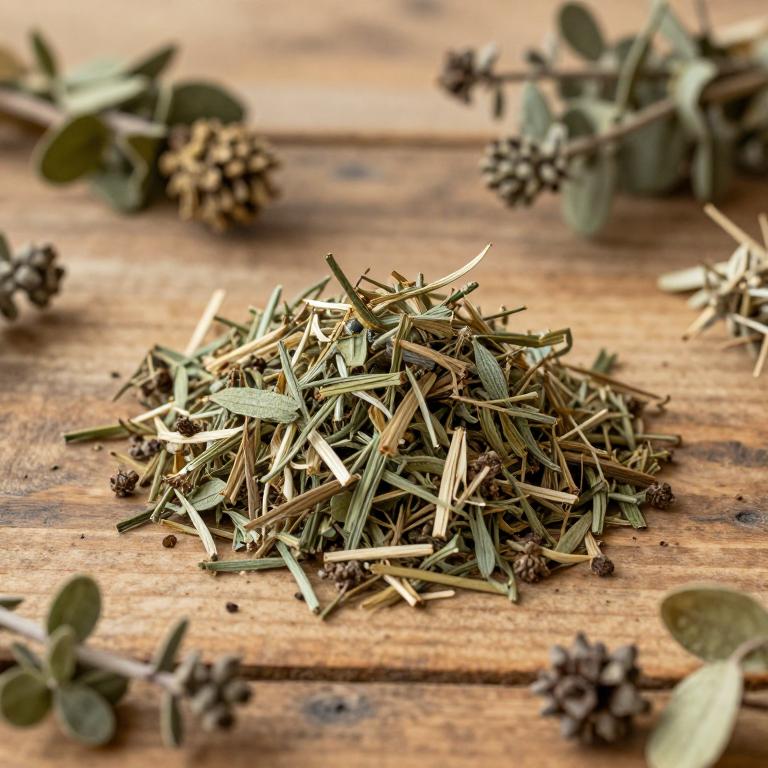
Turraeanthus africanus (wrong spelling), scientifically known as Turraeanthus africanus, is a significant medicinal shrub native to tropical Africa. Highly valued in traditional medicine, its leaves are frequently used to treat various ailments, including respiratory issues, fever, and inflammation. This plant remains a vital component of indigenous healing practices.
- Family
- Meliaceae
- Native range
- Africa
- Parts used
- Not available
- Common names
- African White Mahogany
- Scientific synonyms
- Bingeria Africana · Turraeanthus Klainei · 4 more
Names and Synonyms
Common Names
- African White Mahogany
Scientific Names
Accepted name
Turraeanthus africanusSynonyms
- Bingeria africana
- Turraeanthus klainei
- Guarea africana
- Turraeanthus zenkeri
- Turraeanthus malchairii
- Turraeanthus vignei
Regional and Traditional Names
Spanish:
- avodiré
- apeya
- engan
- lusamba
- wansenwa
- Caoba blanca africana
French:
- Avodiré
- avodire
- Avodiré
Sources: Wikidata, Catalogue of Life
Taxonomical Classification
This plant, Turraeanthus africanus, belongs to the kingdom Plantae and the phylum Streptophyta. Within the class Equisetopsida and subclass Magnoliidae, it is classified under the order Sapindales and the family Meliaceae. Finally, it is placed in the genus Turraeanthus.
| Rank | Classification |
|---|---|
| Kingdom | Plantae |
| Phylum | Streptophyta |
| Class | Equisetopsida |
| Subclass | Magnoliidae |
| Order | Sapindales |
| Family | Meliaceae |
| Genus | Turraeanthus |
Sources: The World Checklist of Vascular Plants (WCVP)
Distribution
This plant is primarily distributed across the West Tropical Africa region. Specifically, it can be found growing within the borders of Ghana. Its natural habitat also extends into the territories of Guinea and the Ivory Coast. Furthermore, the species is documented to exist in Liberia. Finally, its geographical range includes the expansive landscapes of Nigeria.
| Region | Area |
|---|---|
| West Tropical Africa | Ghana |
| West Tropical Africa | Guinea |
| West Tropical Africa | Ivory Coast |
| West Tropical Africa | Liberia |
| West Tropical Africa | Nigeria |
| West Tropical Africa | Sierra Leone |
| West-Central Tropical Africa | Central African Republic |
| West-Central Tropical Africa | Cameroon |
| West-Central Tropical Africa | Congo |
| West-Central Tropical Africa | Equatorial Guinea |
Sources: The World Checklist of Vascular Plants (WCVP)
Botanical Identification
Life history
The life history of Turraeanthus africanus is characterized by its status as a perennial species, allowing the plant to persist in its environment over multiple growing seasons rather than completing its life cycle within a single year. As a long-lived woody plant, it establishes a permanent presence in its native habitat, undergoing continuous cycles of growth, maturation, and reproduction. This perennial nature enables the species to develop significant structural complexity and robust root systems, which provide the stability and resource storage necessary to survive seasonal fluctuations and environmental stressors. Through its extended lifespan, the plant contributes to the long-term stability of its ecosystem, maintaining its biological functions and reproductive potential across successive years.
- Lifecycle :
- perennial
Morphology
The morphology of Turraeanthus africanus is characterized by its robust growth form, specifically categorized as a woody tree. As a terrestrial species, it does not exhibit aquatic or epiphytic tendencies and functions as an independent organism rather than a parasite. The plant is self-supporting in its structure, meaning it does not require climbing mechanisms such as vines or lianas to maintain its upright stature. In terms of dimensions, it is a significant specimen, with plant heights ranging from a minimum of approximately 12.19 meters to a maximum of about 33.53 meters, maintaining an average height of 25 meters.
- Aquatic :
- terrestrial
- Climber :
- self-supporting
- Epiphyte :
- terrestrial
- Growth form :
- tree
- Parasite :
- independent
- Plant height max:
- 33.52840771 m
- Plant height mean:
- 25 m
- Plant height min:
- 12.19214826 m
- Woodiness :
- woody
Physiology
The physiology of Turraeanthus africanus is characterized by its specialized metabolic processes and structural adaptations suited for its ecological niche. As a woody perennial, its physiological activities are driven by efficient photosynthetic pathways that support significant biomass accumulation and the synthesis of secondary metabolites, which are essential for its medicinal properties. The plant exhibits robust nutrient uptake mechanisms, yet it is not a nitrogen fixer; it lacks the symbiotic relationship with nitrogen-fixing bacteria, such as Rhizobium, required to convert atmospheric nitrogen into bioavailable forms. Consequently, its nitrogen acquisition is strictly dependent on the uptake of nitrates and ammonium from the soil via its root system. Its water regulation and transpiration rates are managed through stomatal control, ensuring survival during periods of environmental stress, while its internal chemical signaling facilitates the production of bioactive compounds that define its pharmacological profile.
- Nitrogen fixer :
- no
Reproduction
The reproduction of Turraeanthus africanus is characterized by a highly flexible flowering period and a specific fruiting window. The flowering time is considered variable, with the potential to initiate blooming across any month of the year, including January, February, March, April, May, June, July, August, September, October, November, and December, and it maintains this variable duration until its end. The fruiting process follows a more concentrated schedule, with the fruiting start and end both specifically centered around the month of June. Regarding the dispersal units, the plant produces seeds with a highly consistent mass; the seed mass mean, maximum, and minimum are all recorded at 1.143 g, indicating a uniform seed size for this species.
- Flowering time :
- variable
- Fruiting time :
- Jun
- Seed mass mean:
- 1.143 g
Sources: Global Inventory of Floras and Traits (GIFT)
Chemicals
Turraeanthus africanus has 4 reported phytochemicals identified across 0 scientific publications and several other databases. The most consistently reported chemicals include Turraeanin I, Turraeanin F, Turraeanin G, Turraeanin H.
| Chemical | Supporting sources | Consensus |
|---|---|---|
| Turraeanin I | 1 supporting sources | ★☆☆☆☆ |
| Turraeanin F | 1 supporting sources | ★☆☆☆☆ |
| Turraeanin G | 1 supporting sources | ★☆☆☆☆ |
| Turraeanin H | 1 supporting sources | ★☆☆☆☆ |
Turraeanin I
- Phytochemistry
Turraeanin F
- Phytochemistry
Turraeanin G
- Phytochemistry
Turraeanin H
- Phytochemistry
Conditions
Turraeanthus africanus has 2 reported investigations on conditions identified across 0 scientific publications and several other databases. The most consistently reported conditions include LDL cholesterol, triglyceride.
| Condition | Supporting sources | Consensus |
|---|---|---|
| Ldl cholesterol | 1 supporting sources | ★☆☆☆☆ |
| Triglyceride | 1 supporting sources | ★☆☆☆☆ |
Ldl cholesterol
- Andrologia
Triglyceride
- Andrologia
Preparations
Turraeanthus africanus has 1 reported preparations identified across 0 scientific publications and several other databases. The most consistently reported preparations include aqueous extract.
| Preparation | Supporting sources | Consensus |
|---|---|---|
| Aqueous extract | 1 supporting sources | ★☆☆☆☆ |
Aqueous extract
- Andrologia