Wild Garlic
Tulbaghia violacea · Accepted scientific name
Scientific literature: Sparse (61 studies) · ★★☆☆☆
Wild Garlic, scientifically known as Tulbaghia violacea, is a perennial herb native to South Africa, celebrated for its distinct onion-like aroma. Beyond its culinary uses, this resilient plant holds significant medicinal value, traditionally utilized for its antimicrobial, anti-inflammatory, and antioxidant properties to support various aspects of holistic wellness.
- Family
- Amaryllidaceae
- Native range
- Europe
- Parts used
- Leaf · Fruit
- Common names
- Society Garlic · Violet Garlic
- Scientific synonyms
- Omentaria Violacea
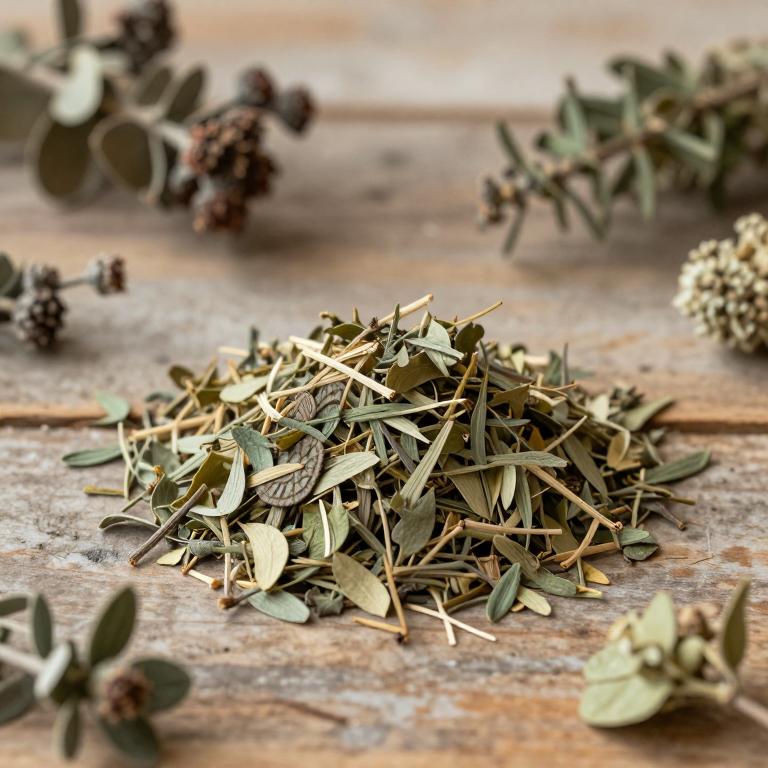
Names and Synonyms
Common Names
- Society Garlic
- Violet Garlic
Scientific Names
Accepted name
Tulbaghia violaceaSynonyms
- Omentaria violacea
Regional and Traditional Names
Spanish:
- Omentaria cepacea
- Omentaria violacea
- Tulbaghia cepacea var. maritima
- Tulbaghia cepacea var. robustior
- Tulbaghia violacea var. minor
- Tulbaghia violacea var. obtusa
- Tulbaghia violacea var. robustior
- Ajillo
- Ajo de monte
- Cebolla africana de monte
German:
- Wilder Knoblauch
- Zimmerknoblauch
- Kaplilie
- Knoblauchgras
- Zimmerknoblauch
French:
- Ail violet d'Afrique du Sud
Sources: Wikidata, Catalogue of Life
Taxonomical Classification
This plant, Tulbaghia violacea, belongs to the kingdom Plantae and the phylum Streptophyta. It is classified within the class Equisetopsida and the subclass Magnoliidae, falling under the order Asparagales. Finally, it is a member of the family Amaryllidaceae and the genus Tulbaghia.
| Rank | Classification |
|---|---|
| Kingdom | Plantae |
| Phylum | Streptophyta |
| Class | Equisetopsida |
| Subclass | Magnoliidae |
| Order | Asparagales |
| Family | Amaryllidaceae |
| Genus | Tulbaghia |
Sources: The World Checklist of Vascular Plants (WCVP)
Distribution
This plant exhibits a wide geographical distribution that spans across several continents. In Europe, its presence can be noted within the borders of Italy. Moving toward Northern Africa, it is found growing in the region of Tunisia. The species also extends into East Tropical Africa, specifically within Tanzania. Finally, its range includes significant portions of Southern Africa, particularly across the Cape Provinces and KwaZulu-Natal.
| Region | Area |
|---|---|
| Southeastern Europe | Italy |
| Northern Africa | Tunisia |
| East Tropical Africa | Tanzania |
| Southern Africa | Cape Provinces |
| Southern Africa | KwaZulu-Natal |
| Mexico | Mexico Central |
Sources: The World Checklist of Vascular Plants (WCVP)
Botanical Identification
Ecology
The ecology of Tulbaghia violacea is characterized by its remarkable adaptability to diverse topographical gradients, allowing it to inhabit a vast array of environmental niches. It exhibits a broad altitudinal distribution, thriving in habitats ranging from sea level to high-altitude environments, with an elevational range spanning from a minimum of 3 m AMSL to a maximum of 2600 m AMSL. This wide vertical extent suggests the species is capable of tolerating varying temperature regimes, atmospheric pressures, and moisture availability found across different mountain profiles. Such ecological plasticity enables the plant to persist in both lowland coastal or riparian zones and more temperate, montane ecosystems, making it a resilient component of its native landscape.
- Elevational range max:
- 2600 m AMSL
- Elevational range min:
- 3 m AMSL
Life history
The life history of Tulbaghia violacea is characterized by its status as a perennial plant, allowing it to persist through multiple growing seasons. As a geophtye, it relies on underground storage organs to survive unfavorable environmental conditions, a trait that aligns with its classification as a cryptophyte, where the perennating buds are protected below the soil surface. This species maintains an evergreen nature, ensuring that its foliage remains functional throughout much of its life cycle without the need for seasonal shedding.
- Deciduousness :
- evergreen
- Life form :
- geophyte
- Life form :
- cryptophyte
- Lifecycle :
- perennial
Morphology
The morphology of Tulbaghia violacea is characterized by its growth form as a non-woody herb. It functions as a self-supporting plant, lacking any climbing or vine-like tendencies, and operates as an independent organism without parasitic behavior. This terrestrial species does not exhibit epiphytic characteristics, growing instead in soil-based environments. In terms of stature, the plant maintains a relatively low profile, with a height that typically ranges from a minimum of 0.1 m to a maximum of 0.44 m, resulting in an average plant height of approximately 0.3 m.
- Aquatic :
- terrestrial
- Climber :
- self-supporting
- Epiphyte :
- terrestrial
- Growth form :
- herb
- Parasite :
- independent
- Plant height max:
- 0.44 m
- Plant height mean:
- 0.3 m
- Plant height min:
- 0.1 m
- Woodiness :
- non-woody
Physiology
The physiology of Tulbaghia violacea is characterized by its perennial growth habit and its specialized metabolic processes geared towards survival in varied soil conditions. As a member of the Amaryllidaceae family, its physiological makeup includes the synthesis of various bioactive alkaloids and organosulfur compounds, which serve as chemical defenses against herbivory. The plant utilizes a bulbous root system to facilitate efficient nutrient storage and water regulation, allowing it to maintain turgor pressure during periods of environmental stress. Regarding its interaction with soil nutrients, Tulbaghia violacea is not a nitrogen fixer; it lacks the symbiotic relationship with nitrogen-fixing bacteria, such as Rhizobium, required to convert atmospheric nitrogen into ammonia. Consequently, its physiological nitrogen acquisition is entirely dependent on the uptake of nitrates and ammonium ions from the surrounding soil through its root system via active transport mechanisms.
- Nitrogen fixer :
- no
Reproduction
Reproduction in Tulbaghia violacea is characterized by a biotic pollination syndrome, relying heavily on living organisms to facilitate the transfer of pollen. Specifically, the plant exhibits a strong affinity for insect pollination, with bees serving as a primary functional group in its reproductive cycle. Once fertilization is successful, the plant produces seeds that are remarkably uniform in size. These seeds possess a consistent seed mass, with a measured mean, minimum, and maximum value of 0.00881 g, indicating a highly standardized seed production process.
- Pollination syndrome :
- insect
- Pollination syndrome :
- bee
- Pollination syndrome :
- biotic
- Seed mass mean:
- 0.00881 g
Sources: Global Inventory of Floras and Traits (GIFT)
Plant Parts
Tulbaghia violacea has 5 reported plant parts identified across 7 scientific publications and several other databases that are studied for medicinal purposes. The most consistently reported plant part include leaf, fruit, rhizome, root, seed.
| Plant part | Supporting sources | Consensus |
|---|---|---|
| Leaf | 3 supporting sources | ★★☆☆☆ |
| Fruit | 1 supporting sources | ★☆☆☆☆ |
| Rhizome | 1 supporting sources | ★☆☆☆☆ |
| Root | 1 supporting sources | ★☆☆☆☆ |
| Seed | 1 supporting sources | ★☆☆☆☆ |
Leaf
- BMC complementary medicine and therapies
- Journal of ethnopharmacology
- Current issues in molecular biology
Fruit
- Chemistry & biodiversity
Rhizome
- Current microbiology
Root
- African health sciences
Seed
- Chemistry & biodiversity
Chemicals
Tulbaghia violacea has 21 reported phytochemicals identified across 7 scientific publications and several other databases. The most consistently reported chemicals include Flavonoids, Terpenoids, 1,2,4-Triazine-3,5(2H,4H)-dione, 2,3-Oxidosqualene, Coumarins.
| Chemical | Supporting sources | Consensus |
|---|---|---|
| Flavonoids | 2 supporting sources | ★☆☆☆☆ |
| Terpenoids | 2 supporting sources | ★☆☆☆☆ |
| 1,2,4-Triazine-3,5(2H,4H)-dione | 1 supporting sources | ★☆☆☆☆ |
| 2,3-Oxidosqualene | 1 supporting sources | ★☆☆☆☆ |
| Coumarins | 1 supporting sources | ★☆☆☆☆ |
| DDMP | 1 supporting sources | ★☆☆☆☆ |
| ERGOSTEROL | 1 supporting sources | ★☆☆☆☆ |
| Glutarylcarnitine | 1 supporting sources | ★☆☆☆☆ |
| Glycosides | 1 supporting sources | ★☆☆☆☆ |
| NAPHTHOQUINONE | 1 supporting sources | ★☆☆☆☆ |
Flavonoids
- BMC complementary medicine and therapies
- Pharmaceuticals (Basel, Switzerland)
Terpenoids
- BMC complementary medicine and therapies
- Pharmaceuticals (Basel, Switzerland)
1,2,4-Triazine-3,5(2H,4H)-dione
- Current issues in molecular biology
2,3-Oxidosqualene
- Current microbiology
Coumarins
- BMC complementary medicine and therapies
DDMP
- Current issues in molecular biology
ERGOSTEROL
- Current microbiology
Glutarylcarnitine
- Scientific reports
Glycosides
- BMC complementary medicine and therapies
NAPHTHOQUINONE
- Pharmaceuticals (Basel, Switzerland)
Activities
Tulbaghia violacea has 6 reported activities identified across 7 scientific publications and several other databases. The most consistently reported activities include Antioxidant, Antibacterial, Antidiabetic, Antifungal, Antimicrobial.
| Activity | Supporting sources | Consensus |
|---|---|---|
| Antioxidant | 3 supporting sources | ★★☆☆☆ |
| Antibacterial | 1 supporting sources | ★☆☆☆☆ |
| Antidiabetic | 1 supporting sources | ★☆☆☆☆ |
| Antifungal | 1 supporting sources | ★☆☆☆☆ |
| Antimicrobial | 1 supporting sources | ★☆☆☆☆ |
| Cytotoxic | 1 supporting sources | ★☆☆☆☆ |
Antioxidant
- BMC complementary medicine and therapies
- Journal of ethnopharmacology
- Scientific reports
Antibacterial
- Journal of ethnopharmacology
Antidiabetic
- African journal of traditional, complementary, and alternative medicines : AJTCAM
Antifungal
- Scientific reports
Antimicrobial
- Journal of ethnopharmacology
Cytotoxic
- African journal of traditional, complementary, and alternative medicines : AJTCAM
Conditions
Tulbaghia violacea has 20 reported investigations on conditions identified across 7 scientific publications and several other databases. The most consistently reported conditions include Aspergillus flavus, Bacillus subtilis, Candida, Diabetes mellitus, Enterococcus faecalis.
| Condition | Supporting sources | Consensus |
|---|---|---|
| Aspergillus flavus | 1 supporting sources | ★☆☆☆☆ |
| Bacillus subtilis | 1 supporting sources | ★☆☆☆☆ |
| Candida | 1 supporting sources | ★☆☆☆☆ |
| Diabetes mellitus | 1 supporting sources | ★☆☆☆☆ |
| Enterococcus faecalis | 1 supporting sources | ★☆☆☆☆ |
| Escherichia coli | 1 supporting sources | ★☆☆☆☆ |
| Staphylococcus aureus | 1 supporting sources | ★☆☆☆☆ |
| Anti-hypertensives | 1 supporting sources | ★☆☆☆☆ |
| Antioxidant | 1 supporting sources | ★☆☆☆☆ |
| Asthma | 1 supporting sources | ★☆☆☆☆ |
Aspergillus flavus
- Current microbiology
Bacillus subtilis
- Journal of ethnopharmacology
Candida
- Current microbiology
Diabetes mellitus
- African journal of traditional, complementary, and alternative medicines : AJTCAM
Enterococcus faecalis
- Chemistry & biodiversity
Escherichia coli
- Chemistry & biodiversity
Staphylococcus aureus
- Chemistry & biodiversity
Anti-hypertensives
- Journal of ethnopharmacology
Antioxidant
- Journal of ethnopharmacology
Asthma
- Pharmaceuticals (Basel, Switzerland)
Preparations
Tulbaghia violacea has 15 reported preparations identified across 7 scientific publications and several other databases. The most consistently reported preparations include 80% ethanol, Bulb and leaf extracts, Extracts from T. violacea leaves were prepared using water and methanol, acetone, aerosol smoke.
| Preparation | Supporting sources | Consensus |
|---|---|---|
| 80% ethanol | 1 supporting sources | ★☆☆☆☆ |
| Bulb and leaf extracts | 1 supporting sources | ★☆☆☆☆ |
| Extracts from t. violacea leaves were prepared using water and methanol | 1 supporting sources | ★☆☆☆☆ |
| Acetone | 1 supporting sources | ★☆☆☆☆ |
| Aerosol smoke | 1 supporting sources | ★☆☆☆☆ |
| Crude aqueous extracts | 1 supporting sources | ★☆☆☆☆ |
| Crude ethanolic extracts | 1 supporting sources | ★☆☆☆☆ |
| Dry smoke | 1 supporting sources | ★☆☆☆☆ |
| Ethanol extracts | 1 supporting sources | ★☆☆☆☆ |
| Fine ground powder | 1 supporting sources | ★☆☆☆☆ |
80% ethanol
- BMC complementary medicine and therapies
Bulb and leaf extracts
- Journal of ethnopharmacology
Extracts from t. violacea leaves were prepared using water and methanol
- Current issues in molecular biology
Acetone
- Scientific reports
Aerosol smoke
- Bioresource technology
Crude aqueous extracts
- African journal of traditional, complementary, and alternative medicines : AJTCAM
Crude ethanolic extracts
- Plants (Basel, Switzerland)
Dry smoke
- Bioresource technology
Ethanol extracts
- African journal of traditional, complementary, and alternative medicines : AJTCAM
Fine ground powder
- Scientific reports