Mashua
Tropaeolum tuberosum · Accepted scientific name
Scientific literature: Very Extensive (232 studies) · ★★★★★
Mashua, scientifically known as Tropaeoluum tuberosum, is a resilient tuberous plant native to the high Andes. Valued for centuries in traditional Andean medicine, this pungent root offers significant therapeutic potential. It is frequently utilized for its antimicrobial, anti-inflammatory, and antioxidant properties, serving as a vital nutritional and medicinal resource.
- Family
- Tropaeolaceae
- Native range
- Southern America
- Parts used
- Not available
- Common names
- Mashua
- Scientific synonyms
- Chymocarpus Tuberosus · Trophaeum Tuberosum
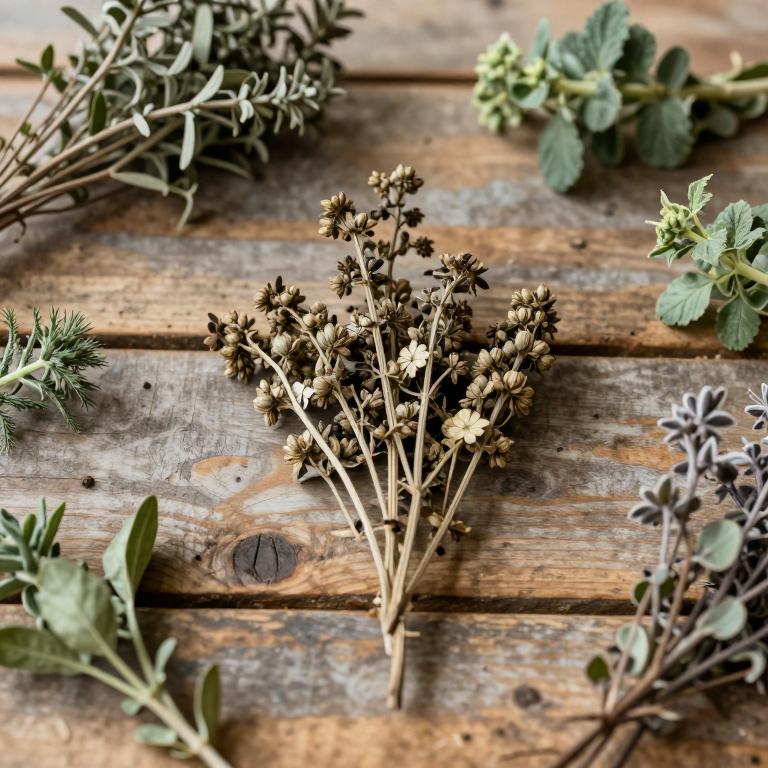
Names and Synonyms
Common Names
- Mashua
Scientific Names
Accepted name
Tropaeolum tuberosumSynonyms
- Chymocarpus tuberosus
- Trophaeum tuberosum
Regional and Traditional Names
Spanish:
- cubios
- magua
- mashua
- cubio
- papa amarga
German:
- Knollige Kapuzinerkresse
- peruanische Knollenkresse
- Knollige Kapuzinerkresse
French:
- capucine tubéreuse
Sources: Wikidata, Catalogue of Life
Taxonomical Classification
This plant, Tropaeoluum tuberosum, belongs to the kingdom Plantae and the phylum Streptophyta. Within the class Equisetopsida and subclass Magnoliidae, it is classified under the order Brassicales and the family Tropaeolaeaceae. It is further categorized into the genus Tropaeoluum.
| Rank | Classification |
|---|---|
| Kingdom | Plantae |
| Phylum | Streptophyta |
| Class | Equisetopsida |
| Subclass | Magnoliidae |
| Order | Brassicales |
| Family | Tropaeolaceae |
| Genus | Tropaeolum |
Sources: The World Checklist of Vascular Plants (WCVP)
Distribution
This plant exhibits a broad distribution across several regions of the South American continent. In Western South America, it can be found growing within the territories of Bolivia, Colombia, and Ecuador. Its presence is also well-documented throughout the diverse landscapes of Peru. Moving toward the southern part of the continent, the species extends its reach into Argentina. Specifically, its range encompasses the northwestern regions of Argentina.
| Region | Area |
|---|---|
| Western South America | Bolivia |
| Western South America | Colombia |
| Western South America | Ecuador |
| Western South America | Peru |
| Southern South America | Argentina Northwest |
Sources: The World Checklist of Vascular Plants (WCVP)
Botanical Identification
Ecology
The ecology of Tropaeoluum tuberosum is defined by its adaptation to high-altitude montane environments, specifically thriving within a specialized altitudinal niche. This species is primarily found in high-elevation ecosystems, occupying an ecological range that begins at 2500 m AMSL and extends up to a maximum of 3600 m AMSL. Within this vertical distribution, the plant must withstand the unique environmental pressures characteristic of the high Andes or similar alpine zones, including significant fluctuations in diurnal temperature, increased ultraviolet radiation exposure, and potentially thinner atmospheric conditions. Its ability to persist across this 1100-meter elevational gradient suggests a robust physiological capacity to manage the varying moisture levels and soil compositions found in these high-mountain habitats.
- Elevational range max:
- 3600 m AMSL
- Elevational range min:
- 2500 m AMSL
Life history
The life history of Tropaeoluum tuberosum is characterized by an annual lifecycle, meaning the plant completes its entire biological progression from germination to seed production within a single growing season. The process begins with the germination of seeds in favorable soil conditions, leading to the rapid development of a specialized underground tuber that serves as a primary nutrient storage organ. As the plant matures, it produces vigorous climbing or trailing stems and distinctive foliage, eventually transitioning into its reproductive phase where it develops flowers and subsequently produces seeds. Once the seeds have matured and been dispersed, the individual plant completes its life cycle and dies, leaving the next generation to emerge from the soil in the following season.
- Lifecycle :
- annual
Morphology
The morphology of Tropaeoluim tuberosum is characterized by a herbaceous growth form, functioning primarily as a non-woody herb. This plant exhibits a terrestrial habit, growing in soil rather than in aquatic or semiaquatic environments, and it is strictly non-epiphytic. In terms of its structural development, the species acts as an obligatory climber, though it possesses a self-supporting capacity within its growth habit. The plant reaches an average height of approximately 2 m and maintains an independent nutritional status, as it is not a parasite.
- Aquatic :
- terrestrial
- Climber :
- self-supporting
- Climber :
- obligatory
- Epiphyte :
- terrestrial
- Growth form :
- herb
- Parasite :
- independent
- Plant height mean:
- 2 m
- Woodiness :
- non-woody
Physiology
The physiology of Tropaeolum tuberosum is characterized by a C3 photosynthetic pathway, utilizing the standard Calvin cycle to fix atmospheric carbon dioxide through the enzyme RuBisCO. This metabolic process dictates its carbon assimilation efficiency and water-use patterns within its specific ecological niche. Regarding its nutrient acquisition strategies, the plant is not a nitrogen fixer, meaning it lacks the symbiotic relationship with nitrogen-fixing bacteria (such as Rhizobium) required to convert atmospheric nitrogen into usable forms, and instead relies on the uptake of nitrates or ammonium present in the soil substrate.
- Nitrogen fixer :
- no
- Photosynthetic pathway :
- C3
Reproduction
The reproduction of Tropaeoluem tuberosum is driven by a biotic pollination syndrome, relying on living organisms to facilitate the transfer of pollen. Specifically, the plant utilizes insect-mediated pollination to ensure successful fertilization. Once fertilization has occurred, the plant produces seeds characterized by a highly consistent mass; the seed mass is uniform, with a minimum, maximum, and mean value all recorded at 0.14 g.
- Pollination syndrome :
- insect
- Pollination syndrome :
- biotic
- Seed mass mean:
- 0.14 g
Sources: Global Inventory of Floras and Traits (GIFT)
Chemicals
Tropaeolum tuberosum has 16 reported phytochemicals identified across 0 scientific publications and several other databases. The most consistently reported chemicals include Anthocyanins, Ash, CALCIUM, Cyanidin 3-glucoside, Cyanidin 3-rutinoside.
| Chemical | Supporting sources | Consensus |
|---|---|---|
| Anthocyanins | 1 supporting sources | ★☆☆☆☆ |
| Ash | 1 supporting sources | ★☆☆☆☆ |
| CALCIUM | 1 supporting sources | ★☆☆☆☆ |
| Cyanidin 3-glucoside | 1 supporting sources | ★☆☆☆☆ |
| Cyanidin 3-rutinoside | 1 supporting sources | ★☆☆☆☆ |
| Cyanidin 3-sophoroside | 1 supporting sources | ★☆☆☆☆ |
| DELPHINIDIN-3-GLUCOSIDE | 1 supporting sources | ★☆☆☆☆ |
| FAT | 1 supporting sources | ★☆☆☆☆ |
| IRON | 1 supporting sources | ★☆☆☆☆ |
| PHOSPHORUS | 1 supporting sources | ★☆☆☆☆ |
Anthocyanins
- Journal of agricultural and food chemistry
Ash
- Dr. Duke
CALCIUM
- Dr. Duke
Cyanidin 3-glucoside
- Journal of agricultural and food chemistry
Cyanidin 3-rutinoside
- Journal of agricultural and food chemistry
Cyanidin 3-sophoroside
- Journal of agricultural and food chemistry
DELPHINIDIN-3-GLUCOSIDE
- Journal of agricultural and food chemistry
FAT
- Dr. Duke
IRON
- Dr. Duke
PHOSPHORUS
- Dr. Duke
Activities
Tropaeolum tuberosum has 207 reported activities identified across 0 scientific publications and several other databases. The most consistently reported activities include Antibacterial, Antioxidant, Acidulant, Aldose-Reductase-Inhibitor, Allergenic.
| Activity | Supporting sources | Consensus |
|---|---|---|
| Antibacterial | 2 supporting sources | ★☆☆☆☆ |
| Antioxidant | 2 supporting sources | ★☆☆☆☆ |
| Acidulant | 1 supporting sources | ★☆☆☆☆ |
| Aldose-Reductase-Inhibitor | 1 supporting sources | ★☆☆☆☆ |
| Allergenic | 1 supporting sources | ★☆☆☆☆ |
| Analgesic | 1 supporting sources | ★☆☆☆☆ |
| Androgenic? | 1 supporting sources | ★☆☆☆☆ |
| Angiotensin-Receptor-Blocker | 1 supporting sources | ★☆☆☆☆ |
| AntiAGE | 1 supporting sources | ★☆☆☆☆ |
| AntiCFS | 1 supporting sources | ★☆☆☆☆ |
Antibacterial
- Dr. Duke
- Journal of ethnopharmacology
Antioxidant
- Dr. Duke
- Journal of ethnopharmacology
Acidulant
- Dr. Duke
Aldose-Reductase-Inhibitor
- Dr. Duke
Allergenic
- Dr. Duke
Analgesic
- Dr. Duke
Androgenic?
- Dr. Duke
Angiotensin-Receptor-Blocker
- Dr. Duke
AntiAGE
- Dr. Duke
AntiCFS
- Dr. Duke
Conditions
Tropaeolum tuberosum has 5 reported investigations on conditions identified across 0 scientific publications and several other databases. The most consistently reported conditions include antibiotic, diuretic, lung diseases, skin diseases, venereal diseases.
| Condition | Supporting sources | Consensus |
|---|---|---|
| Antibiotic | 1 supporting sources | ★☆☆☆☆ |
| Diuretic | 1 supporting sources | ★☆☆☆☆ |
| Lung diseases | 1 supporting sources | ★☆☆☆☆ |
| Skin diseases | 1 supporting sources | ★☆☆☆☆ |
| Venereal diseases | 1 supporting sources | ★☆☆☆☆ |
Antibiotic
- Journal of ethnopharmacology
Diuretic
- Journal of ethnopharmacology
Lung diseases
- Journal of ethnopharmacology
Skin diseases
- Journal of ethnopharmacology
Venereal diseases
- Journal of ethnopharmacology
Preparations
Tropaeolum tuberosum has 1 reported preparations identified across 0 scientific publications and several other databases. The most consistently reported preparations include ethanolic extracts.
| Preparation | Supporting sources | Consensus |
|---|---|---|
| Ethanolic extracts | 1 supporting sources | ★☆☆☆☆ |
Ethanolic extracts
- Biomedicine & pharmacotherapy = Biomedecine & pharmacotherapie