Troncosoa seriphioides
Troncosoa seriphioides · Accepted scientific name
Scientific literature: Very Sparse (3 studies) · ★☆☆☆☆
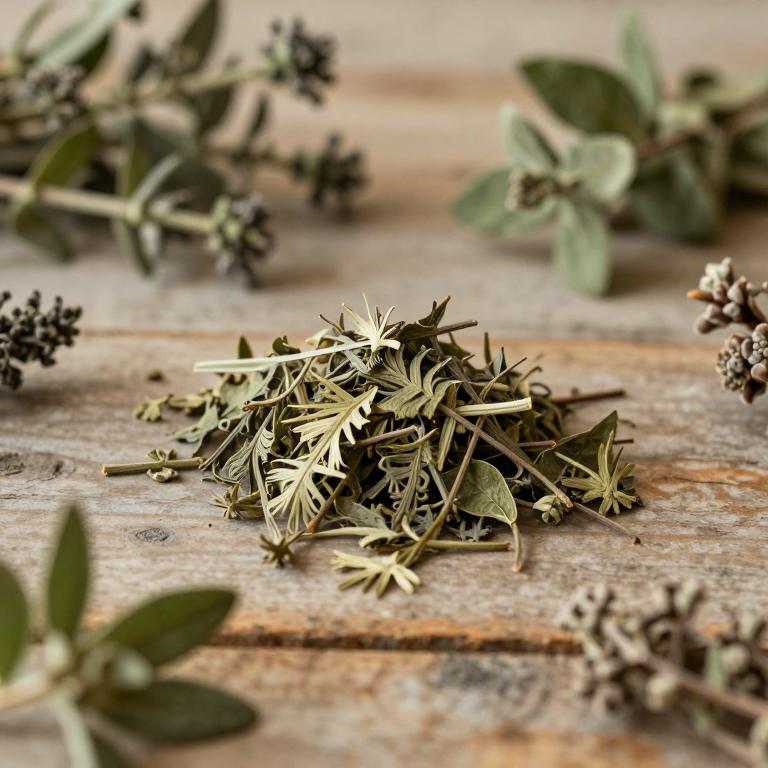
Troncosoa seriphioides is a remarkable botanical species recognized for its diverse range of therapeutic properties. This plant serves as a potent natural resource, offering significant antibacterial and antifungal activities. Additionally, it functions as an effective insect-repellent, making it valuable for pest management. Many of its beneficial compounds are most efficiently harnessed through the preparation of essential oils. Understanding these characteristics highlights the plant's growing importance in both medicinal and practical applications.
- Synonyms
- Acantholippia Seriphioides · Lippia Seriphioides · 1 more
- Common names
- Not available
- Family
- Verbenaceae
- Distribution
- Not available
- Plant Parts
- Not available
Classification
Common Names
Troncosoa seriphioides is a distinctive botanical species widely recognized by its common name, Tomillo silvestre. This plant is frequently sought after by enthusiasts who appreciate its unique characteristics and natural charm. As a member of its specific genus, it holds a special place within its native ecological niche. Understanding its identity as Tomillo silvestre helps gardeners and researchers connect with its cultural heritage. Exploring this relationship offers a deeper insight into the diverse world of wild flora.
Sources: Catalogue of Life (COL)
Synonyms
Troncosoa seriphioides is a botanical subject that has been identified under several different names throughout scientific history. This plant is formally recognized as having multiple synonyms, including the designation Acantholippia seriphioides. It has also been cataloged in various studies as Lippia foliolosa and Lippia rubiginosa. Furthermore, the name Lippia seriphioides is frequently cited as another valid synonym for this species. Understanding these various taxonomic labels is essential for researchers tracking the plant's classification.
Sources: The World Checklist of Vascular Plants (WCVP)
Taxonomy
Troncosoa seriphioides is a unique botanical specimen belonging to the kingdom Plantae. Within this vast kingdom, the species is classified under the class Equisetopsida. It further finds its place in the order Lamiales, showcasing its evolutionary connections. As a member of the genus Troncosoa, it represents a specialized lineage of vegetation. Finally, its taxonomic journey concludes within the family Verbenaceae, marking its distinct biological identity.
| Rank | Classification |
|---|---|
| Kingdom | Plantae |
| Phylum | Streptophyta |
| Class | Equisetopsida |
| Subclass | Magnoliidae |
| Order | Lamiales |
| Family | Verbenaceae |
| Genus | Troncosoa |
Sources: The World Checklist of Vascular Plants (WCVP)
Distribution
Geographic Regions
Troncosoa seriphioides is a plant species with a notable presence throughout Southern America. Within the region of Southern South America, it maintains a widespread and diverse distribution. Specifically, the species can be found across the Northeast of Argentina. Its range also extends into the Northwest territories of the same country. Finally, the plant is well-established in the South of Argentina, completing its regional footprint.
Sources: The World Checklist of Vascular Plants (WCVP)
Identification
Biological Activities
Troncosoa seriphioides, also identified as Acantholippia seriphioides, demonstrates significant biological potential through its essential oils. Research indicates that this Andean plant possesses notable antibacterial activity, contributing to its medicinal value. Furthermore, its essential oils exhibit antifungal properties that could be useful in treating various superficial infections. The plant also shows insect-repellent characteristics, which may assist in controlling disease vectors like Triatoma infestans. Ultimately, these diverse bioactive qualities highlight the importance of this species in regional pharmacology and vector control.
Compounds
Conditions
Preparations
Troncosoa seriphioides is prepared as essential oils through a process of hydrodistillation. These extracted oils contain significant amounts of oxygenated monoterpenes, specifically comprising 29.72% of the total composition. Chemical analysis via GC-FID and GC/MS reveals that thymol and carvacrol are the primary components found within the oil. The resulting essential oil demonstrates bioactive properties that may be useful for medicinal applications. This specific preparation method allows for the identification of the plant's chemical profile and potential therapeutic uses.