Sea aster
Tripolium pannonicum · Accepted scientific name
Scientific literature: Very Sparse (3 studies) · ★☆☆☆☆
Sea aster, scientifically known as Tripolium pannonicum, is a resilient perennial herb native to coastal wetlands and salt marshes. Renowned for its striking purple blooms, this medicinal plant offers therapeutic potential through its bioactive compounds, traditionally utilized in various cultures to support skin health and promote overall wellness.
- Family
- Asteraceae
- Native range
- Europe
- Parts used
- Not available
- Common names
- Sea Aster · Sea Starwort
- Scientific synonyms
- Tripolium Pannonicum F. Discoideum · Galatella Tripolium Subsp. Pannonica · 31 more
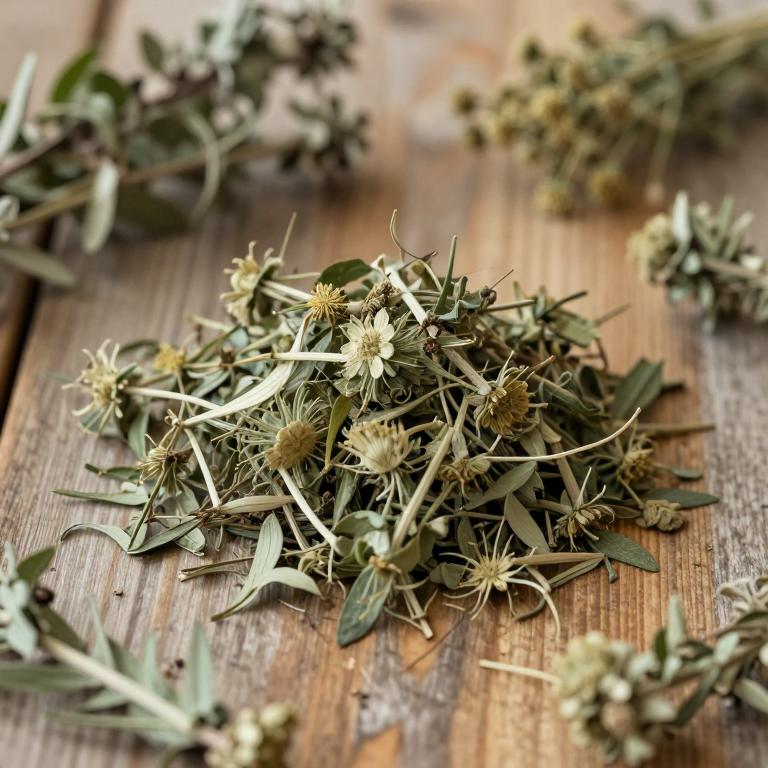
Names and Synonyms
Common Names
- sea aster
- sea starwort
Scientific Names
Accepted name
Tripolium pannonicumSynonyms
- Tripolium pannonicum f. discoideum
- Galatella tripolium subsp. pannonica
- Galatella tripolium
- Aster tripolium subsp. longicaulis
- Tripolium linnaeanum
- Aster tripolium var. integrifolius
- Tripolium vulgare var. latifolium
- Tripolium vulgare var. angustifolium
- Aster depressus
- Aster tripolium var. discoideus
- Aster longicaulis
- Aster macrolophus
- Eurybia maritima var. flosculosa
- Aster maritimus
- Aster tripolium var. flosculosus
- Aster palustris
- Aster pannonicus
- Aster papposissimus
- Aster salinus
- Aster tripolium var. arcticum
- Aster tripolium subsp. pannonicus
- Aster tripolium subsp. minoricensis
- Tripolium vulgare var. longicaule
- Eurybia maritima
- Tripolium vulgare var. diffusum
- Fimbristima maritima
- Tripolium vulgare var. salinum
- Tripolium longicaule
- Tripolium maritimum
- Tripolium pannonicum subsp. maritimum
- Tripolium pannonicum subsp. tripolium
- Tripolium vulgare
- Tripolium vulgare var. pannonicum
Regional and Traditional Names
Spanish:
- Aster tripolium
German:
- Strand-Aster
- Pannonische Salzaster
- Strand-Aster
French:
- Aster maritime
Sources: Wikidata, Catalogue of Life
Taxonomical Classification
This plant belongs to the kingdom Plantae within the phylum Streptophyta and the class Equisetopsida. Under the subclass Magnoliidae, it is classified in the order Asterales and the family Asteraceae. Finally, it is identified by the genus Tripolium as Tripolium pannonicum.
| Rank | Classification |
|---|---|
| Kingdom | Plantae |
| Phylum | Streptophyta |
| Class | Equisetopsida |
| Subclass | Magnoliidae |
| Order | Asterales |
| Family | Asteraceae |
| Genus | Tripolium |
Sources: The World Checklist of Vascular Plants (WCVP)
Distribution
This plant, Tripolium pannonicum, exhibits a specific distribution pattern across various regions of Northern Europe. Its presence has been documented in the country of Denmark, where it occupies certain local habitats. The species also extends its range into the Nordic territories of Finland and Norway. Additionally, this medicinal plant can be found throughout the islands of Great Britain and Ireland. Collectively, these locations define its northern geographical footprint.
| Region | Area |
|---|---|
| Northern Europe | Denmark |
| Northern Europe | Finland |
| Northern Europe | Great Britain |
| Northern Europe | Ireland |
| Northern Europe | Norway |
| Northern Europe | Sweden |
| Middle Europe | Austria |
| Middle Europe | Belgium |
| Middle Europe | Czechia-Slovakia |
| Middle Europe | Germany |
Sources: The World Checklist of Vascular Plants (WCVP)
Botanical Identification
Ecology
The ecology of Tripolium pannonicum is characterized by its specialized adaptation to saline and coastal environments. This species is primarily found inhabiting meadows, saline places, sea shores, and maritime coastal zones, where it thrives in high-salinity substrates that would be inhospitable to many other plant species. Its distribution is closely tied to coastal ecosystems, allowing it to occupy niches ranging from salt marshes and sandy shores to saline inland meadows. By occupying these specific habitats, the plant plays a role in the stabilization of coastal soils and contributes to the unique biodiversity of halophytic plant communities.
- Habitat :
- meadows, saline places, sea, shores
Life history
The life history of Tripolium pannonicum is characterized by a complex biological strategy, primarily functioning as a perennial species with a variable lifecycle that can encompass annual or biennial stages depending on environmental conditions. Its structural growth is defined by its life forms, manifesting as both a hemicryptophyte, where the perennating buds are located at the soil surface, and a therophyte, allowing it to complete its life cycle through ephemeral seasonal growth. In terms of its vegetative persistence, the plant exhibits evergreen characteristics, maintaining its foliage to sustain metabolic processes throughout varying climatic shifts.
- Deciduousness :
- evergreen
- Life form :
- hemicryptophyte
- Life form :
- therophyte
- Lifecycle :
- perennial
Morphology
The morphology of Trifolium pannonicum is characterized by its growth form as a non-woody herb, specifically classified as a forb. This plant is a self-supporting species that does not function as a climber or a liana, and it grows as an independent organism rather than a parasite or epiphyte. As a terrestrial plant, it maintains a relatively modest stature, with plant height ranging from a minimum of 0.05 m to a maximum of 0.9 m, resulting in an average height of approximately 0.25 m.
- Aquatic :
- terrestrial
- Climber :
- self-supporting
- Epiphyte :
- terrestrial
- Growth form :
- herb
- Growth form :
- forb
- Parasite :
- independent
- Plant height max:
- 0.9 m
- Plant height mean:
- 0.25 m
- Plant height min:
- 0.05 m
- Woodiness :
- non-woody
Physiology
The physiology of Tripolium pannonicum is characterized by a C3 photosynthetic pathway, indicating a metabolic process optimized for environments where carbon fixation occurs primarily through the enzyme RuBisCO without the specialized adaptations seen in C4 or CAM plants. The plant exhibits a non-carnivorous nutritional strategy, relying on traditional soil-based nutrient uptake rather than the capture of prey. Morphologically, its foliage maintains a mean leaf size of 24.163 cm², which contributes to its overall structural efficiency. This leaf morphology is further quantified by a mean Specific Leaf Area (SLA) of 185.58 cm²/g, a value that reflects the plant's investment in leaf tissue density and its capacity for light interception and gas exchange relative to its biomass.
- Carnivory :
- non-carnivorous
- Leaf size mean:
- 24.163 cm²
- Photosynthetic pathway :
- C3
- Specific Leaf Area (SLA) mean:
- 185.58 cm²/g
Reproduction
The reproduction of Tripolium pannonicum is characterized by a sexual process facilitated by bisexual flowers. The flowering period typically commences in July and continues through September. This reproductive cycle relies on biotic pollination, specifically utilizing an insect pollination syndrome with bees playing a key role in the process. The plant is a monocarp, meaning it completes its life cycle through a single reproductive event, and it lacks any form of asexual reproduction. Following successful fertilization, which can occur via self-fertilization, the plant develops dry, indehiscent fruits classified as achenes. The resulting seeds are quite small, with a mean mass of approximately 0.001138889 g (ranging from a minimum of 0.00039 g to a maximum of 0.00203 g) and a consistent seed volume of 0.84 mm³. These seeds are dispersed via an anemochorous syndrome, utilizing the wind for distribution.
- Dehiscence :
- indehiscent
- Dispersal syndrome :
- anemochorous
- Flowering time :
- Jul
- Flowering time :
- Sep
- Fruit dryness :
- dry
- Fruit type :
- achene
- Monocarpy :
- monocarp
- Pollination syndrome :
- insect
- Pollination syndrome :
- bee
- Pollination syndrome :
- biotic
- Reproduction asexual :
- absent
- Reproduction sexual :
- bisexual
- Seed mass max:
- 0.00203 g
- Seed mass mean:
- 0.001138889 g
- Seed mass min:
- 0.00039 g
- Seed volume max:
- 0.84 mm³
- Self fertilization :
- present
Sources: Global Inventory of Floras and Traits (GIFT)
Activities
Tripolium pannonicum has 3 reported activities identified across 0 scientific publications and several other databases. The most consistently reported activities include Antimicrobial, Antioxidant, Prebiotic.
| Activity | Supporting sources | Consensus |
|---|---|---|
| Antimicrobial | 1 supporting sources | ★☆☆☆☆ |
| Antioxidant | 1 supporting sources | ★☆☆☆☆ |
| Prebiotic | 1 supporting sources | ★☆☆☆☆ |
Antimicrobial
- Chemistry & biodiversity
Antioxidant
- Chemistry & biodiversity
Prebiotic
- Chemistry & biodiversity
Preparations
Tripolium pannonicum has 1 reported preparations identified across 0 scientific publications and several other databases. The most consistently reported preparations include methanolic extract.
| Preparation | Supporting sources | Consensus |
|---|---|---|
| Methanolic extract | 1 supporting sources | ★☆☆☆☆ |
Methanolic extract
- Chemistry & biodiversity