Triplaris gardneriana
Triplaris gardneriana · Accepted scientific name
Scientific literature: Very Sparse (13 studies) · ★☆☆☆☆
, scientifically known as Tripariana gardneriana, is a significant medicinal shrub native to the tropical regions of Africa. Renowned for its potent bioactive compounds, it is traditionally utilized in herbal medicine to treat various ailments, including digestive issues and malaria, offering valuable insights for modern pharmacological research and development.
- Family
- Polygonaceae
- Native range
- Southern America
- Parts used
- Seed
- Common names
- Not available
- Scientific synonyms
- Triplaris Pachau · Triplaris Bonplandiana · 5 more
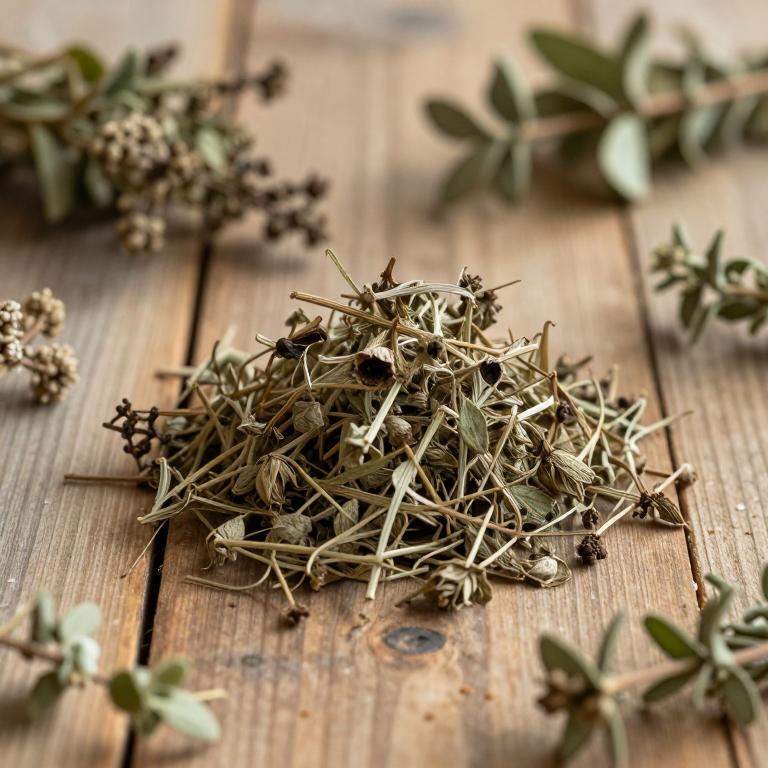
Names and Synonyms
Scientific Names
Accepted name
Triplaris gardnerianaSynonyms
- Triplaris pachau
- Triplaris bonplandiana
- Triplaris baturitensis
- Triplaris guaranitica
- Triplaris tomentosa
- Triplaris speciosa
- Triplaris pachau var. longipetala
Sources: Wikidata, Catalogue of Life
Taxonomical Classification
This plant belongs to the kingdom Plantae and the phylum Streptophyta, falling under the class Equisetopsida and subclass Magnoliidae. Within the order Caryophyllales, it is classified under the family Polygonaceae. Finally, it is identified by the genus Triplaris, specifically as the species Triplaris gardneriana.
| Rank | Classification |
|---|---|
| Kingdom | Plantae |
| Phylum | Streptophyta |
| Class | Equisetopsida |
| Subclass | Magnoliidae |
| Order | Caryophyllales |
| Family | Polygonaceae |
| Genus | Triplaris |
Sources: The World Checklist of Vascular Plants (WCVP)
Distribution
This plant exhibits a broad geographical distribution across several regions of South America. In Western South America, its presence is documented within the countries of Bolivia and Peru. The species also extends into the vast territory of Brazil, covering multiple distinct zones. Specifically, it can be found in Brazil West-Central as well as the Brazil Northeast region. Finally, its range includes the Brazil Southeast area, completing its wide continental spread.
| Region | Area |
|---|---|
| Western South America | Bolivia |
| Western South America | Peru |
| Brazil | Brazil West-Central |
| Brazil | Brazil Northeast |
| Brazil | Brazil Southeast |
| Brazil | Brazil North |
| Brazil | Brazil South |
| Southern South America | Paraguay |
Sources: The World Checklist of Vascular Plants (WCVP)
Botanical Identification
Ecology
The ecology of Triplaris gardneriana is characterized by its occurrence across a diverse range of Brazilian biomes, including the Caatinga (strictu sensu), Carrasco, Cerrado (lato sensu), and within riparian environments such as Floresta Ciliar or Galeria. This plant thrives within a broad altitudinal gradient, spanning from sea level up to a maximum elevation of 500 m AMSL.
- Elevational range max:
- 500 m AMSL
- Elevational range min:
- 0 m AMSL
- Habitat :
- Caatinga (stricto sensu), Carrasco, Cerrado (lato sensu), Floresta Ciliar ou Galeria
Life history
The life history of Triplaris gardneriana is characterized by a perennial lifecycle, allowing the plant to persist in its environment over multiple growing seasons. Classified as a phanerophyte, its regenerative buds are located well above the ground, a trait consistent with its status as both a phanerophyte and a nanophanerophyte depending on its specific growth stage and environmental context. Furthermore, the species exhibits a deciduous nature, shedding its foliage periodically as part of its seasonal survival strategy.
- Deciduousness :
- deciduous
- Life form :
- phanerophyte
- Lifecycle :
- perennial
Morphology
The morphology of Triplaris gardneriana is characterized by its growth form as a woody tree, standing at a significant height that typically ranges from a minimum of 4 m to a maximum of 15 m, with an average height of approximately 5 m. This species is strictly terrestrial in its habitat, functioning as an independent organism rather than acting as a parasite or an epiphyte. In terms of its structural support and habit, the plant is classified as self-supporting, maintaining its upright posture without the need for climbing mechanisms such as lianas or vines.
- Aquatic :
- terrestrial
- Climber :
- self-supporting
- Epiphyte :
- terrestrial
- Growth form :
- tree
- Parasite :
- independent
- Plant height max:
- 15 m
- Plant height mean:
- 5 m
- Plant height min:
- 4 m
- Woodiness :
- woody
Physiology
The physiology of Triplaris gardneriana is characterized by complex metabolic processes adapted to its specific ecological niche, though it does not exhibit the specialized symbiotic relationships required for atmospheric nitrogen acquisition. Regarding its nutrient cycling capabilities, the plant is not a nitrogen fixer, meaning it lacks the functional nodules or specialized bacterial associations necessary to convert atmospheric nitrogen into bioavailable forms; instead, it relies on the uptake of nitrates and ammonium from the soil through its root system. Its metabolic framework involves standard photosynthetic pathways to drive carbon fixation, supporting its growth and structural development. The plant's physiological efficiency is largely dictated by its ability to manage water transport and nutrient absorption within its vascular tissues to maintain homeostasis in its native environment.
- Nitrogen fixer :
- no
Reproduction
The reproduction of Triplaris gardneriana is driven by biotic pollination syndromes, specifically relying on external agents to facilitate the transfer of pollen. The plant utilizes an insect-based pollination strategy, with a specific emphasis on bees as primary pollinators. Furthermore, the reproductive process is characterized by the absence of self-fertilization, necessitating cross-pollination to ensure genetic diversity and successful seed production.
- Pollination syndrome :
- insect
- Pollination syndrome :
- bee
- Pollination syndrome :
- biotic
- Self fertilization :
- absent
Sources: Global Inventory of Floras and Traits (GIFT)
Plant Parts
Triplaris gardneriana has 1 reported plant parts identified across 1 scientific publications and several other databases that are studied for medicinal purposes. The most consistently reported plant part include seed.
| Plant part | Supporting sources | Consensus |
|---|---|---|
| Seed | 1 supporting sources | ★☆☆☆☆ |
Seed
- Biomedicine & pharmacotherapy = Biomedecine & pharmacotherapie
Chemicals
Triplaris gardneriana has 2 reported phytochemicals identified across 1 scientific publications and several other databases. The most consistently reported chemicals include Flavonoids, Hippuric acid.
| Chemical | Supporting sources | Consensus |
|---|---|---|
| Flavonoids | 1 supporting sources | ★☆☆☆☆ |
| Hippuric acid | 1 supporting sources | ★☆☆☆☆ |
Flavonoids
- Biomedicine & pharmacotherapy = Biomedecine & pharmacotherapie
Hippuric acid
- Biomedicine & pharmacotherapy = Biomedecine & pharmacotherapie
Conditions
Triplaris gardneriana has 7 reported investigations on conditions identified across 1 scientific publications and several other databases. The most consistently reported conditions include inflammation, leishmaniasis, lipid peroxidation, malaria, oxidative stress.
| Condition | Supporting sources | Consensus |
|---|---|---|
| Inflammation | 2 supporting sources | ★☆☆☆☆ |
| Leishmaniasis | 1 supporting sources | ★☆☆☆☆ |
| Lipid peroxidation | 1 supporting sources | ★☆☆☆☆ |
| Malaria | 1 supporting sources | ★☆☆☆☆ |
| Oxidative stress | 1 supporting sources | ★☆☆☆☆ |
| Pain | 1 supporting sources | ★☆☆☆☆ |
| Venereal diseases | 1 supporting sources | ★☆☆☆☆ |
Inflammation
- Journal of toxicology and environmental health. Part A
- Journal of ethnopharmacology
Leishmaniasis
- Journal of ethnopharmacology
Lipid peroxidation
- Biomedicine & pharmacotherapy = Biomedecine & pharmacotherapie
Malaria
- Journal of ethnopharmacology
Oxidative stress
- Biomedicine & pharmacotherapy = Biomedecine & pharmacotherapie
Pain
- Journal of ethnopharmacology
Venereal diseases
- Journal of toxicology and environmental health. Part A
Preparations
Triplaris gardneriana has 6 reported preparations identified across 1 scientific publications and several other databases. The most consistently reported preparations include chloroformic fraction, ethanol extract, ethyl acetate fraction, fractions, methanolic fraction.
| Preparation | Supporting sources | Consensus |
|---|---|---|
| Chloroformic fraction | 1 supporting sources | ★☆☆☆☆ |
| Ethanol extract | 1 supporting sources | ★☆☆☆☆ |
| Ethyl acetate fraction | 1 supporting sources | ★☆☆☆☆ |
| Fractions | 1 supporting sources | ★☆☆☆☆ |
| Methanolic fraction | 1 supporting sources | ★☆☆☆☆ |
| Seed ethanolic extract | 1 supporting sources | ★☆☆☆☆ |
Chloroformic fraction
- Biomedicine & pharmacotherapy = Biomedecine & pharmacotherapie
Ethanol extract
- Biomedicine & pharmacotherapy = Biomedecine & pharmacotherapie
Ethyl acetate fraction
- Biomedicine & pharmacotherapy = Biomedecine & pharmacotherapie
Fractions
- Biomedicine & pharmacotherapy = Biomedecine & pharmacotherapie
Methanolic fraction
- Biomedicine & pharmacotherapy = Biomedecine & pharmacotherapie
Seed ethanolic extract
- Biomedicine & pharmacotherapy = Biomedecine & pharmacotherapie