Triplaris cumingiana
Triplaris cumingiana · Accepted scientific name
Scientific literature: Very Sparse (1 studies) · ★☆☆☆☆
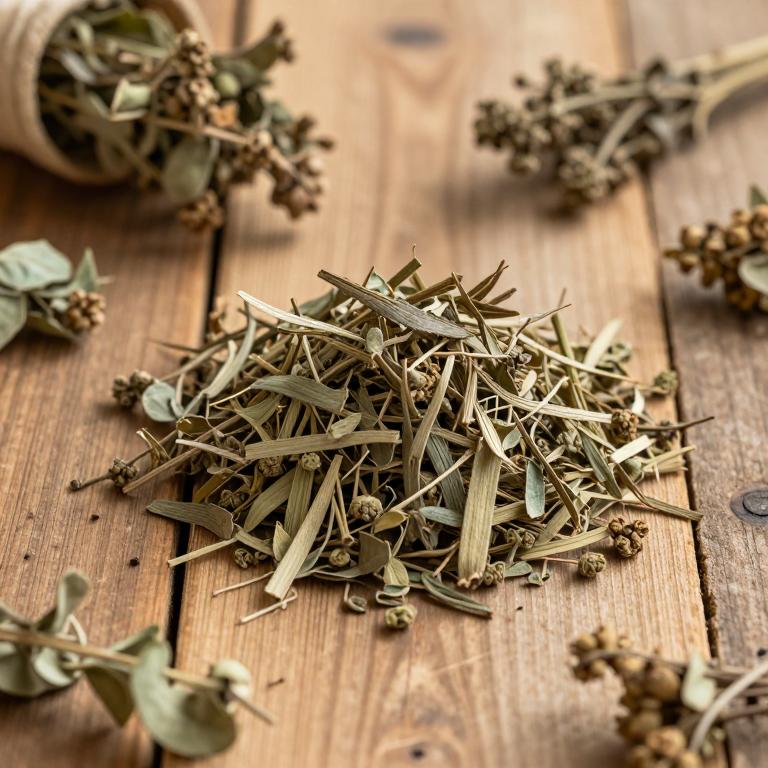
, scientifically known as Triplaris cumingiana, is a remarkable medicinal plant valued for its unique therapeutic properties. Found in specific ecological niches, it offers significant bioactive compounds used in traditional healing practices. Understanding its chemical profile is essential for exploring its potential role in modern pharmacological developments and holistic wellness.
- Family
- Not available
- Native range
- Southern America
- Parts used
- Leaf
- Common names
- Not available
- Scientific synonyms
- Not available
Names and Synonyms
Scientific Names
Accepted name
Triplaris cumingianaDistribution
This plant exhibits a diverse geographical distribution spanning multiple regions across the Americas. In Central America, its presence is specifically noted in Panamá. The species also extends into the Caribbean, where it can be found in Puerto Rico and Trinidad-Tobago. Within Northern South America, its range includes the country of Venezuela. Finally, its distribution reaches Western South America through Colombia.
| Region | Area |
|---|---|
| Central America | Panamá |
| Caribbean | Puerto Rico |
| Caribbean | Trinidad-Tobago |
| Northern South America | Venezuela |
| Western South America | Colombia |
| Western South America | Ecuador |
| Western South America | Peru |
Sources: The World Checklist of Vascular Plants (WCVP)
Botanical Identification
Ecology
The ecology of Triplaris cumingiana is characterized by its distribution across a broad altitudinal gradient, spanning from sea level to higher elevations. Specifically, this species inhabits environments ranging from 0 m AMSL to a maximum elevation of 1000 m AMSL. This wide elevational range suggests an ability to adapt to various microclimates and ecological niches within these low-to-mid elevation zones, allowing it to persist in diverse landscape settings across its range.
- Elevational range max:
- 1000 m AMSL
- Elevational range min:
- 0 m AMSL
Life history
The life history of Triplaris cumingiana is characterized by its status as a perennial plant, meaning it persists through multiple growing seasons rather than completing its cycle in a single year. Throughout its lifespan, the plant maintains a consistent vegetative presence as an evergreen species, retaining its foliage year-round without undergoing a seasonal shedding period.
- Deciduousness :
- evergreen
- Lifecycle :
- perennial
Morphology
The morphology of Triplaris cumingiana is characterized by its significant stature, reaching a mean height of 20 m, with a maximum potential height of up to 28 m. It exhibits a tree growth form and is classified as a woody plant. This species is strictly terrestrial in its ecological habit, functioning neither as an epiphyte nor as an aquatic or semiaquatic organism. In terms of its structural support, it is a self-supporting plant, lacking the climbing tendencies of lianas or vines, and it maintains an independent existence as it is not a parasite.
- Aquatic :
- terrestrial
- Climber :
- self-supporting
- Epiphyte :
- terrestrial
- Growth form :
- tree
- Parasite :
- independent
- Plant height max:
- 28 m
- Plant height mean:
- 20 m
- Woodiness :
- woody
Physiology
The physiology of Tripariis cuminiana is characterized by a C3 photosynthetic pathway, indicating a standard carbon fixation process that typically occurs under moderate environmental conditions. The plant exhibits a highly consistent leaf dry matter content (LDMC), with a mean, minimum, and maximum value all recorded at 385.9 mg/g, suggesting a uniform structural density within its foliage. Furthermore, this species does not function as a nitrogen fixer, meaning it relies on existing soil nitrogen rather than symbiotic nitrogen-fixing bacteria to meet its nutritional requirements.
- Leaf dry matter content (LDMC) mean:
- 385.9 mg/g
- Nitrogen fixer :
- no
- Photosynthetic pathway :
- C3
Reproduction
The reproduction of Triplaris cumingiana is characterized by specific mechanisms of pollination and seed dissemination. This species does not engage in self-fertilization, as the trait is noted as absent, implying a reliance on cross-pollination to maintain genetic diversity. Following fertilization, the plant produces seeds with varying dimensions; the seed mass ranges from a minimum of 0.0445 g to a maximum of 0.083 g, with an average seed mass of approximately 0.05894 g. The dispersal of these seeds follows an anemochorous syndrome, meaning they are primarily dispersed by the wind, allowing the progeny to colonize new areas through aerial transport.
- Dispersal syndrome :
- anemochorous
- Seed mass max:
- 0.083 g
- Seed mass mean:
- 0.05894 g
- Seed mass min:
- 0.0445 g
- Self fertilization :
- absent
Sources: Global Inventory of Floras and Traits (GIFT)
Plant Parts
Triplaris cumingiana has 1 reported plant parts identified across 1 scientific publications and several other databases that are studied for medicinal purposes. The most consistently reported plant part include leaf.
| Plant part | Supporting sources | Consensus |
|---|---|---|
| Leaf | 1 supporting sources | ★☆☆☆☆ |
Leaf
- Journal of natural products
Preparations
Triplaris cumingiana has 1 reported preparations identified across 1 scientific publications and several other databases. The most consistently reported preparations include young leaves.
| Preparation | Supporting sources | Consensus |
|---|---|---|
| Young leaves | 1 supporting sources | ★☆☆☆☆ |
Young leaves
- Journal of natural products