Triphyophyllum peltatum
Triphyophyllum peltatum · Accepted scientific name
Scientific literature: Very Sparse (20 studies) · ★☆☆☆☆
Triphyophyllum peltatum, is a remarkable medicinal woody climber native to the tropical Americas. Often called the "climbing palm," this unique plant is prized in traditional folk medicine. It is frequently utilized for its bioactive properties to treat various ailments, ranging from skin inflammations to digestive issues and systemic infections.
- Family
- Dioncophyllaceae
- Native range
- Africa
- Parts used
- Leaf · Root
- Common names
- Not available
- Scientific synonyms
- Dioncophyllum Peltatum
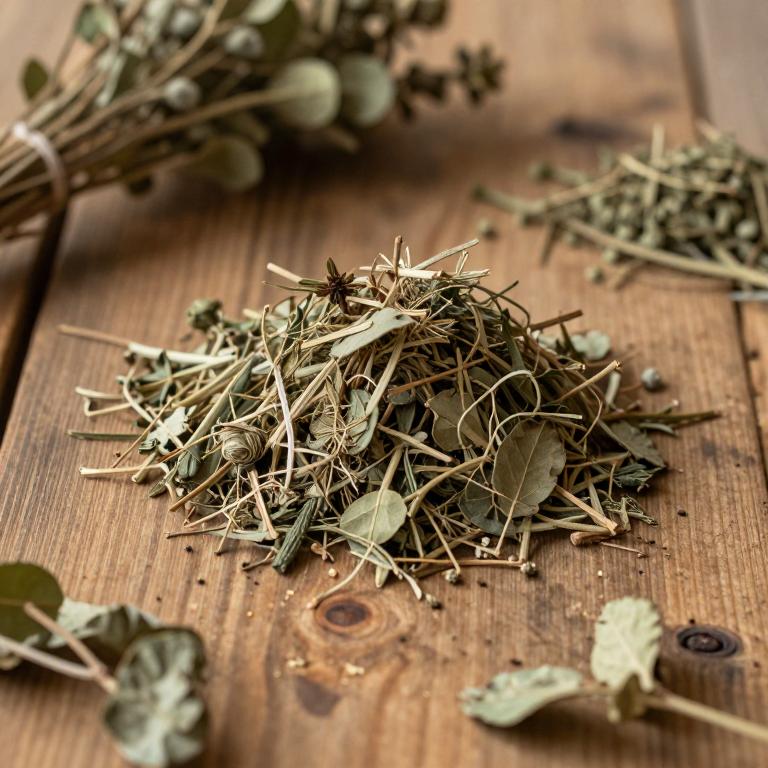
Names and Synonyms
Scientific Names
Accepted name
Triphyophyllum peltatumSynonyms
- Dioncophyllum peltatum
Regional and Traditional Names
Spanish:
- Dioncophyllum peltatum
German:
- Hakenblatt
- Dreifaltigblatt
Sources: Wikidata, Catalogue of Life
Taxonomical Classification
This plant belongs to the kingdom Plantae and is classified under the phylum Streptophyta within the class Equisetopsida. Following the subclass Magnoliidae, it is ordered under Caryophyllales and placed in the family Dioncophyllaecae. Finally, its specific taxonomic identity is defined by the genus Triphyophyllum.
| Rank | Classification |
|---|---|
| Kingdom | Plantae |
| Phylum | Streptophyta |
| Class | Equisetopsida |
| Subclass | Magnoliidae |
| Order | Caryophyllales |
| Family | Dioncophyllaceae |
| Genus | Triphyophyllum |
Sources: The World Checklist of Vascular Plants (WCVP)
Distribution
This plant, known as Triphyophyllum peltatum, exhibits a specific distribution pattern across West Tropical Africa. It can be found growing within the borders of Guinea. Furthermore, its habitat extends into the coastal regions of the Ivory Coast. The species is also documented to occur throughout Liberia. Finally, its range includes the territory of Sierra Leone.
| Region | Area |
|---|---|
| West Tropical Africa | Guinea |
| West Tropical Africa | Ivory Coast |
| West Tropical Africa | Liberia |
| West Tropical Africa | Sierra Leone |
Sources: The World Checklist of Vascular Plants (WCVP)
Botanical Identification
Life history
The life history of Triphyophyllum peltatum is characterized by its classification as a phanerophyte, specifically exhibiting life forms such as nanophanerophyte and phanerophyte, which indicates that its perennating buds are located on aerial branches well above the ground. As a woody plant, it follows a perennial life cycle, transitioning from seedling establishment to a robust vegetative growth phase where it develops its distinctive peltate leaves. Its survival strategy relies on these elevated buds to withstand seasonal environmental changes, maintaining its structural integrity through various growth stages. This phanerophyte status, encompassing both nanophanerophytic and broader phanerophytic characteristics, allows the species to occupy specific niches within its ecosystem, ensuring long-term persistence through its specialized aerial bud positioning.
- Life form :
- phanerophyte
Morphology
The morphology of Triphyophyllum peltatum is characterized by a woody growth habit, exhibiting a structural form that can be described as a shrub or a woody climber. As a liana, it functions as an obligatory climber, utilizing its woody stems to ascend toward light sources within its habitat. Although it can exhibit shrub-like characteristics in certain environments, its primary climbing mechanism defines its architecture. Furthermore, the plant is strictly terrestrial in its growth habit, rooting firmly in the ground rather than growing as an epiphyte.
- Climber :
- liana
- Climber :
- obligatory
- Epiphyte :
- terrestrial
- Growth form :
- shrub
- Woodiness :
- woody
Sources: Global Inventory of Floras and Traits (GIFT)
Plant Parts
Triphyophyllum peltatum has 3 reported plant parts identified across 4 scientific publications and several other databases that are studied for medicinal purposes. The most consistently reported plant part include leaf, root, stem.
| Plant part | Supporting sources | Consensus |
|---|---|---|
| Leaf | 2 supporting sources | ★☆☆☆☆ |
| Root | 1 supporting sources | ★☆☆☆☆ |
| Stem | 1 supporting sources | ★☆☆☆☆ |
Leaf
- International journal for parasitology
- Biopolymers
Root
- International journal for parasitology
Stem
- Biopolymers
Chemicals
Triphyophyllum peltatum has 9 reported phytochemicals identified across 4 scientific publications and several other databases. The most consistently reported chemicals include Dioncophylline A, 8-O-Methyldioncophylline D, 8-O-Methyldioncophyllinol B, Dioncopeltine A, Dioncophylline B.
| Chemical | Supporting sources | Consensus |
|---|---|---|
| Dioncophylline A | 2 supporting sources | ★☆☆☆☆ |
| 8-O-Methyldioncophylline D | 1 supporting sources | ★☆☆☆☆ |
| 8-O-Methyldioncophyllinol B | 1 supporting sources | ★☆☆☆☆ |
| Dioncopeltine A | 1 supporting sources | ★☆☆☆☆ |
| Dioncophylline B | 1 supporting sources | ★☆☆☆☆ |
| Dioncophylline D | 1 supporting sources | ★☆☆☆☆ |
| Dioncophyllinol D | 1 supporting sources | ★☆☆☆☆ |
| Habropetaline A | 1 supporting sources | ★☆☆☆☆ |
| betulinic acid | 1 supporting sources | ★☆☆☆☆ |
Dioncophylline A
- Journal of ethnopharmacology
- Biopolymers
8-O-Methyldioncophylline D
- Phytochemistry
8-O-Methyldioncophyllinol B
- Phytochemistry
Dioncopeltine A
- Journal of ethnopharmacology
Dioncophylline B
- Journal of ethnopharmacology
Dioncophylline D
- Phytochemistry
Dioncophyllinol D
- Phytochemistry
Habropetaline A
- Phytochemistry
betulinic acid
- Planta medica
Activities
Triphyophyllum peltatum has 2 reported activities identified across 4 scientific publications and several other databases. The most consistently reported activities include Antimalarial, Antiplasmodial.
| Activity | Supporting sources | Consensus |
|---|---|---|
| Antimalarial | 1 supporting sources | ★☆☆☆☆ |
| Antiplasmodial | 1 supporting sources | ★☆☆☆☆ |
Antimalarial
- Phytochemistry
Antiplasmodial
- Biopolymers
Conditions
Triphyophyllum peltatum has 1 reported investigations on conditions identified across 4 scientific publications and several other databases. The most consistently reported conditions include malaria.
| Condition | Supporting sources | Consensus |
|---|---|---|
| Malaria | 2 supporting sources | ★☆☆☆☆ |
Malaria
- Planta medica
- Biopolymers
Preparations
Triphyophyllum peltatum has 3 reported preparations identified across 4 scientific publications and several other databases. The most consistently reported preparations include CH2Cl2 root and bark extracts, CH2Cl2/NH3 leaf extract, Extracts.
| Preparation | Supporting sources | Consensus |
|---|---|---|
| Ch2cl2 root and bark extracts | 1 supporting sources | ★☆☆☆☆ |
| Ch2cl2/nh3 leaf extract | 1 supporting sources | ★☆☆☆☆ |
| Extracts | 1 supporting sources | ★☆☆☆☆ |
Ch2cl2 root and bark extracts
- International journal for parasitology
Ch2cl2/nh3 leaf extract
- International journal for parasitology
Extracts
- Journal of ethnopharmacology