Himalayan Trillium
Trillium govanianum · Accepted scientific name
Scientific literature: Sparse (75 studies) · ★★☆☆☆
Himalayan Trillium, scientifically known as Trillium govanianum, is a remarkable medicinal herb native to high-altitude regions. Renowned for its potent bioactive compounds, this plant plays a vital role in traditional healing practices. It is frequently studied for its therapeutic potential in supporting respiratory health and managing various inflammatory conditions.
- Family
- Melanthiaceae
- Native range
- Asia-Temperate
- Parts used
- Rhizome · Root
- Common names
- Himalayan Trillium
- Scientific synonyms
- Trillidium Govanianum
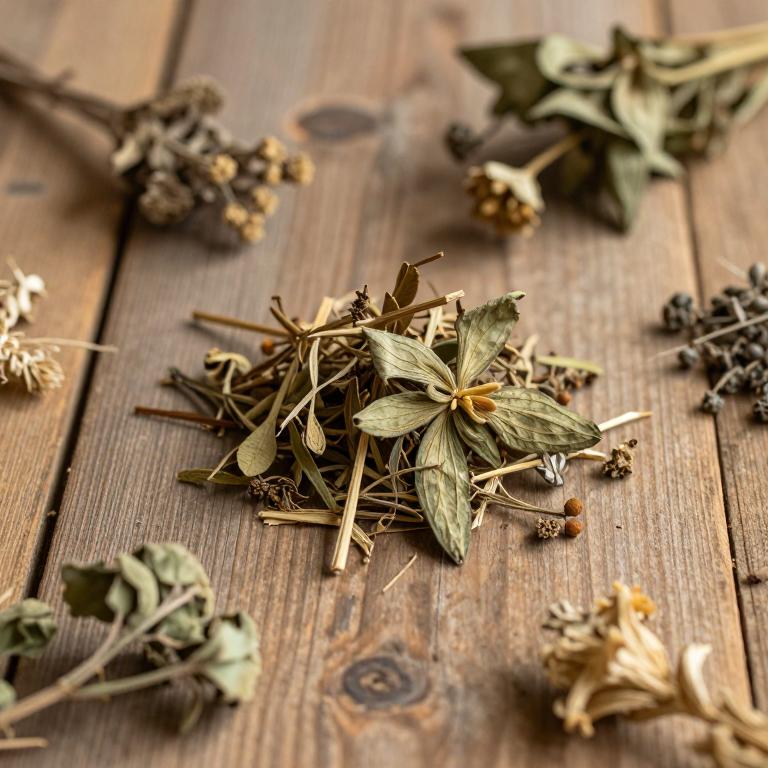
Names and Synonyms
Common Names
- Himalayan Trillium
Scientific Names
Accepted name
Trillium govanianumSynonyms
- Trillidium govanianum
Sources: Wikidata, Catalogue of Life
Taxonomical Classification
This plant belongs to the kingdom Plantae and is classified under the phylum Streptophyta and the class Equisetopsida. Within the subclass Magnoliidae, it is organized under the order Liliales and falls into the family Melanthiaceae. Its specific taxonomic identity is defined by the genus Trillium.
| Rank | Classification |
|---|---|
| Kingdom | Plantae |
| Phylum | Streptophyta |
| Class | Equisetopsida |
| Subclass | Magnoliidae |
| Order | Liliales |
| Family | Melanthiaceae |
| Genus | Trillium |
Sources: The World Checklist of Vascular Plants (WCVP)
Distribution
This plant exhibits a widespread distribution across several key mountainous regions in Asia. In Western Asia, its presence has been documented within the borders of Afghanistan. It can also be found in the high-altitude regions of Tibet in China. Within the Indian Subcontinent, the species thrives in the East Himalaya and throughout Nepal. Additionally, its geographical range extends into the rugged terrains of Pakistan.
| Region | Area |
|---|---|
| Western Asia | Afghanistan |
| China | Tibet |
| Indian Subcontinent | East Himalaya |
| Indian Subcontinent | Nepal |
| Indian Subcontinent | Pakistan |
| Indian Subcontinent | West Himalaya |
Sources: The World Checklist of Vascular Plants (WCVP)
Botanical Identification
Ecology
The ecology of Trillium govanianum is defined by its specialized niche within high-altitude montane environments, where it occupies a specific vertical distribution along mountain slopes. This species is typically found within a rigorous elevational range that begins at a minimum of 2500 m AMSL and extends up to a maximum of 4000 m AMSL. Throughout its habitat, it thrives most consistently at a mean elevation of approximately 3200 m AMSL, suggesting a strong adaptation to the cooler temperatures and specific atmospheric conditions characteristic of these mid-to-high alpine zones.
- Elevational range max:
- 4000 m AMSL
- Elevational range mean:
- 3200 m AMSL
- Elevational range min:
- 2500 m AMSL
Life history
The life history of Trilium govanianum is characterized by a perennial lifecycle, allowing the plant to persist through multiple growing seasons. As a member of the cryptophyte group, it possesses specialized underground organs that protect its vital parts during unfavorable environmental conditions. Specifically, it functions as a geophyte, relying on subterranean structures such as rhizomes to store nutrients and ensure survival and regrowth in subsequent years.
- Life form :
- geophyte
- Life form :
- cryptophyte
- Lifecycle :
- annual
Morphology
The morphology of Trillium govanianum is characterized by its growth form as a herb, exhibiting a non-woody structure throughout its vegetative parts. It functions as a terrestrial plant, growing in soil rather than as an epiphyte, and maintains an independent lifestyle without acting as a parasite on other organisms. While it possesses a climbing tendency, it is classified as a self-supporting climber, meaning it does not rely on external hosts for structural stability.
- Climber :
- self-supporting
- Epiphyte :
- terrestrial
- Growth form :
- herb
- Parasite :
- independent
- Woodiness :
- non-woody
Physiology
The physiology of Trillium govanianum is characterized by specific morphological parameters of its foliage, which serve as critical indicators of its vegetative development and photosynthetic capacity. The leaf structure exhibits a controlled range of dimensions, with leaf lengths typically measuring a mean of 5 cm, though they can fluctuate between a minimum of 4 cm and a maximum of 6 cm. Complementing this longitudinal growth, the leaf width follows a distinct developmental pattern, ranging from a minimum of 2.2 cm to a maximum of 4 cm. These precise leaf dimensions are essential for the plant's metabolic efficiency, facilitating optimal light interception and gas exchange within its specific ecological niche.
- Leaf length max:
- 6 cm
- Leaf length mean:
- 5 cm
- Leaf length min:
- 4 cm
- Leaf width max:
- 4 cm
- Leaf width min:
- 2.2 cm
Reproduction
The reproduction of Trillium govanianum is closely tied to its seasonal flowering cycle, which is characterized by a specific period of floral development. The flowering process for this species is concentrated within a narrow window, with the flowering start occurring in July. This reproductive phase concludes within the same period, as the flowering end is also recorded in July, indicating a brief and highly synchronized blooming period. This temporal pattern suggests that the plant's reproductive efforts are concentrated into a single month, likely timed to coincide with optimal environmental conditions for pollination.
- Flowering time :
- Jul
Sources: Global Inventory of Floras and Traits (GIFT)
Plant Parts
Trillium govanianum has 4 reported plant parts identified across 10 scientific publications and several other databases that are studied for medicinal purposes. The most consistently reported plant part include rhizome, root, fruit, leaf.
| Plant part | Supporting sources | Consensus |
|---|---|---|
| Rhizome | 6 supporting sources | ★★★☆☆ |
| Root | 2 supporting sources | ★☆☆☆☆ |
| Fruit | 1 supporting sources | ★☆☆☆☆ |
| Leaf | 1 supporting sources | ★☆☆☆☆ |
Rhizome
- ACS omega
- Natural product research
- Applied biochemistry and biotechnology
- Frontiers in chemistry
- Molecules (Basel, Switzerland)
View 1 additional sources
- Chemistry & biodiversity
Root
- Natural product research
- Phytotherapy research : PTR
Fruit
- Scientific reports
Leaf
- Scientific reports
Chemicals
Trillium govanianum has 27 reported phytochemicals identified across 10 scientific publications and several other databases. The most consistently reported chemicals include Dioscin, Steroids, 20-HYDROXYECDYSONE, Borassoside E, DIOSGENIN.
| Chemical | Supporting sources | Consensus |
|---|---|---|
| Dioscin | 3 supporting sources | ★★☆☆☆ |
| Steroids | 3 supporting sources | ★★☆☆☆ |
| 20-HYDROXYECDYSONE | 2 supporting sources | ★☆☆☆☆ |
| Borassoside E | 2 supporting sources | ★☆☆☆☆ |
| DIOSGENIN | 2 supporting sources | ★☆☆☆☆ |
| Saponins | 2 supporting sources | ★☆☆☆☆ |
| 2-Deoxyribose | 1 supporting sources | ★☆☆☆☆ |
| As | 1 supporting sources | ★☆☆☆☆ |
| CA | 1 supporting sources | ★☆☆☆☆ |
| CD | 1 supporting sources | ★☆☆☆☆ |
Dioscin
- Phytochemical analysis : PCA
- Chemistry & biodiversity
- Scientific reports
Steroids
- Chemistry & biodiversity
- Phytotherapy research : PTR
- Molecules (Basel, Switzerland)
20-HYDROXYECDYSONE
- Frontiers in chemistry
- Scientific reports
Borassoside E
- Frontiers in chemistry
- Molecules (Basel, Switzerland)
DIOSGENIN
- Frontiers in chemistry
- Scientific reports
Saponins
- Phytotherapy research : PTR
- Chemistry & biodiversity
2-Deoxyribose
- Scientific reports
As
- Scientific reports
CA
- Scientific reports
CD
- Scientific reports
Activities
Trillium govanianum has 4 reported activities identified across 10 scientific publications and several other databases. The most consistently reported activities include Analgesic, Anticancer, Antiseptic, Antispasmodic.
| Activity | Supporting sources | Consensus |
|---|---|---|
| Analgesic | 1 supporting sources | ★☆☆☆☆ |
| Anticancer | 1 supporting sources | ★☆☆☆☆ |
| Antiseptic | 1 supporting sources | ★☆☆☆☆ |
| Antispasmodic | 1 supporting sources | ★☆☆☆☆ |
Analgesic
- Molecules (Basel, Switzerland)
Anticancer
- ACS omega
Antiseptic
- Phytotherapy research : PTR
Antispasmodic
- Natural product research
Conditions
Trillium govanianum has 17 reported investigations on conditions identified across 10 scientific publications and several other databases. The most consistently reported conditions include inflammation, cancer, dysentery, sepsis, Candida auris.
| Condition | Supporting sources | Consensus |
|---|---|---|
| Inflammation | 3 supporting sources | ★★☆☆☆ |
| Cancer | 2 supporting sources | ★☆☆☆☆ |
| Dysentery | 2 supporting sources | ★☆☆☆☆ |
| Sepsis | 2 supporting sources | ★☆☆☆☆ |
| Candida auris | 1 supporting sources | ★☆☆☆☆ |
| Arthritis | 1 supporting sources | ★☆☆☆☆ |
| Boils | 1 supporting sources | ★☆☆☆☆ |
| Diabetes mellitus | 1 supporting sources | ★☆☆☆☆ |
| Diarrhea | 1 supporting sources | ★☆☆☆☆ |
| Hyperalgesia | 1 supporting sources | ★☆☆☆☆ |
Inflammation
- Phytotherapy research : PTR
- Molecules (Basel, Switzerland)
- Journal of ethnopharmacology
Cancer
- ACS omega
- Journal of ethnopharmacology
Dysentery
- Phytotherapy research : PTR
- Journal of ethnopharmacology
Sepsis
- Natural product research
- Journal of ethnopharmacology
Candida auris
- Indian journal of microbiology
Arthritis
- Journal of ethnopharmacology
Boils
- Phytotherapy research : PTR
Diabetes mellitus
- Phytochemical analysis : PCA
Diarrhea
- Natural product research
Hyperalgesia
- Phytochemical analysis : PCA
Preparations
Trillium govanianum has 14 reported preparations identified across 10 scientific publications and several other databases. The most consistently reported preparations include extract, rhizomes, Aqueous protein fraction (APF), Hexane-Methanol-treated aqueous protein fraction (HMAPF), MeOH extract.
| Preparation | Supporting sources | Consensus |
|---|---|---|
| Extract | 2 supporting sources | ★☆☆☆☆ |
| Rhizomes | 2 supporting sources | ★☆☆☆☆ |
| Aqueous protein fraction (apf) | 1 supporting sources | ★☆☆☆☆ |
| Hexane-methanol-treated aqueous protein fraction (hmapf) | 1 supporting sources | ★☆☆☆☆ |
| Meoh extract | 1 supporting sources | ★☆☆☆☆ |
| Methanol-treated aqueous protein fraction (mapf) | 1 supporting sources | ★☆☆☆☆ |
| Crude extract | 1 supporting sources | ★☆☆☆☆ |
| Ethyl acetate fraction | 1 supporting sources | ★☆☆☆☆ |
| Methanol extract of the roots | 1 supporting sources | ★☆☆☆☆ |
| Methanolic extract | 1 supporting sources | ★☆☆☆☆ |
Extract
- Indian journal of microbiology
- Molecules (Basel, Switzerland)
Rhizomes
- ACS omega
- Frontiers in chemistry
Aqueous protein fraction (apf)
- Applied biochemistry and biotechnology
Hexane-methanol-treated aqueous protein fraction (hmapf)
- Applied biochemistry and biotechnology
Meoh extract
- Natural product research
Methanol-treated aqueous protein fraction (mapf)
- Applied biochemistry and biotechnology
Crude extract
- Chemistry & biodiversity
Ethyl acetate fraction
- Chemistry & biodiversity
Methanol extract of the roots
- Natural product research
Methanolic extract
- Natural product research